Undark: A scientist's quest for unhackable voting machine
UC alumnus invents transparent electronic voting machine

Undark magazine profiled a University of Cincinnati alumnus who creates new voting software.
Juan Gilbert, a professor of computer science at the University of Florida, earned his master's and doctoral degrees in computer science from UC's College of Engineering and Applied Science.
He has dedicated much of his career to election security, inventing electronic voting systems that have been used in elections in Ohio and New Hampshire.
His latest invention is an electronic voting machine surrounded in clear glass so voters can see and verify their paper ballot as it is printed once they cast their votes. Gilbert told Undark that the machine offers more transparency — literally because of the glass — than some other systems.
Election security became a national issue after the 2020 presidential election when some Republicans alleged, without evidence, that voting machines were compromised. Now voting machine companies are suing right-wing media outlets and several high-profile supporters of former President Trump for defamation and seeking billions of dollars in damages.
According to Undark, Gilbert, a native of Hamilton, Ohio, has challenged hackers to try to compromise his latest voting system.
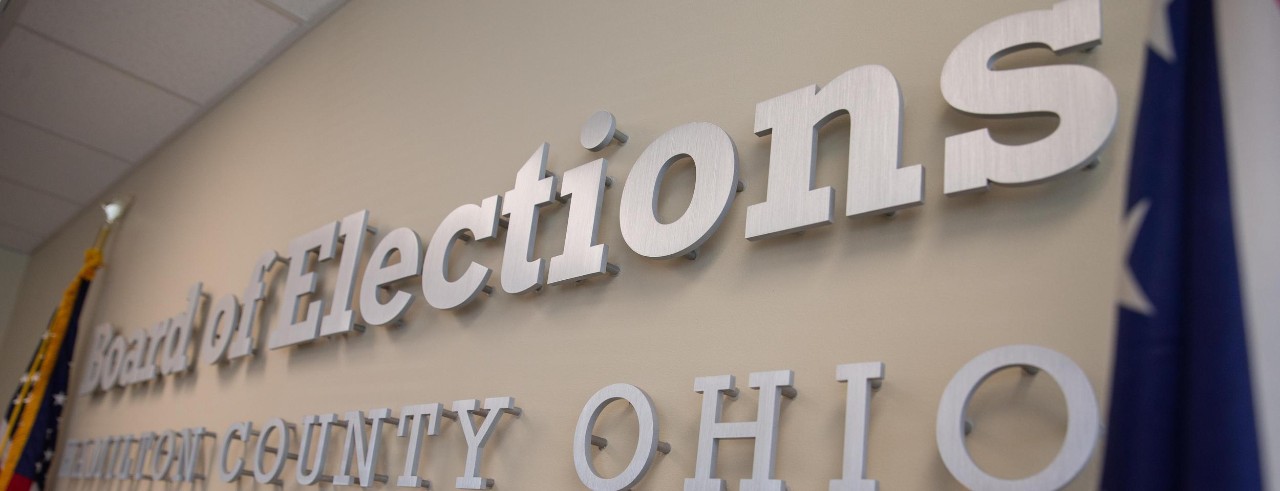
Featured image at top: A sign at the Hamilton County Board of Elections. Photo/Andrew Higley/UC Marketing + Brand

Undark profiled University of Cincinnati graduate Juan Gilbert, a computer science professor at the University of Florida who studies election security. Photo/Andrew Higley/UC Marketing + Brand
Related Stories
As Crosley Tower comes down, UC looks to STEM
July 30, 2026
With demolition of Crosley Tower more than halfway complete, the University of Cincinnati is preparing a, 200,000-square-foot STEM Academic Facility on its Uptown campus, transforming the north side of campus with new classrooms and labs.
Donor support of UC and UC Health reaches historic level
July 30, 2026
This summer, every law student at the Donald P. Klekamp College of Law who applied for a Summer Public Interest fellowship will receive a fully funded real-world learning experience, expanding opportunities for University of Cincinnati students wishing to pursue real-world experience in public service. This 30% increase in fully funded fellowship participation is a direct result of transformative philanthropy.
UC co-op helps build career pathways at AtriCure
July 28, 2026
AtriCure, a global medical device company in Mason, Ohio, is UC’s largest biomedical engineering co-op employer, turning University of Cincinnati co-op students into full-time innovators.