First-gen UC undergrad beating the odds, finding her voice
Student credits A&S with helping her find academic path
Many non-traditional students find a home at the University of Cincinnati, and Emily O’Bryant is no exception. A student who comes from a history of displaced housing as a ward of the court, O’Bryant is a first-generation student pursuing her bachelor's degree in communications through UC's College of Arts and Sciences.
“I am an independent student. My birth mom had me at 14 and I ended up in multiple homes throughout my childhood,” says O’Bryant. “Neither of my parents made it out of the eighth grade. I went through a few different types of care when I was younger all over the place, but as an adult I wanted to be better and do better.”
Only 26% of first-generation students complete at least a bachelor’s degree, according to data from the Pew Research Center. In addition to the usual struggles associated with adjusting to college culture, there are myriad additional barriers that first generation can students face, including lack of support from family and peers, college preparedness, racial disparity and financial stability.

UC communication major Emily O'Bryant
O’Bryant began living on her own at age 17, paying rent, working and even teaching herself how to drive, as no other women in her family could. After an untraditional schooling experience, with online classes that were not to the standards of the curriculum other kids in Ohio were taking, O’Bryant decided to attend UC at 19 years old. She chose to major in geology, however while working in cosmetics full-time to put herself through school, things got too busy, and she took about a year and half off.
After some time off, she switched to online school through UC and obtained her associates degree in information technology. With more motivation and knowledge, she immediately began pursuing her bachelor's degree in communications, and she is now a third-year student in that program.
“I was at a disadvantage when I came to UC. I wasn’t given the proper background to be successful in college because there is so much, I wasn’t given the resources to learn,” O’Bryant says.
UC worked with me to find a program that would cater to my strengths and allow me to thrive.
Emily O'Bryant, UC communication major
“I think all professors have been really helpful with that for me. I have difficulty understanding math, I failed statistics the first time. I took a year and a half off, and I took that time to teach myself everything,” she says. “UC worked with me to find a program that would cater to my strengths and allow me to thrive.”
O’Bryant gives credit to communication professor Molly Mayer for her success so far in the program. In Mayer’s business communications class, students give a personal narrative speech to the class. Mayer was appreciative of O’Bryant’s speech on her experience in displaced care, which motivated O’Bryant to discuss her experiences more.
“The assignment teaches students how to share personal information in a professional setting,” says Mayer. “Emily told a very impactful story about how she learned to talk about having grown up in displaced circumstances in a professional setting. She also talked about how to be a role model to foster youth and learning from them to own and talk about her youth as a displaced child.”
O’Bryant shares that she spent the beginning of her college experience being ashamed of telling people where she came from. She volunteered with young foster girls through Interface Hospitality Network and other organizations, where they can open up to her about their experiences. Not only does she find passion in helping the girls, but she says the girls have helped her speak up and not be ashamed of her own experiences.
“I have family on the West Virginia, Ohio border,” says O’Bryant. “None of the women in my direct family can drive, and it is a really severe level of poverty. Some of my relatives don’t have electricity. Going to college is looked down on, it is not something people in my family are proud of me for.”
Through all O’Bryant has been through, she finds perseverance through the opportunities that the A&S communication program has given her on the path to her degree. Not only has she gained an education she never thought she would have the opportunity to gain, but she found her voice to speak about her experiences along the way.
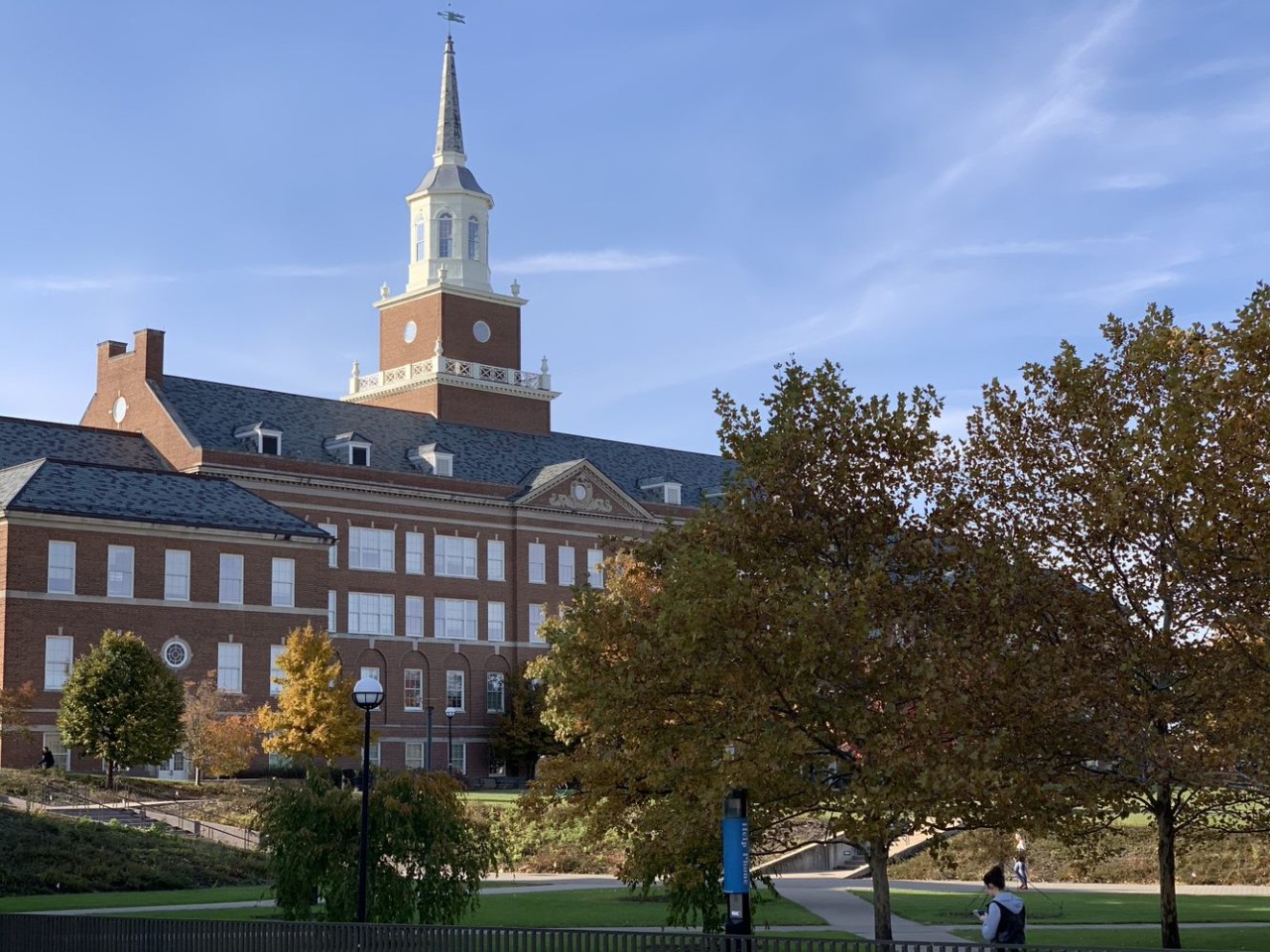
Featured image at top: UC's Arts & Sciences Hall on the Uptown West campus.

By Hayley Garr
Student Journalist, Marketing and Communication, College of Arts and Sciences
artscinews@ucmail.uc.edu
Related Stories
Decade of discovery
July 27, 2026
Every summer, UHP Discover has connected undergraduate students in the University Honors Program (UHP) to a unique array of opportunities in original interdisciplinary research. This year, the program celebrates its 10th anniversary.
Colleges use 'Odyssey' as opportunity to promote Classics programs
July 24, 2026

Jack Davis, UC's Carl W. Blegen Professor of Greek Archaeology, spoke to the Chronicle of Higher Education about the Christopher Nolan-directed move "The Odyssey," which had the biggest box office showing of any live-action movie this year..
UC selected for federal initiative to use AI to advance scientific discovery
July 22, 2026

A University of Cincinnati project to protect sources of drinking water and identify valuable underground resources is part of a national initiative to harness artificial intelligence to speed scientific breakthroughs.