
BBC: Scientists discover frog that can't croak
International media reports on new species identified by UC biologist

The BBC reported on the astonishing discovery by researchers at the University of Cincinnati of a new species of voiceless frog in Tanzania's Ukaguru Mountains.
The Ukaguru spiny-throated reed frog does not croak, sing or ribbit. Found in Tanzania’s Ukaguru Mountains for which it is named, Hyperolius ukaguruensis is among the few frogs around the world that do not vocalize to other frogs.
The new species belongs to a group of “spiny throated” reed frogs, which true to their name have tiny spines on the male’s throat. Since they can’t rely on sound to recognize members of their species, they might use spines instead.
Researchers described the new species in the journal PLOS ONE.
“The male frogs don't call like most other frogs do. We think they may use the spine as something like Braille for species recognition,” said study lead author Lucinda Lawson, a conservation biologist and assistant professor of research in UC's College of Arts and Sciences.
“Without a call, they need some other way to recognize each other.”
Lawson published the study with co-authors Christoph Liedtke, Simon Loader and John Lyakurwa.
Featured image at top: Researchers found a new species of spiny-throated reed frog. Photo/Christoph Liedtke
More UC Biology in the news
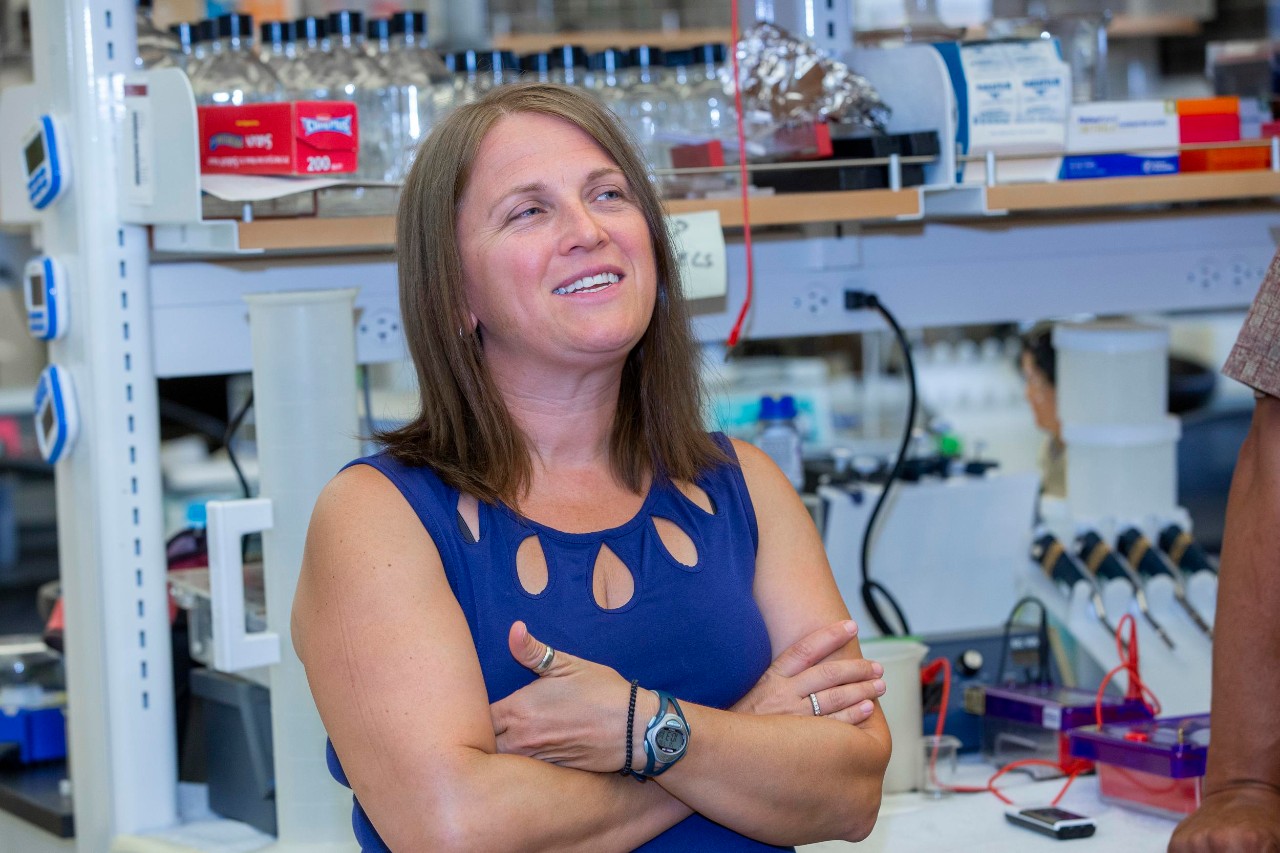
UC assistant professor Lucinda Lawson worked with an international team on an amphibian survey in Tanzania. Photo/Joseph Fuqua II/UC
- Eurasia Review: Voiceless frog discovered in Tanzania
- Prensa Latina: New croakless frog discovered in Africa
- Earth.com: Voiceless frog found in Africa
Related Stories
'There's a strong community here:' UC transfer student finds place in College of Arts and Sciences
October 23, 2026
This week marks National Transfer Students Week, and the College of Arts and Sciences celebrated those students Thursday. Olivia White, assistant director of recruitment, said around 13-15% of students at UC are transfer students, and with that comes its own set of challenges.
AI breast cancer survival model from Cancer Center could improve accuracy and personalize care
October 23, 2026
UC Cancer Center researchers, including lead author Wedad Alatebi, developed a deep learning survival model for breast cancer that combines detailed clinical and genetic information, potentially offering physicians a more accurate tool to guide treatment decisions.
UC expert explains potential impact of Pennsylvania’s new vape product law
October 22, 2026

UC professor Ashley Merianos speaks to the Pittsburgh Post-Gazette about Pennsylvania’s new vape law, youth vaping prevention, enforcement challenges and possible unintended consequences.