
WCPO: UC research could repair heart damage
Yigang Wang leads team developing new method to treat heart attacks

Tissue damaged by a heart attack could be repaired in the future thanks to research being conducted at the University of Cincinnati, WCPO reported.
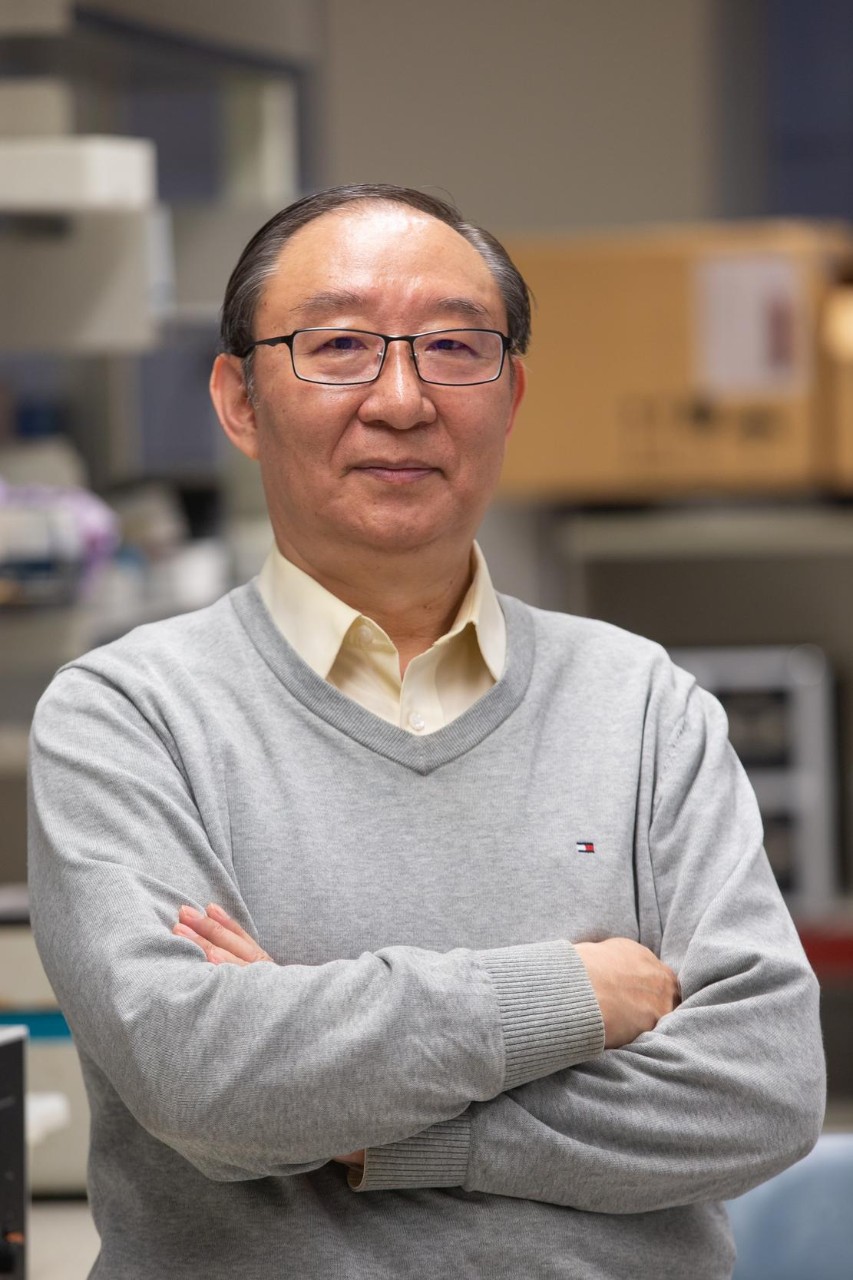
Yigang Wang, MD, a professor in the University of Cincinnati College of Medicine, has developed a technology that regenerates and repairs heart cells. Photo/Andrew Higley/UC Marketing + Brand
When a person suffers a heart attack, millions of heart muscle cells are starved of oxygen and die. Once the cells in the heart die, there’s no natural system in the human body to replace them.
Yigang Wang, MD, director of the regenerative medicine division in UC's College of Medicine, is leading the UC research team that is looking for solutions to repair the damaged tissue.
Wang and his team are developing a cell patch, a lab-grown patch of muscle that would help replace damaged cells and allow the heart to repair itself.
Along with repairing damaged tissue, the method would reduce the need for more invasive procedures.
“If we can put the cell patch on the surface of the infarcted area, that will help the person who has serious heart disease or cannot tolerate operation,” Wang told WCPO.
Featured image at top: Xingyu He, a postdoctoral research fellow, works in the lab of Yigang Wang, MD, a professor in the University of Cincinnati College of Medicine, who has developed a technology that regenerates and repairs heart cells. Photo/Andrew Higley/UC Marketing + Brand
Next Lives Here
The University of Cincinnati is classified as a Research 1 institution by the Carnegie Commission and is ranked in the National Science Foundation's Top-35 public research universities. UC's medical, graduate and undergraduate students and faculty investigate problems and innovate solutions with real-world impact. Next Lives Here.
Related Stories
UC Speech & Hearing Clinic serves patients while acting as training site
September 30, 2026

The University of Cincinnati's Speech & Hearing Clinic provides graduate students in audiology and speech-language pathology with hands-on experience while delivering care to patients across the region. Located on the university's medical campus, the clinic serves patients of all ages and was recently featured on Spectrum News 1 Ohio.
UC economist warns of higher heating costs this winter
September 30, 2026

David Brasington explains why home heating will cost so much this winter and how to save money.
Former mistress of convicted pastor and former American Idol contestant likely won’t face criminal charges
September 30, 2026

Mark Godsey, a criminal law professor in the Donald P. Klekamp College of Law at the University of Cincinnati spoke with NBC News about a criminal case that has attracted national attention.