Healio: CAR-T reinfusion lacks durability for younger patients with leukemia

A second round of T-cell therapy for children and young adults with relapsed or refractory B-cell acute lymphoblastic leukemia (ALL) led to a small percentage of clinically meaningful responses, according to data presented by the University of Cincinnati and Cincinnati Children's Hospital Medical Center's Christa Krupski, DO.
Krupski presented data from a retrospective study at the Tandem Meetings | Transplantation & Cellular Therapy Meetings of ASTCT and CIBMTR.
The study focused on a drug called Tisagenlecleucel, also known as tisa-cel, that has historically been effective in approximately 80% of younger patients with B-cell ALL, Krupski said. After the first infusion of tisa-cel, there are few treatment options.
Krupski reported a second round of tisa-cel infusion has limited effectiveness and should be given as a bridge toward another treatment.
“We have shown that reinfusion with [tisagenlecleucel] is not a definitive therapy,” said Krupski, professor in the department of pediatrics at UC and pediatric bone marrow transplant physician at Cincinnati Children's Hospital Medical Center. “The remissions it produces are unlikely to be long lasting, so physicians who treat these patients will need to have something else in mind before moving forward.
“It needs to be a bridge to something, and that something, in my opinion, is a transplant for definitive therapy," Krupski continued.
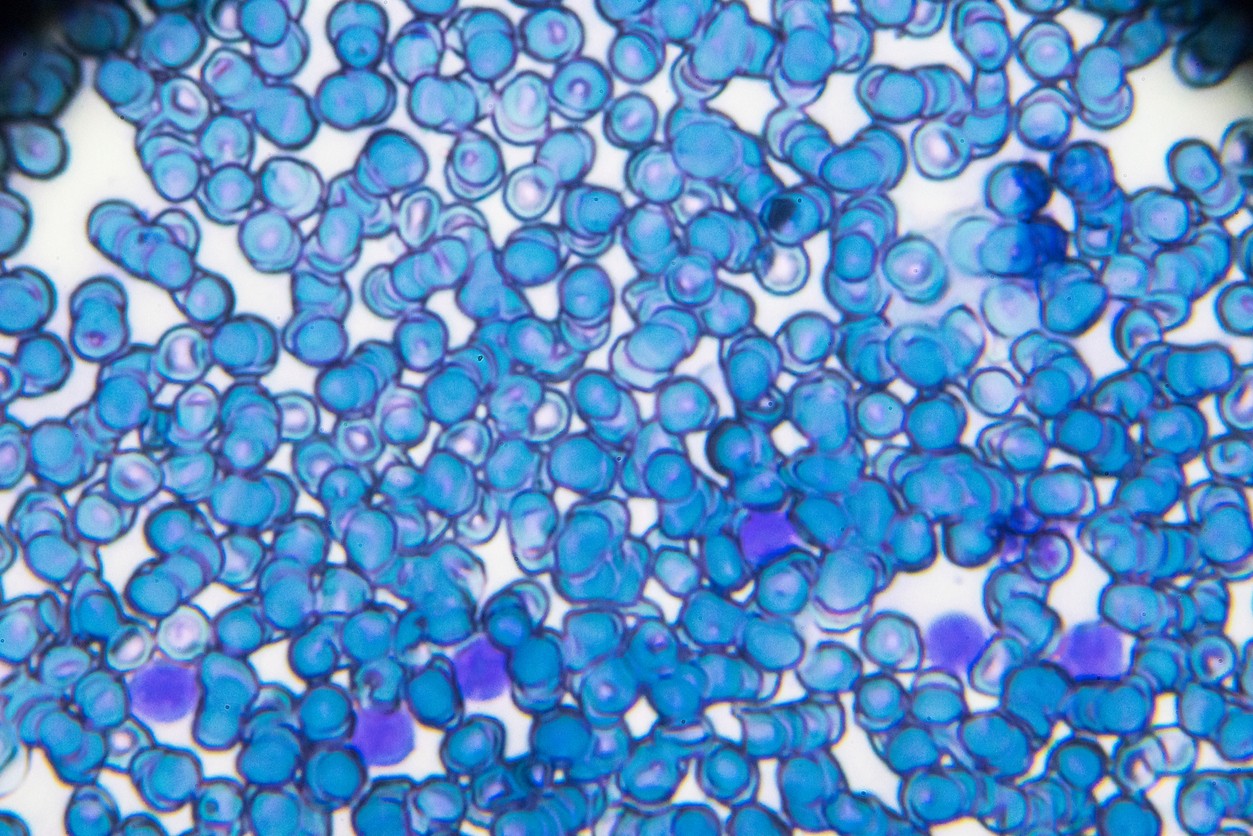
Featured photo of acute lymphoblastic leukemia cells courtesy of iStock.
Related Stories
UC doctoral student shares his journey with Spectrum News
July 27, 2026

UC doctoral student Amota Ataneka spoke with Spectrum News about his educational journey. Ataneka, a native of the Pacific island nation of Kiribati, is one of 35 emerging scholars across the United States to win the National Academy of Education/Spencer Dissertation Fellowship.
How scammers can persuade you with AI
July 27, 2026
Spectrum News recently dove into how cloning voices with artificial intelligence is making it easier to scam people over the phone. The news outlet spoke with Kimberly Hyun, assistant professor of marketing at UC’s Lindner College of Business, to examine why AI is making it so much easier to trick people.
Decade of discovery
July 27, 2026
Every summer, UHP Discover has connected undergraduate students in the University Honors Program (UHP) to a unique array of opportunities in original interdisciplinary research. This year, the program celebrates its 10th anniversary.