WLWT: A change in mammography standards could help save lives

A new Food and Drug Administration policy will soon require health care providers to tell women if they have dense breast tissue, a trait that can make cancer harder to detect. The move is aimed to support prevention, early detection and treatment of breast cancer.
The announcement also follows advocacy from patients, lawmakers and University of Cincinnati Cancer Center physicians that led to the passage of Ohio House Bill 371, which requires insurance companies to cover additional screenings for individuals who are at high risk for breast cancer or have dense breast tissue.
Erich J. Boomgarden, MD, assistant professor in UC's College of Medicine and a UC Health radiologist, told WLWT mammography is still the standard of care, but additional MRI or ultrasound screenings can help see through dense breast tissue.
"If you get your screening mammogram, and assuming it comes back negative, meaning there was nothing suspicious in there, we would recommend getting a supplemental screening in six months," Boomgarden said. "We do that because it's helpful for us because again, by staggering it that way, then anything that may be developing, between the screening mammogram and MRI hopefully will be detected sooner then."
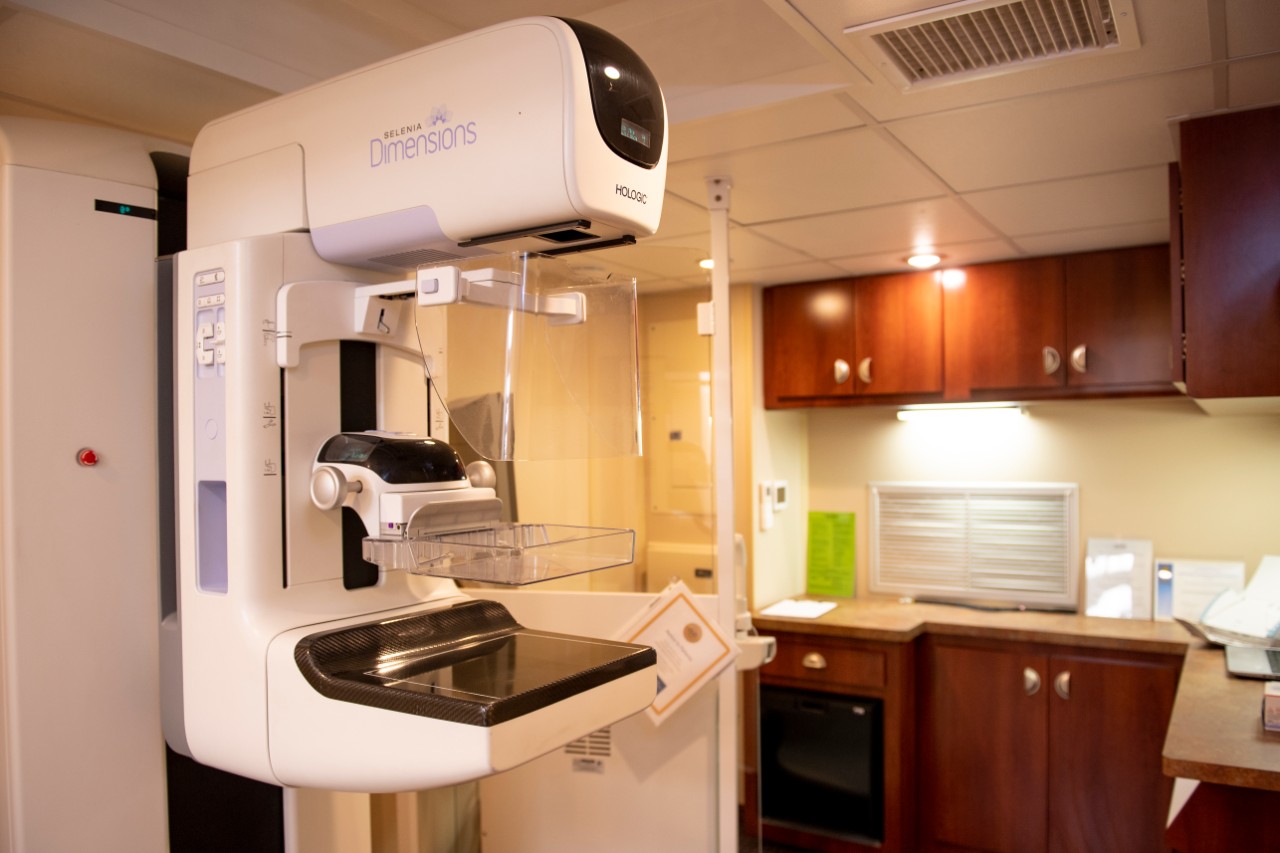
Featured photo at top of a 3D mammogram machine. Photo/Colleen Kelley/UC Marketing + Brand.
Related Stories
UC doctoral student shares his journey with Spectrum News
July 27, 2026

UC doctoral student Amota Ataneka spoke with Spectrum News about his educational journey. Ataneka, a native of the Pacific island nation of Kiribati, is one of 35 emerging scholars across the United States to win the National Academy of Education/Spencer Dissertation Fellowship.
How scammers can persuade you with AI
July 27, 2026
Spectrum News recently dove into how cloning voices with artificial intelligence is making it easier to scam people over the phone. The news outlet spoke with Kimberly Hyun, assistant professor of marketing at UC’s Lindner College of Business, to examine why AI is making it so much easier to trick people.
Decade of discovery
July 27, 2026
Every summer, UHP Discover has connected undergraduate students in the University Honors Program (UHP) to a unique array of opportunities in original interdisciplinary research. This year, the program celebrates its 10th anniversary.