
BBC: 'Snowball Earth' could have been a slushball
UC geologist says mid-latitude seas might have remained ice-free

BBC News highlighted research by a University of Cincinnati geologist who examined an ice age 635 million years ago that many scientists believed froze the planet solid from pole to pole.
But a new study published in the journal Nature Communications by an international team of scientists said evidence suggests some shallow seas in the mid-latitudes remained ice free, possibly allowing life to persist during this prolonged period of global glaciation.
UC College of Arts and Sciences geosciences Professor Thomas Algeo worked with researchers from the China University of Geosciences to use isotopic analysis to understand what life on Earth was like hundreds of millions of years before dinosaurs roamed the Earth.
“We called this ice age ‘Snowball Earth,'” Algeo said. “We used to believe that Earth was completely frozen during this long ice age. But it could be ‘Slushball Earth.’”
Featured illustration at top: University of Cincinnati researchers found evidence that a prolonged ice age 635 million years did not freeze the planet solid from pole to pole as previously believed. Graphic/Huyue Song
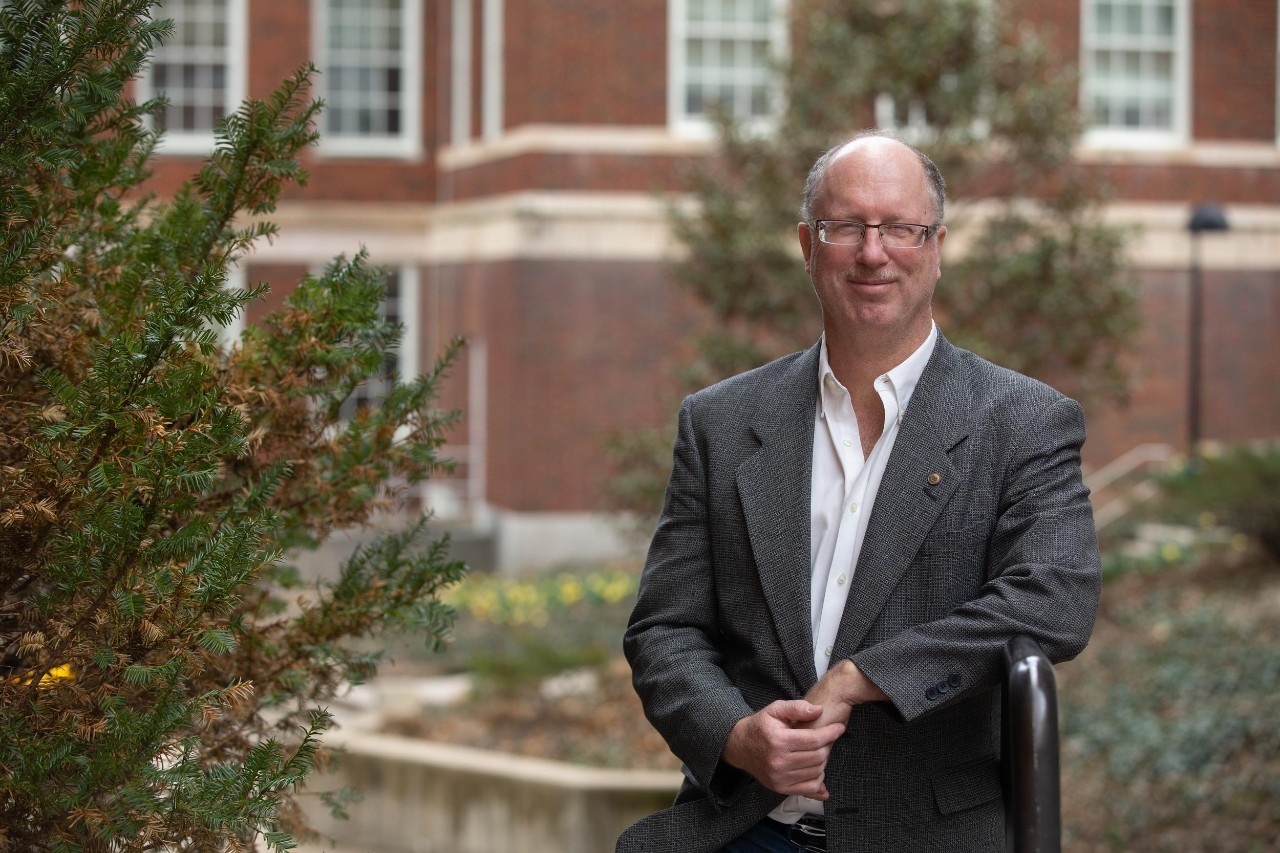
UC College of Arts and Sciences Professor Thomas Algeo studied life on Earth during a prolonged ice age 635 million years ago. Photo/Andrew Higley/UC Marketing + Brand
More UC Geosciences in the news
- Extreme Tech: 'Snowball Earth' may have been less icy than thought
- India Today: When Earth froze to death but somehow life survived
Related Stories
UC hematology researcher to study bone complications in sickle cell disease
September 25, 2026
University of Cincinnati hematology researcher Jahnavi Gollamudi, MD, has received new grant funding to study how inflammation predicts bone complications in people with sickle cell disease, offering new hope for treatment.
UC partners join communitywide effort to improve outcomes for children and families
September 24, 2026

WLWT Channel 5 covered a signing agreement ceremony for the newly formed Hamilton County Child & Family Systems Partner Collaborative dedicated to working more efficiently together to reduce barriers for families, connect them with support early on and improve delivery of services. UC Corrections Institute and the Donald P. Klekamp College of Law are among the organizations part of the collaborative.
Engineering professor optimizes emergency room operations
September 24, 2026
Tommaso Giovannelli, assistant professor of industrial and systems engineering at the University of Cincinnati, is committed to improving emergency room operations. An expert in mathematical optimization, he is spearheading several projects surrounding efficiency in the healthcare system.