Goldwater scholar explores microchips of future
UC electrical engineering student is examining ways to improve computer performance

A University of Cincinnati student is on a quest to make a better microchip.
Greg Muha, an electrical engineering undergraduate in UC’s College of Engineering and Applied Science, is studying how to apply a polarizing material to microchips to create circuits that use less energy.
Ferroelectrics have a spontaneous electric polarization that is reversible by an electric field. Muha said it holds promise for improving both data storage and computer performance.
“They’re useful in transistors and computer processing applications,” he said. “My research has been on the device side.”
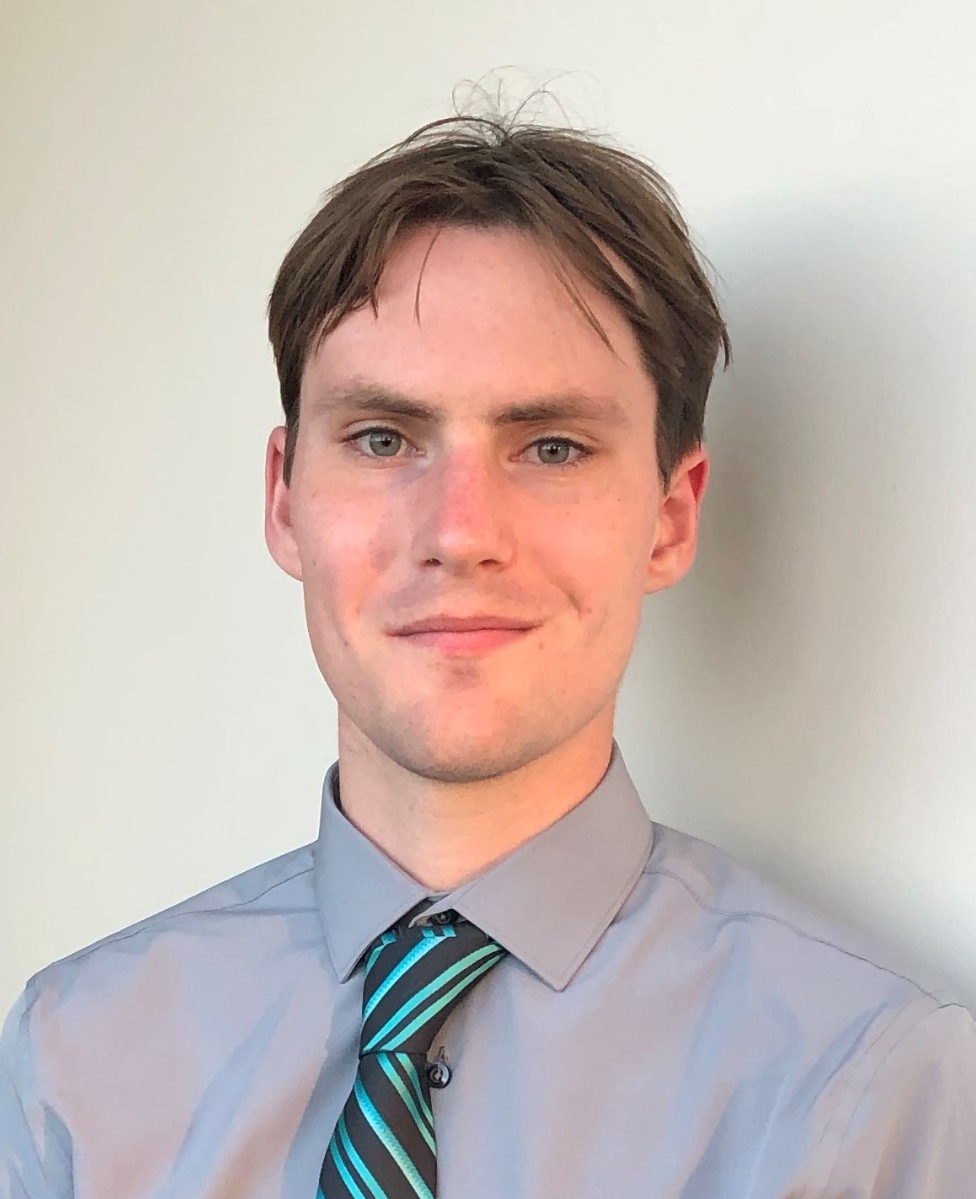
Goldwater scholar Greg Muha. Photo/Provided
The Goldwater Foundation recognized Muha and his research by naming him a 2023 recipient of a prestigious Goldwater scholarship. The Barry Goldwater Scholarship and Excellence in Education Foundation was established by Congress in 1986 to honor the lifetime work of the late U.S. senator for which it’s named. The scholarships this year were granted to 413 sophomores or juniors across the country who intend to pursue careers in the natural sciences, mathematics or engineering.
Muha works in Professor Rashmi Jha’s lab where he is learning about the latest microchip fabrication techniques.
He is in UC’s Accend Program, which allows students to earn bachelor’s and master’s degrees simultaneously. Upon graduation, he wants to pursue his doctorate.
As a UC engineering student, Muha has participated in the cooperative education program required of all students in the college. They divide their year between dedicated classroom work and full-time employment with companies or organizations in their chosen field.
UC’s long-established co-op program is a big reason he enrolled here, he said.
“The co-op program was definitely a benefit,” Muha said. “I wanted to come to a public school. You meet a lot of people from different backgrounds. It’s an awesome campus. Students are active and passionate about what they do here.”

UC students get practical experience working with microchip fabrication equipment in the Mantei Center Cleanroom in UC's College of Engineering and Applied Science. Photo/Corrie Mayer/CEAS Marketing
Muha had co-ops with NASA’s Glenn Research Center in Cleveland and the Air Force Research Lab at Wright-Patterson Air Force Base just outside Dayton, Ohio.
At NASA, Muha worked on software and hardware for a ground station that captures and sends data to satellites in orbit.
“I helped write the interface for the RF hardware which is used for low-Earth orbit satellite communication in a variety of missions,” Muha said.
But these days he is most interested in microchips.
Professor Jha noted that intelligent computing and high-density data storage is a growth industry, estimated to be valued at $193 billion by 2026. These computer systems are ubiquitous in the Internet of Things, autonomous systems, wearable electronics and communications, among many others she said.
I knew I wanted a research career on the engineering side of things. And being able to come to UC and start accomplishing that dream was fulfilling for me.
Greg Muha, UC Goldwater scholar
Muha’s work has been supported by the Protégé program at UC, National Science Foundation awards to Jha’s lab and the Center for Hardware and Embedded Systems Security and Trust along with the NSF’s Industry-University Research Cooperative Research Centers.
“When I joined Dr. Jha’s lab, I was surprised to learn how much you could do as a student — how much autonomy you could have to choose what you wanted to work on,” Muha said.
And in UC Associate Professor Tao Li’s microfabrication class, he got firsthand experience working in the Mantei Center Cleanroom, where students learn the fundamentals of fabricating microchips in tightly controlled spaces designed to prevent contaminants and dust from fouling sensitive electronics.
“Wearing the ‘bunny suit’ is a little surreal. It feels like science fiction,” Muha said.
He was excited about being named a Goldwater scholar.
“I was just really happy and surprised,” he said. “I felt like I was on the right path. I knew I wanted a research career on the engineering side of things. And being able to come to UC and start accomplishing that dream was fulfilling for me.”
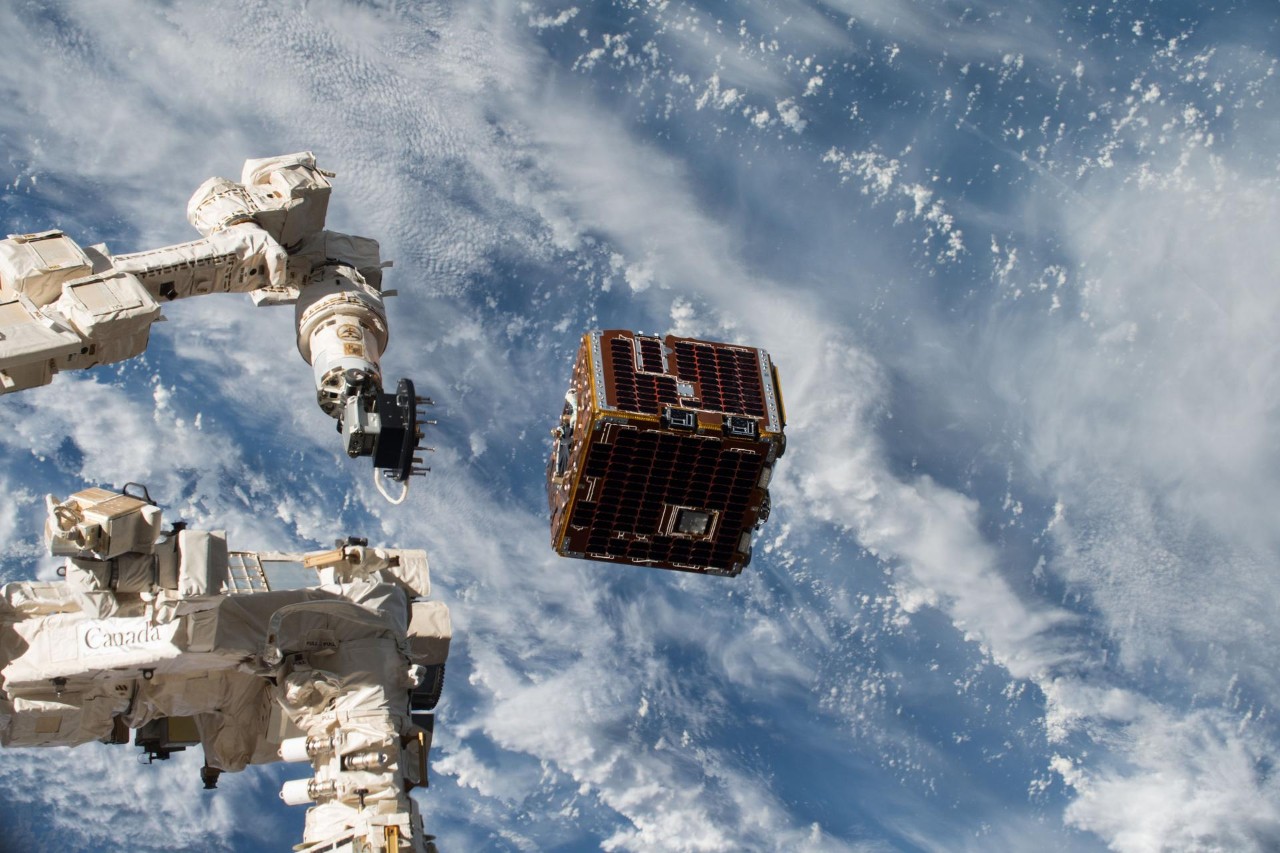
Featured image at top: The International Space Station deploys a satellite in this 2018 file photo. UC College of Engineering and Applied Science student Greg Muha worked on satellite communications during his co-op at NASA. Photo/Drew Feustel/NASA
Become a Bearcat
Whether you’re a first-generation student or from a family of Bearcats, UC is proud to support you at every step along your journey. We want to make sure you succeed — and feel right at home.
Related Stories
UC climbs to No. 3 in the nation for co-ops and internships in 2027 U.S. News rankings
September 22, 2026
In U.S. News & World Report’s 2027 Best Colleges rankings, the University of Cincinnati rises to No. 3 in the nation for co-ops and internships — No. 1 among public institutions — and posts gains in undergraduate business, computer science and psychology.
'Discovery, mentorship, momentum': UC College of Medicine's graduate programs celebrate year of success
September 22, 2026
From new mentorship honors to a growing research pipeline, see how the University of Cincinnati College of Medicine's graduate programs made this a standout year.
Tina Cheng, MD, receives American Academy of Pediatrics’ highest honor
September 22, 2026
UC Pediatrics chair Tina Cheng, MD, has received the American Academy of Pediatrics' highest honor for her decades of advancing child health.