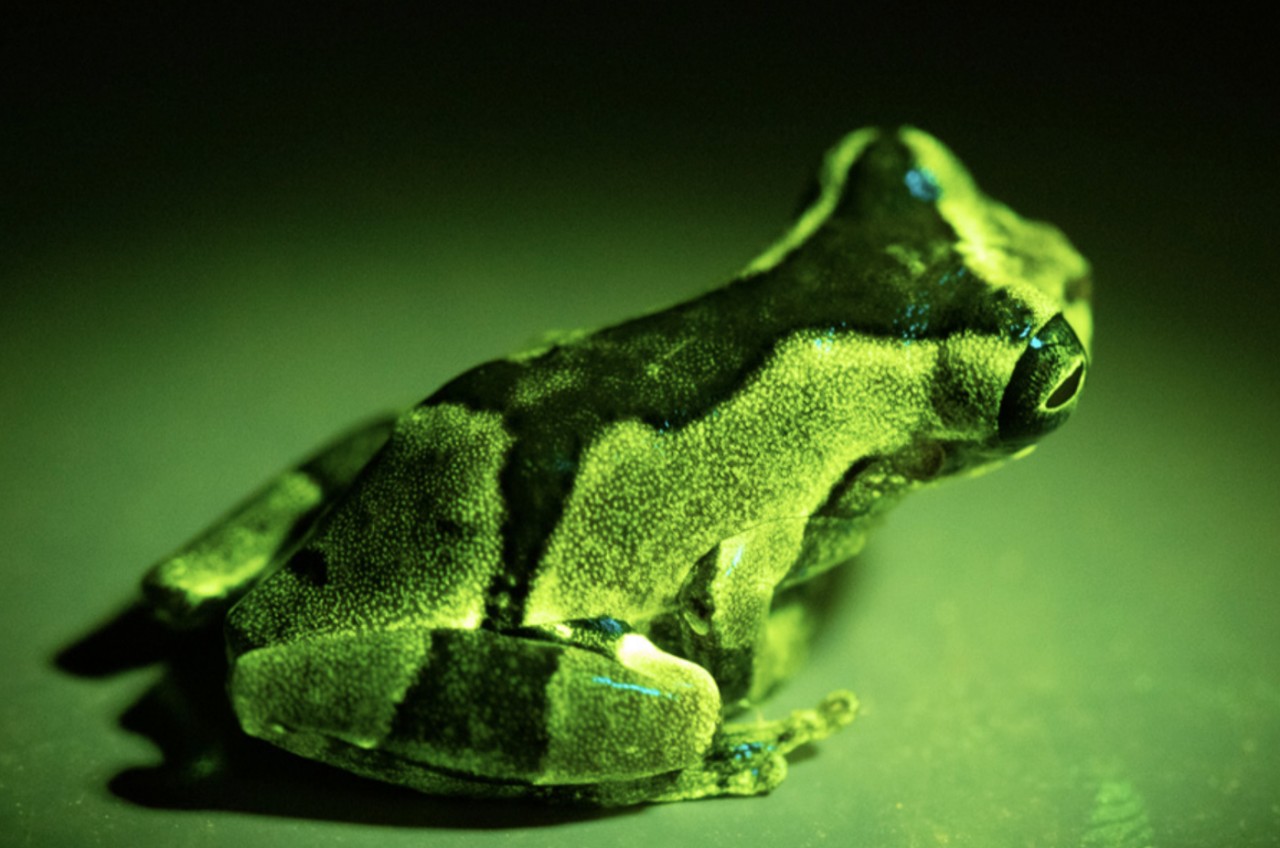
Atlas Obscura: Biologists threw a fluorescent frog rave for science
UC biologist explains why some frogs glow in the dark

Atlas Obscura turned to a University of Cincinnati doctoral student to explain why many frogs glow in the dark under certain light.
Amartya Tashi Mitra is studying the development of vision in UC Professor Elke Buschbeck's lab. Mitra said the evidence suggests biofluorescence is one way frogs communicate in a world in which they are most active at night.

UC doctoral student Amartya Mitra. Photo/Provided
Florida State University researcher Courtney Whitcher shared her discovery that many frogs are biofluorescent with Atlas Obscura. Whitcher has been studying the phenomenon in the rainforests of South America.
Mitra was not part of the study, which was published as a preprint in the journal bioRxiv.
“It also seems that the species that they found to fluoresce seem to be things like tree frogs with really big eyes,” Mitra told Atlas Obscura.
“It’s quite likely that those species are using their vision to perform complex tasks like signaling. They didn’t find this kind of fluorescence in aquatic species, which have much smaller eyes and live in murky waters, so it does seem that this is something that evolved by a sensory drive to serve a very specific purpose.”
Featured image at top: A frog glows under a black light. Photo/Santiago Ron
Related Stories
UC Law professor discusses labor dispute involving the Consumer Financial Protection Bureau
September 4, 2026

Anne Lofaso, a professor at the University of Cincinnati College of Law and former attorney for the National Labor Relations Board, spoke with Bloomberg Law about a union labor dispute involving the Consumer Financial Protection Bureau.
UC creates ‘The Why,’ a new student hub in historic YMCA building
September 4, 2026

The University of Cincinnati is creating a new student-centered hub focused on engagement, community and well-being known as 'The Why.'
Cancer Center expert urges lung cancer screenings as too few at-risk patients get tested
September 4, 2026

The University of Cincinnati Cancer Center's Robert Van Haren, MD, spoke with Local 12 about the need for more awareness and discussions around lung cancer screenings.