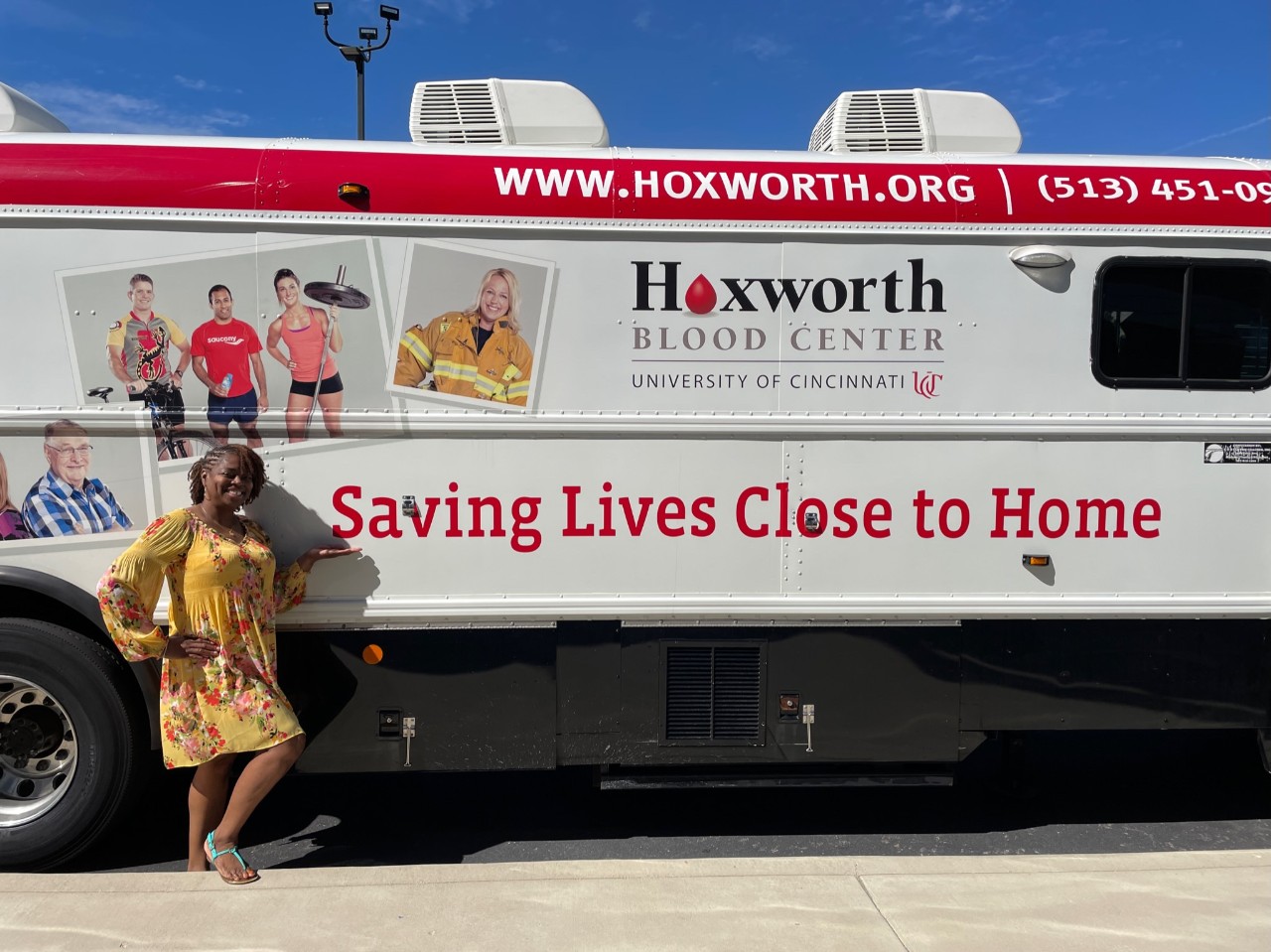
Blood drive hosted by Hoxworth board member to raise awareness for sickle cell and need for diverse blood supply in Cincinnati

Hoxworth Blood Center community advisory board member and sickle cell warrior Carla Howard hosted a blood drive in partnership with Delta Sigma Theta - Cincinnati Alumnae Chapter, at Corinthian Baptist Church in honor of Sickle Cell Awareness Month last September.

Carla's journey with sickle cell disease began at the age of two, when, as her mother puts it, she "cried a cry she had never heard before." After visiting Cincinnati Children's Hospital, Carla was diagnosed with sickle cell disease - a blood disorder that changes normal, round red blood cells into a rigid, crescent moon shape. These abnormal cells can block blood vessels, impede oxygen flow and cause extreme pain.
Standard treatment for many patients with sickle cell disease includes regular blood transfusions, like Carla received back in 2017 after she experienced a sickle cell crisis.
Locally, the blood required for these transfusions comes directly from Hoxworth Blood Center donors and is specially matched to each patient by Hoxworth's 24-hour onsite laboratory staff.
"Patients that require chronic transfusion therapy, like those with sickle cell, will require more specially matched units of blood,” explains Caroline Alquist, MD, PhD, Chief Transplant-Services Officer, Hoxworth Blood Center.
“Because different genetic and ethnic backgrounds have different proteins on the surface of red blood cells, an individual will be better matched to someone with the same genetic or ethnic background, which is why a diverse blood supply is critically needed for patients battling sickle cell.”
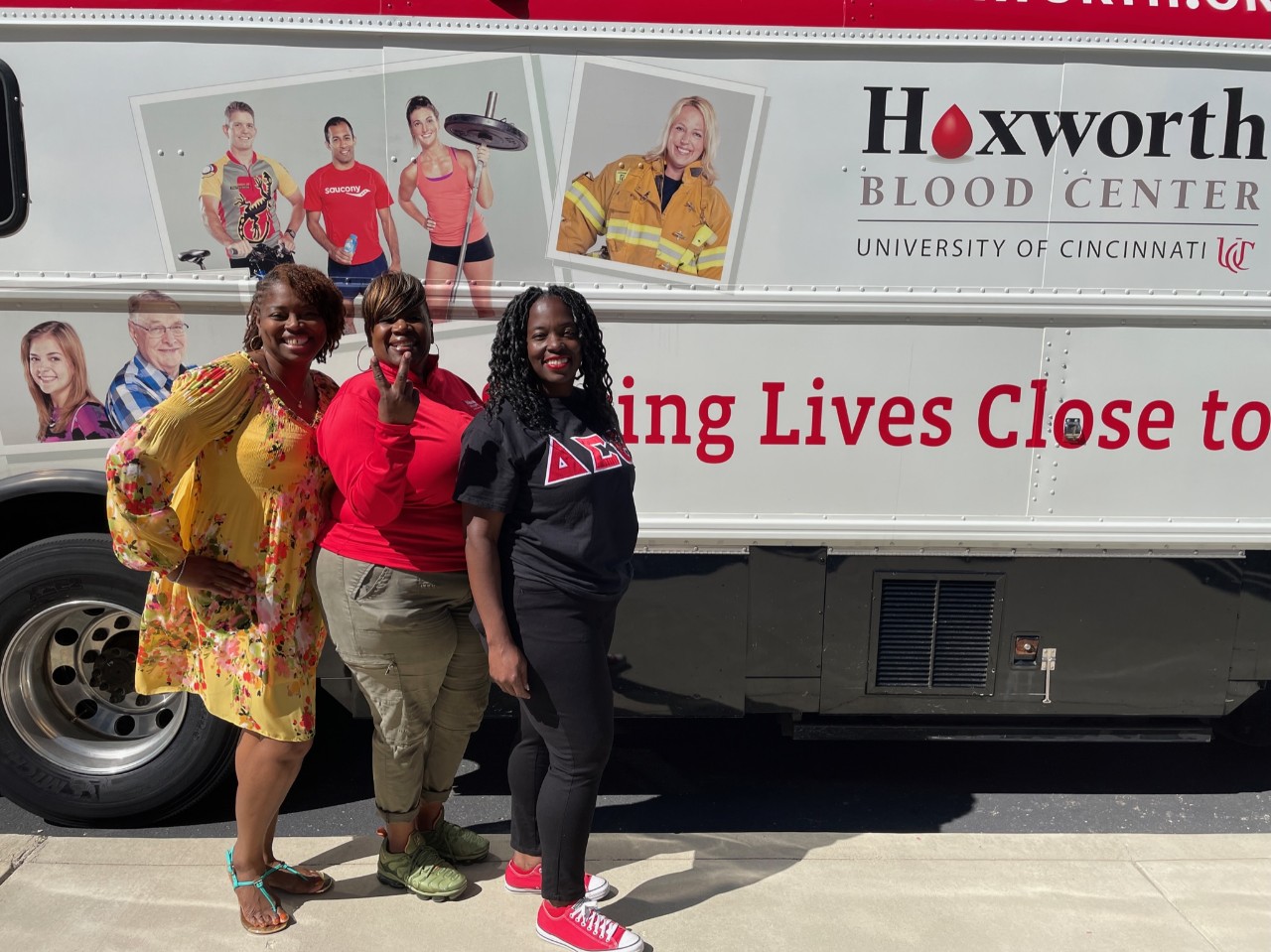
Carla Howards blood drive, in partnership with Delta Sigma Theta - Cincinnati Alumnae Chapter, registered 50 blood donors, including 30 individuals who rolled up a sleeve for the very first time; making a significant impact on the greater Cincinnati blood supply.
Hoxworth officials note that more than 750 units of red blood cells have been used directly for local sickle cell patients over the last couple months alone and the need will continue to grow.
“If we have a blood supply that matches the patients in need, we can do a much better job at matching and providing blood in a quicker and more efficient way,” says Alquist.
Learn more about the need for a diverse blood supply and how you can directly impact your community through blood donation by clicking the button below.
Related Stories
UC hematology researcher to study bone complications in sickle cell disease
September 25, 2026
University of Cincinnati hematology researcher Jahnavi Gollamudi, MD, has received new grant funding to study how inflammation predicts bone complications in people with sickle cell disease, offering new hope for treatment.
More young adults are having strokes than three decades ago
September 23, 2026
A University of Cincinnati-led study published in the journal Neurology found that strokes among adults ages 20 to 54 nearly doubled over almost three decades, even as short-term survival after stroke improved.
UC part of $18 million initiative to expand behavioral health workforce in Ohio
September 23, 2026

The University of Cincinnati is participating in a new $18 million statewide scholarship program, as Cleveland.com recently reported, to address critical shortages of mental health and substance use treatment providers across Ohio.