Local 12: UC stroke study aims to give patients more treatment options

The University of Cincinnati's Pooja Khatri and Eva Mistry spoke with Local 12 about the SISTER trial that will test a new drug to treat patients with strokes who are not eligible to receive traditional treatments due to timing factors or risk of complications.
When patients are rushed to the emergency room after suffering a stroke, not all of them can be given the traditional intravenous stroke drugs known as TPA or TNK. The trial will test a new monoclonal antibody treatment for those patients that is designed to help dissolve blood clots and open arteries more effectively than the current drugs used to treat a stroke or injury to the brain.
“What this novel drug is doing is it’s working in a completely different mechanism. It allows the body’s natural ability to dissolve blood clots,” said Mistry, MBBS, assistant professor in the Department of Neurology and Rehabilitation Medicine in UC’s College of Medicine and a neurologist at the UC Gardner Neuroscience Institute.. “It has been shown that it is safer and more effective than the drugs that we currently use, the TPA and TNK.”
“There’s some reason to think it’s going to cause less inflammation in the brain and help protect the brain. So, we've got a lot of hope tied to this drug,” said Khatri, MD, associate director of the UC Gardner Neuroscience Institute, co-principal investigator of the National Coordinating Center for the NIH StrokeNet and professor and division chief in UC's Department of Neuroogy and Rehabilitation Medicine.
Read or watch the Local 12 story.
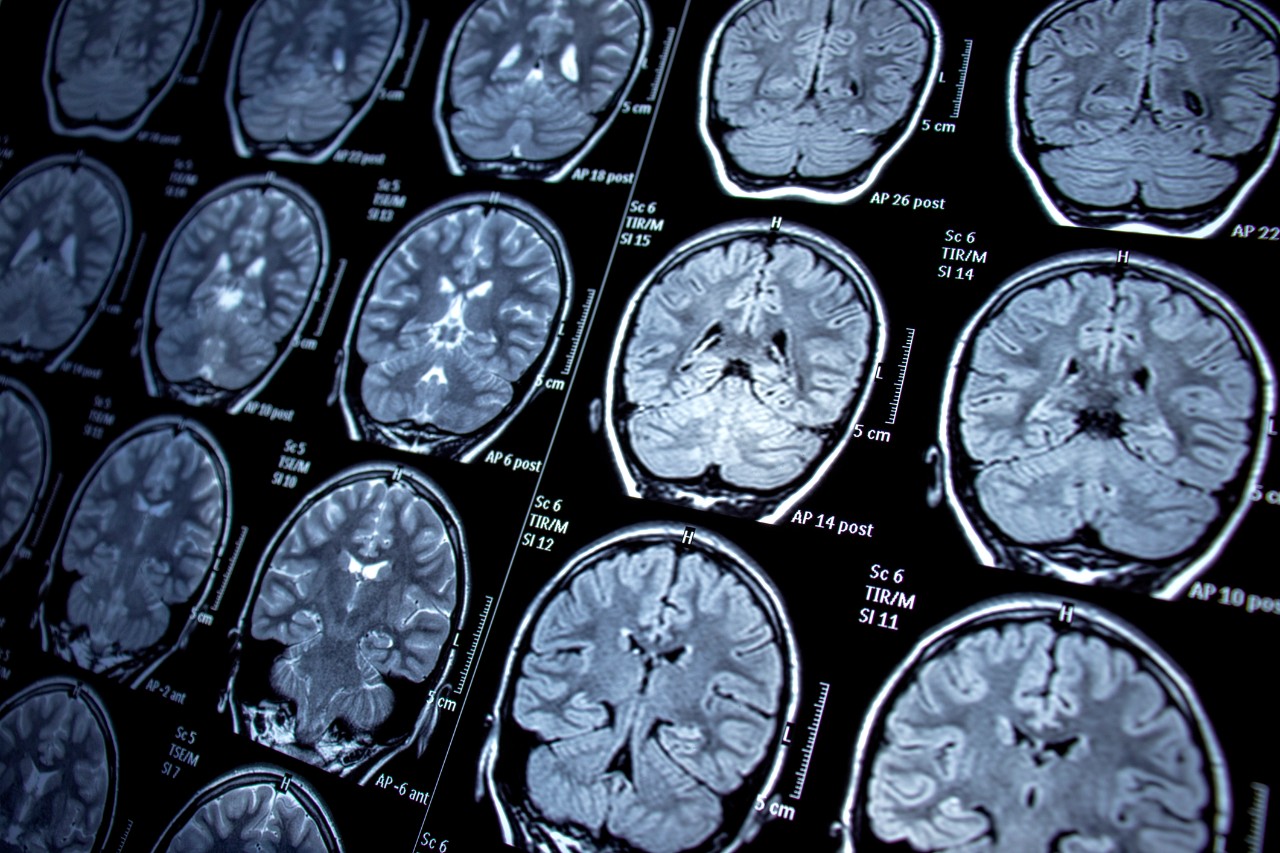
Featured photo at top of brain scans. Photo/Nur Ceren Demir/iStock.
Related Stories
Protecting the brain with chemistry
April 24, 2026
UC chemistry student Carter St. Clair will pursue his interest in computational chemistry through a new fellowship at the Air Force Research Laboratory. His topic: new applications in AI in human health.
A family tradition continues at UC College of Nursing
April 24, 2026
When Ashley Enginger walks across the stage at this spring’s commencement ceremony, she will leave behind a UC College of Nursing that her family is far from finished with. Her sister Sarah is already two years in, and their youngest sister Lauren is set to arrive in the fall.
UC works with local paramedics to advance sudden cardiac arrest research
April 24, 2026
A University of Cincinnati study demonstrates the feasibility of emergency medicine researchers partnering with community emergency medical services nationwide to investigate the causes of sudden cardiac arrest.