NY Post: Does body lotion attract spiders?
UC biologist weighs in on latest social media panic

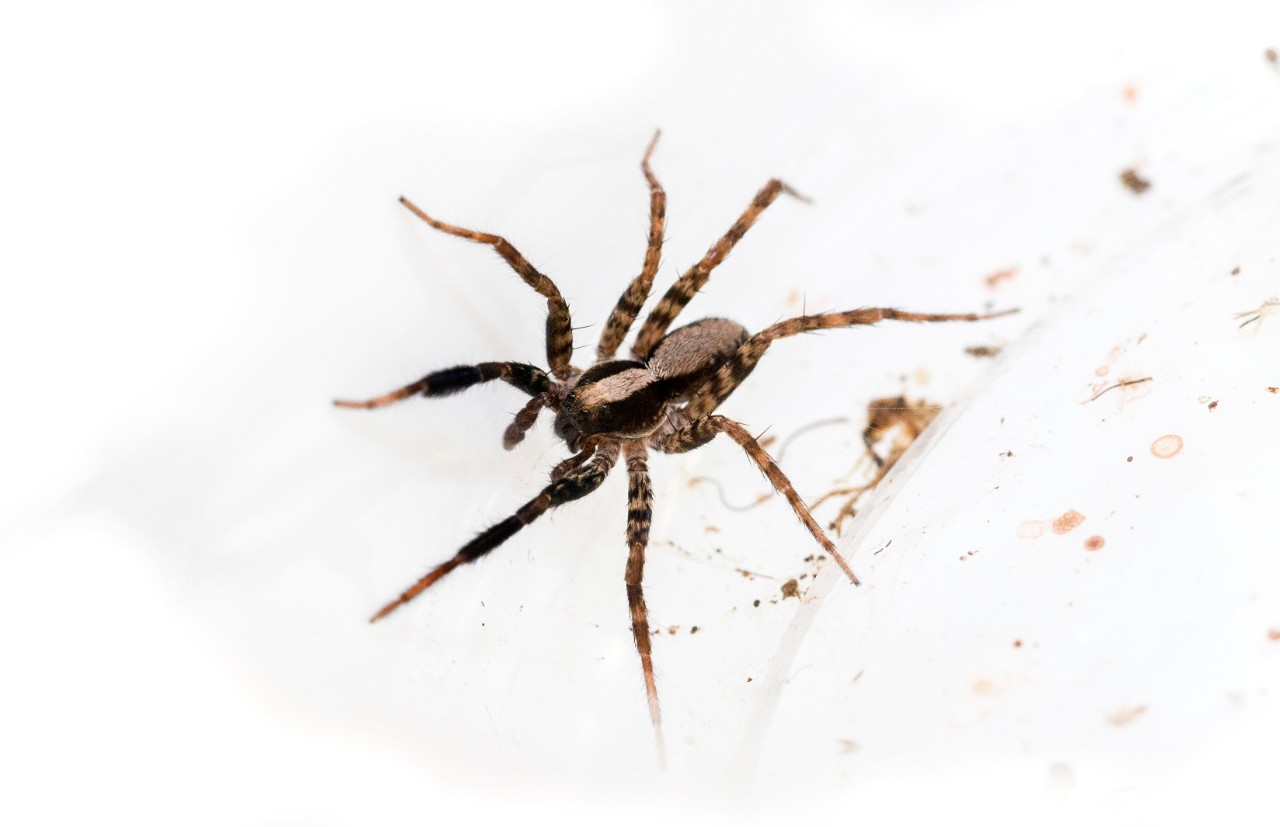
The New York Post turned to a University of Cincinnati biologist to help debunk the latest social media panic over a Reddit review suggesting that wolf spiders were attracted to a popular brand of body lotion.
UC College of Arts and Sciences Professor George Uetz and his students study wolf spiders in his biology lab. And while his research has revealed some startling behaviors — particularly in the ways they communicate visually and through vibrations — he has never documented wolf spiders running to the smell of body butter.

UC biologist George Uetz. Photo/Lisa Ventre/UC
The Post was following up on a one-star brand review posted to Reddit that suggested the lotion attracted spiders — and not just any spiders but wolf spiders, which have a fearsome name but are actually so harmless that UC biology students routinely catch them by hand.
By Tuesday, the post on Reddit generated nearly 800 comments and reviewers on the brand page were promising new product reviews free of spider talk.
The brouhaha even made the storied pages of The New York Times.
The new urban legend gained traction when other posters suggested the body cream contained spider sex pheromones or chemicals used to signal receptivity.
But Uetz, who has published more than 200 studies primarily on spiders, told the New York Post that pheromones are highly species-specific.
“The internet is a great source of information, but it’s not always accurate, and someone putting a dab of body butter on a tissue and reporting in Reddit that it attracts spiders doesn’t count as research,” Uetz said.
Featured image at top: UC students study wolf spiders in a biology lab. Photo/Joseph Fuqua II/UC

A UC student holds a harmless wolf spider in a biology lab. Photo/Joseph Fuqua II/UC
Related Stories
Is Cincinnati building new homes fast enough?
September 22, 2026

Gary Painter, professor and academic director of the Real Estate Center at UC's Lindner College of Business, offers comments on affordability issues in Cincinnati.
UC climbs to No. 3 in the nation for co-ops and internships in 2027 U.S. News rankings
September 22, 2026
In U.S. News & World Report’s 2027 Best Colleges rankings, the University of Cincinnati rises to No. 3 in the nation for co-ops and internships — No. 1 among public institutions — and posts gains in undergraduate business, computer science and psychology.
UC expert explains geology of Mammoth Cave
September 21, 2026

UC Associate Professor Dylan Ward and UC geosciences graduate Rachel Bosch joins an episode of OutSCIder Classroom to talk about weathering in caves found in places such as Mammoth Cave National Park.