
Knowridge: Scientists turn greenhouse gas into plastics
UC engineering professor is developing new ways of making in-demand chemical

Knowridge Science Report highlighted a University of Cincinnati engineer's innovative methods to convert carbon dioxide into ethylene, a chemical compound that is used in diverse manufacturing processes around the world.
Associate Professor Jingjie Wu in UC's College of Engineering and Applied Science and his research partners developed an efficient method for converting carbon dioxide to ethylene, a key ingredient in plastics and many other uses.
Ethylene has been called “the world’s most important chemical,” used in everything from textiles to antifreeze to vinyl. The chemical industry generated 225 million metric tons of ethylene in 2022.
Wu said the process holds promise for one day producing ethylene through green energy instead of fossil fuels. It has the added benefit of removing carbon from the atmosphere.
His research team's findings were published in the journal Nature Chemical Engineering.
UC chemical engineering in the news
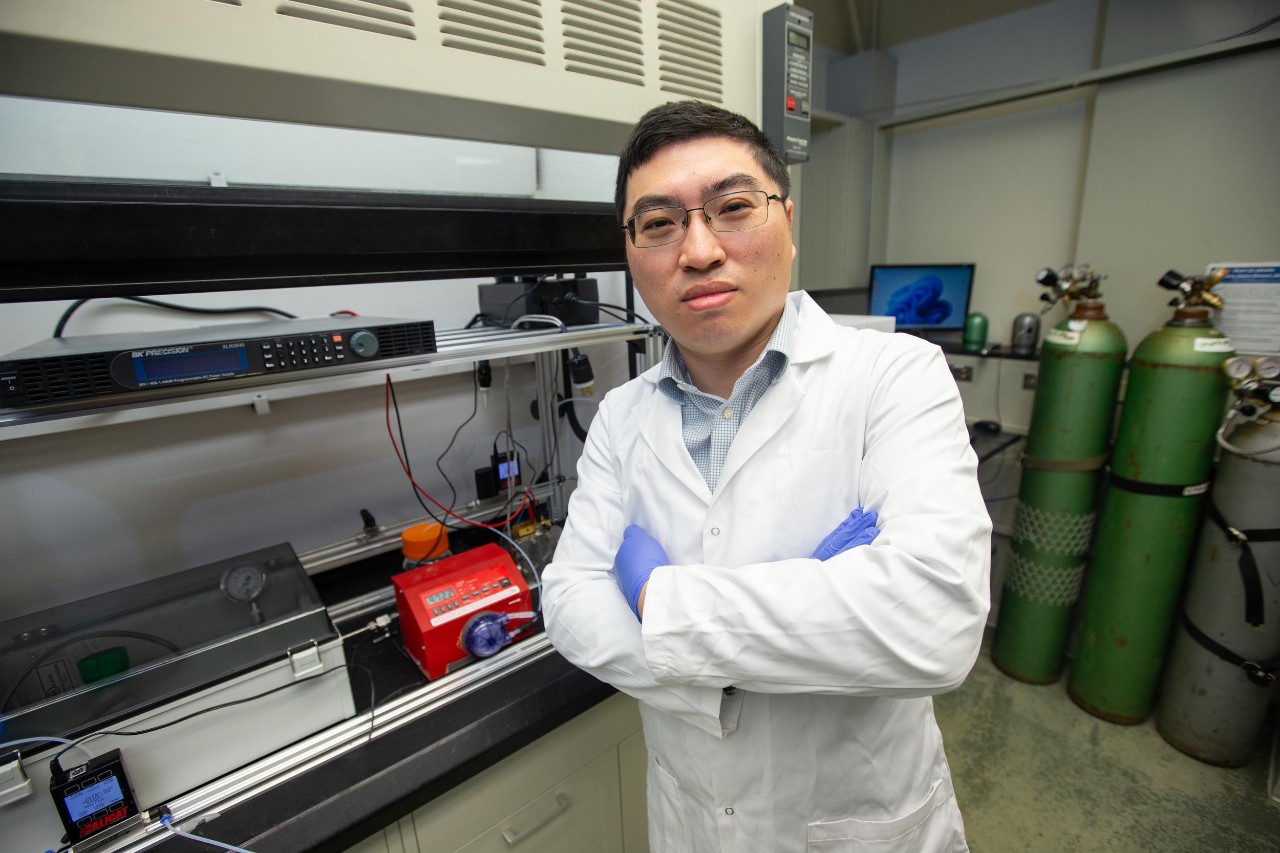
In his chemical engineering lab, Associate Professor Jingjie Wu is refining a process that converts carbon dioxide into ethylene. Photo/Andrew Higley/UC Marketing + Brand
- Technology Networks: Conversion turns greenhouse gas into ethylene
- Chemical Processing: UC researchers ID path to more efficient ethylene production
- AZO Cleantech: A system that is more effective in handling climate change
Related Stories
Simple ways to find a deeper sense of happiness and well being
October 8, 2026

UC assistant professor Suzie White, featured in an AARP story on practical ways to live a happier, healthier life, shared research-backed strategies for increasing well-being through gratitude and service to others. White teaches Happiness in Action, a course that helps students apply the science of happiness in everyday life.
New vending machine helps people with addiction
October 8, 2026

The University of Cincinnati's Daniel Arendt was featured in a Spectrum News report on a new harm reduction vending machine installed at the IPM Food Pantry in partnership with the Hamilton County Mental Health and Recovery Services Board.
UC study correlates increased physical activity with slower Parkinson’s progression
October 7, 2026
Higher levels of physical activity were associated with slower declines in thinking and memory as well as slower worsening of movement symptoms for people with Parkinson’s disease, according to a new study led by University of Cincinnati researchers published Oct. 7, 2026, in Neurology.