EveryDay Health: Ways to manage symptoms linked to multiple myeloma

The University of Cincinnati's Ed Faber spoke with EveryDay Health about ways to manage symptoms of multiple myeloma including numbness, pain or tingling in your arms and legs.
These symptoms, known as peripheral neuropathy (PN), affect the nerves that send and receive signals between your brain, spinal cord and the rest of the body. The cancer itself, or the medications used to treat myeloma, can change the way those nerves work.
“The precise mechanisms of how the nerves are damaged is not well understood,” Faber, a University of Cincinnati Cancer Center member and associate professor in UC's Collece of Medicine, told EveryDay Health. “So it’s difficult to create a well-proven treatment strategy that works for [everyone].”
Lowering the dose, changing the timing or stopping the use of certain medications is one strategy to manage NP symptoms, he said.
“When we didn’t have as many therapy choices for myeloma, we were forced to tolerate side effects like neuropathy,” Faber said. “We are now in the ‘age of choices’ for multiple myeloma patients. There are many more medications and combinations of medications today.”
Other strategies include taking certain supplements, wearing orthotics, participating in low-impact exercise and acupuncture.
Read the EveryDay Health article.
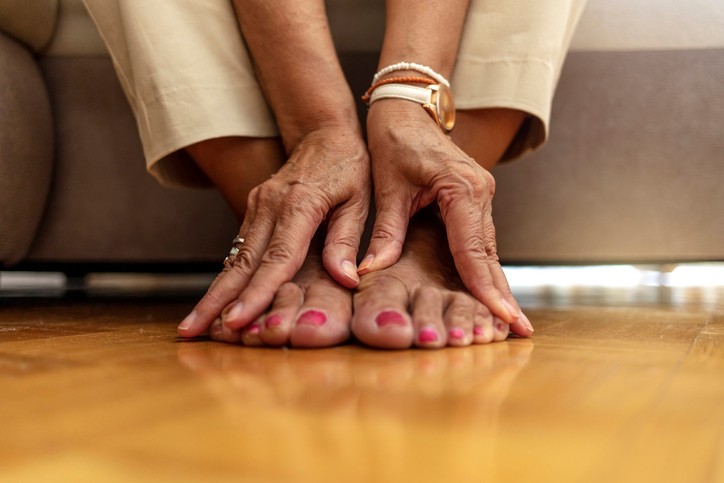
Featured photo at top of a woman massaging her feet. Photo/Jelena Stanojkovic/iStock.
Related Stories
Is Cincinnati building new homes fast enough?
September 22, 2026

Gary Painter, professor and academic director of the Real Estate Center at UC's Lindner College of Business, offers comments on affordability issues in Cincinnati.
'Discovery, mentorship, momentum': UC College of Medicine's graduate programs celebrate year of success
September 22, 2026
From new mentorship honors to a growing research pipeline, see how the University of Cincinnati College of Medicine's graduate programs made this a standout year.
Tina Cheng, MD, receives American Academy of Pediatrics’ highest honor
September 22, 2026
UC Pediatrics chair Tina Cheng, MD, has received the American Academy of Pediatrics' highest honor for her decades of advancing child health.