Greek Reporter: See the glittering gold of Mycenaean Greece
UC Classics discoveries shed light on ancient Greece

The Greek Reporter highlighted gold artifacts discovered by researchers at the University of Cincinnati in Pylos, Greece.
The Bronze Age gold documented the culture, religion and economy of the Mycenaean civilization, characterized by palatial states, advanced urban organization and a written language called Linear B.
UC Classics Professor Jack Davis and Senior Research Associate Sharon Stocker in 2015 discovered the tomb of an ancient Greek leader dubbed the "Griffin Warrior" for the mythological griffin adorning an ivory plaque found in his grave.
The discovery was hailed as one of the most spectacular Greek finds in two generations. The tomb included armor, weapons and jewelry, including an exquisite agate sealstone depicting mortal combat in such fine detail that Archaeology magazine declared it “a Bronze Age masterpiece.”
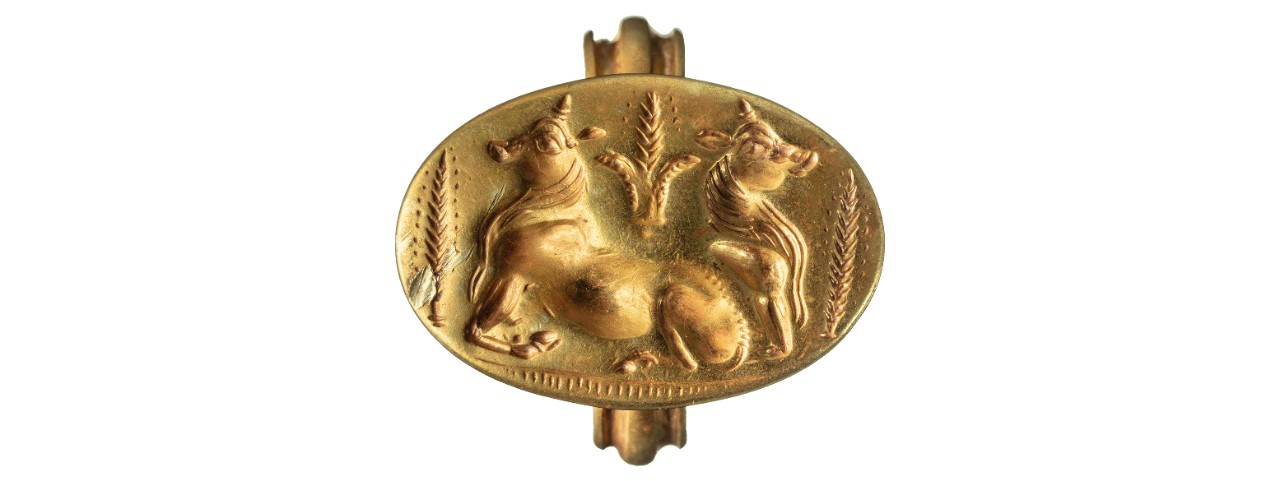
The tomb contained more than 2,000 objects crafted by artisans: gold rings emblazoned with leaping bulls, an epic battle depicted on a tiny sealstone and a delicate gold necklace bearing polished agate and beads.

UC Classics Professor Jack Davis, left, and Senior Research Associate Sharon Stocker pose in front of the Colosseum. Their discoveries are helping to shed light on ancient Mycenaean civilization. Photo/Provided
In 2017, Davis and Stocker found gold-covered princely tombs at Pylos that likewise contained gold jewelry and artifacts that are helping historians understand ancient Greece.
“Like with the Griffin Warrior grave, by the end of the first week we knew we had something that was really important,” said Stocker, who supervised the excavation.
A particularly interesting find was a gold pendant bearing the image of the Egyptian goddess Hathor who presided over motherhood and the protection of the dead, the Greek Reporter wrote.
“You have this explosion of wealth. People are vying for power,” Stocker said. “It’s the formative years that will give rise to the Classic Age of Greece.”
Read the Greek Reporter story.
Featured image at top: A gold ring found in the family tombs at Pylos depicts bulls and barley. Archaeologists believe it's the first known depiction of domestic animals and agriculture in a single artwork from ancient Greece. Photo/Jeff Vanderpool/UC Classics
Related Stories
University of Cincinnati and Hamilton County work to lower overdose deaths
September 17, 2026

University of Cincinnati researchers and Hamilton County officials are using overdose data to identify Cincinnati hot spots and place free NaloxBoxes and fentanyl test strip dispensers where they are needed most to help prevent opioid overdose deaths.
You're probably not getting that $5,000 presidential check
September 17, 2026

Michael Jones, associate professor of economics at the University of Cincinnati's Lindner College of Business, spoke with Marketplace on why President Trump's $5,000 check proposal probably won't happen from a numbers perspective.
Scholarships make first-gen student’s UC journey possible
September 17, 2026
Fall Campaign story 2026 - College of Arts and Sciences.