New York Times, Boston Globe: New technique reshaping organ transplantation

The University of Cincinnati's Shimul Shah, MD, was featured in the New York Times and Boston Globe discussing how a new technique of keeping donation organs alive outside the body is revolutionizing organ transplantation.
In a process called perfusion, a device pumps blood or oxygenated fluid through tubes into the blood vessels of donated organs, allowing them to continue to function. This allows doctors to better assess if the organ will thrive in a recipient's body.
Perfusion is changing all areas of the transplant process, including how surgeons operate, who is eligible to be an organ donor and long-term outcomes for donor recipients. Specifically, patients whose families have withdrawn life support and whose hearts eventually stop are now donor candidates, when previously they would not be eligible due to their organs being deprived of oxygen for prolonged periods of time.
Due to this new technique and larger potential donor base, Shah said UC's organ transplant program has wiped out its entire waiting list for livers.
“I never thought, in my career, I would ever say that,” said Shah, the James and Catherine Orr Endowed Chair of Liver Transplantation and professor in the Department of Surgery in the UC College of Medicine.
Read the article in the New York Times or read in the Boston Globe.
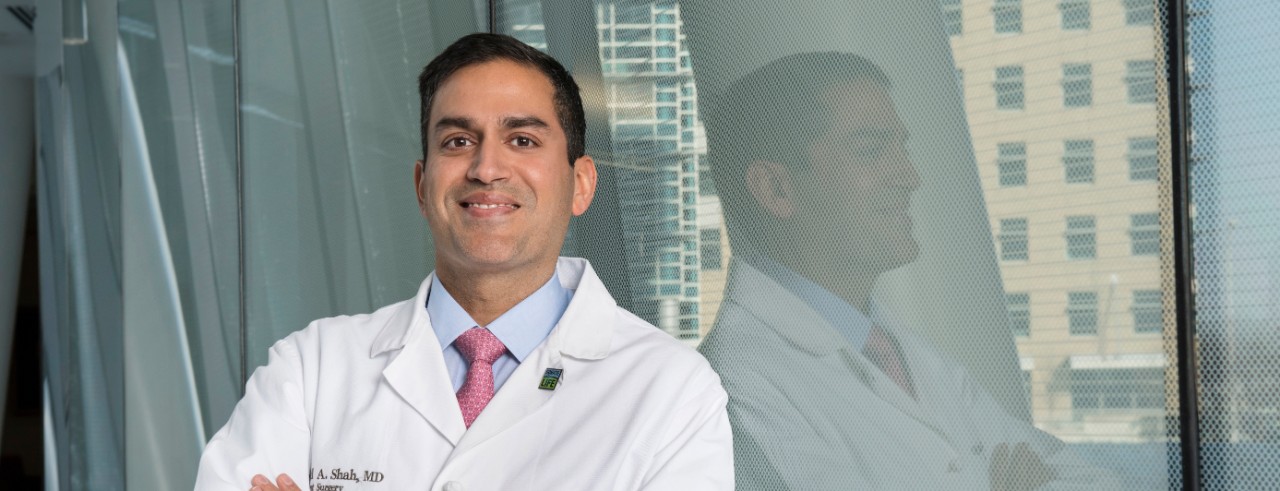
Featured photo at top of Shimul Shah. Photo/University of Cincinnati.
Related Stories
These teeny spiders are social media stars
August 28, 2026

The New York Times turned to a University of Cincinnati professor to explain the appeal of jumping spiders on social media.
An internal divide among unions on AI impacts the Wisconsin gubernatorial race
August 28, 2026

Anne Lofaso, a professor in the Donald P. Klekamp College of Law at UC, spoke with Wisconsin Public Radio, about the schism among unions over AI and whether it is a plus, a negative, or somewhere in between when looking at job creation.
On-site training in Speech & Hearing Clinic sets UC’s programs apart
August 27, 2026
At the University of Cincinnati’s Speech & Hearing Clinic, Doctor of Audiology and Speech-Language Pathology graduate students gain real-world experience while providing free speech and hearing services to the community.