Is ketamine the answer to treatment-resistant depression?
UC expert joins WVXU's Cincinnati Edition roundtable discussion

While once considered a counterculture drug, ketamine is now giving hope for patients with treatment-resistant depression.
The University of Cincinnati's Stephen Rush, MD, treats patients with intranasal ketamine and esketamine in the Treatment Resistant Depression Clinic and joined WVXU's Cincinnati Edition to discuss the drugs' benefits and the importance of administering the drug in a safe and controlled setting.
Rush explained ketamine was initially developed as an anesthetic, and its "mirror image" molecule esketamine has been approved by the FDA for treatment-resistant depression.
"Ketamine or esketamine impact an entirely different molecule in the brain (than traditional antidepressants)," said Rush, associate professor of clinical psychiatry in UC's College of Medicine and medical director of ambulatory services. "Ketamine increases the neuroplasticity of the brain. That is, it increases the ability of our nervous system to change its activity by reorganizing its structure, functions and connections with other parts of the brain, going from a function causing depression to a function in which depression is no longer present."
Rush said administering intranasal ketamine and esketamine in the clinic is structured with safety in mind, as vital signs like heart rate and blood pressure are monitored, side effects are reported and patients stay for 2-4 hours after treatment to confirm their vital signs are in normal range and they are safe to be discharged.
"My personal opinion is that the data on safety around home-use ketamine is not there yet, and I would generally advise against it," Rush said. "Certainly someone who is participating in treatment in our clinics cannot also be getting home treatment through another service."
Since the use of ketamine or esketamine is focused on people who have failed traditional treatments, Rush said it is exciting to see patients entering remission from depression through this treatment. Meta-analyses of studies have found likelihood of remission with esketamine treatment is about 30-45%, while likelihood of having at least a 50% reduction in symptoms is about 40-55%.
"I often hear about patients telling me about how life has changed, whether that means going back to work and coming off of disability, or going back to school, engaging in relationships in ways they haven’t for years and generally functioning," Rush said. "Not only are we talking about the improvement in mood, we’re talking about the increase in functioning and the person’s ability to contribute to society and be productive, which is a huge factor in determining someone's sense of wellness."
Listen to the Cincinnati Edition segment.
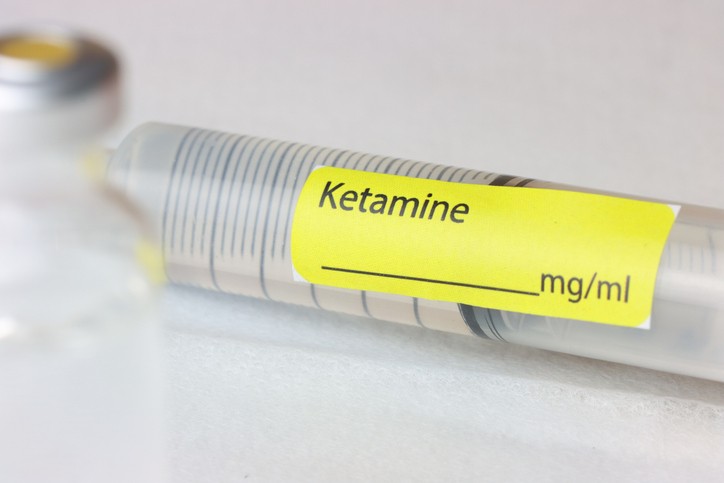
Featured photo at top of ketamine vial. Photo/Jennifer Fontan/iStock.
Related Stories
Ancient warming event hints at potential climate tipping point
August 12, 2026

Researchers say a spike in temperatures during an ice age 304 million years ago could inform what climate scientists are learning about rapidly changing conditions today.
What is a trademark?
August 11, 2026

Sean Owens, an adjunct professor in the Donald P. Klekamp College of Law, discussed trademark law with the Dayton Daily News. Owens is also a partner at intellectual property law firm Wood Herron & Evans in Cincinnati.
UC radiation oncologist speaks with Local 12 news about clinical trial for head and neck cancer treatment
August 10, 2026

Dr. Sara Medek, a UC radiation oncology professor, speaks with Local 12 news about a new clinical trial aimed at reducing radiation in certain areas while still treating cancer effectively but with fewer painful side effects.