Teens adopted an oil well. Their goal: shut it down.
New York Times turns to environmental science professor to explain impact of orphaned wells

The New York Times turned to a University of Cincinnati environmental science professor for her insights into an abandoned and leaking oil well that teenagers in Ohio helped to cap.
UC College of Arts and Sciences Professor Amy Townsend-Small has been studying the problem of leaking oil and gas wells across the United States.
She led a study published last year in the journal PLOS Climate that found a simple way to address methane leaks would be to shut off marginal wells that are no longer profitable.

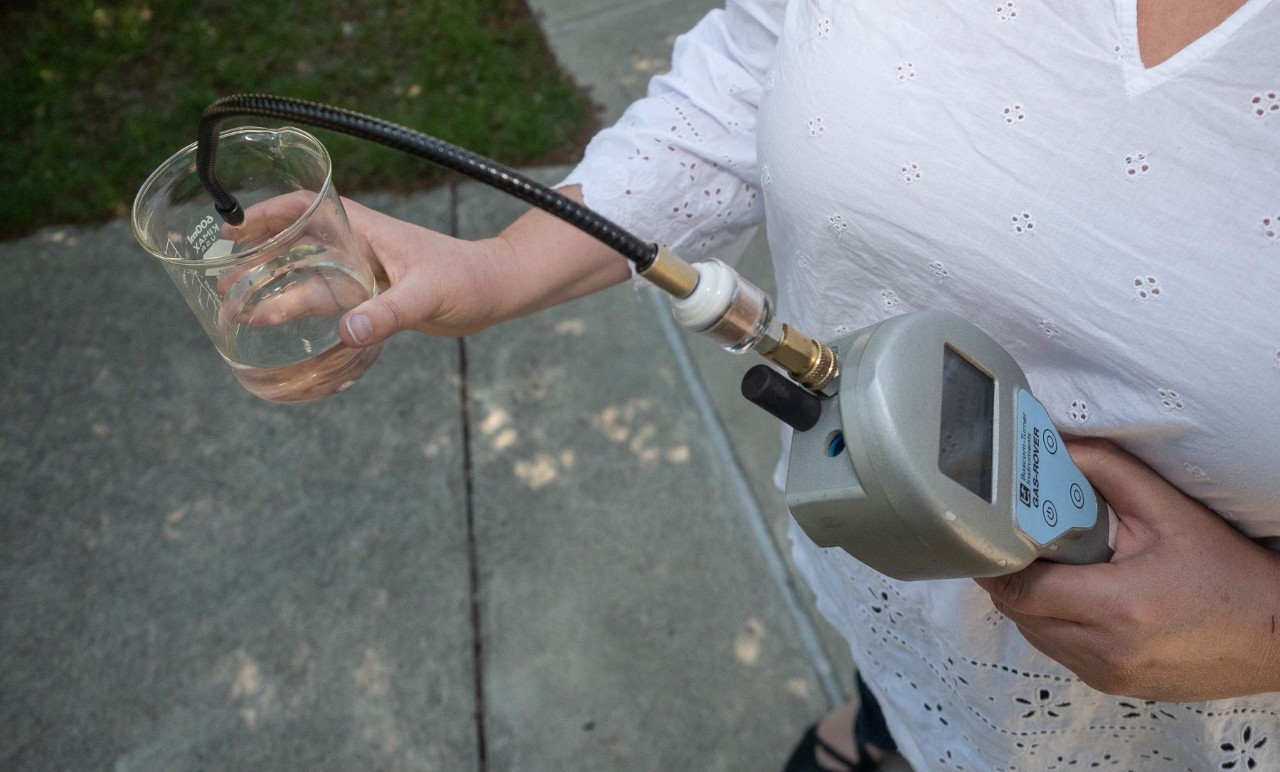
UC Professor Amy Townsend-Small studies the oil and gas industry. Photo/Jay Yocis/UC
The Times profiled teenagers in Ohio who worked with a nonprofit called the Well Done Foundation to cap an abandoned oil well outside Cuyahoga Valley National Park outside Cleveland.
The well had been drilled by a company called Pine Top. And it was leaking methane — lots of it, according to the high school students, Mateo De La Rocha, Sebastian Ng and Lila Gisondi.
When companies are finished extracting oil or gas, they are required to cap the well to prevent it from spilling toxic chemicals into the air or water. But many operators simply walk away.
Ohio created an Orphan Well Program in 1977 to plug abandoned oil and gas wells. But today the state still more than 20,000 orphaned or abandoned oil and gas wells, many of which are spewing methane and other greenhouse gases into the atmosphere. This is a known contributor to climate change.
The state capped 144 wells in 2021.
The Times cited Townsend-Small's 2016 study concluding that inventories of methane for the oil and gas industry by the Environmental Protection Agency are underestimated by a significant 2 to 4% because of leaky abandoned or orphaned oil and gas wells. The study found that some wells leaked as much as 150 grams of methane per hour although the average was about 10 grams per hour.
But at the Cuyahoga Valley well, the nonprofit group Well Done Foundation found the well was leaking as much as 10,000 grams of methane per hour.
Townsend-Small also spoke to WOSU public media about new EPA regulations designed to curb methane emissions from abandoned oil and gas wells. A major driver of global warming, methane traps far more heat than carbon dioxide, the most common greenhouse gas.
“An increase in methane emissions leads to a rapid increase in temperature,” Townsend-Small told WOSU. “And climate change impacts are costing the government more and more every year.”
Read the New York Times story.
Featured image at top: UC Professor Amy Townsend-Small studies environmental challenges in the oil and gas industry. Photo/Jay Yocis/UC
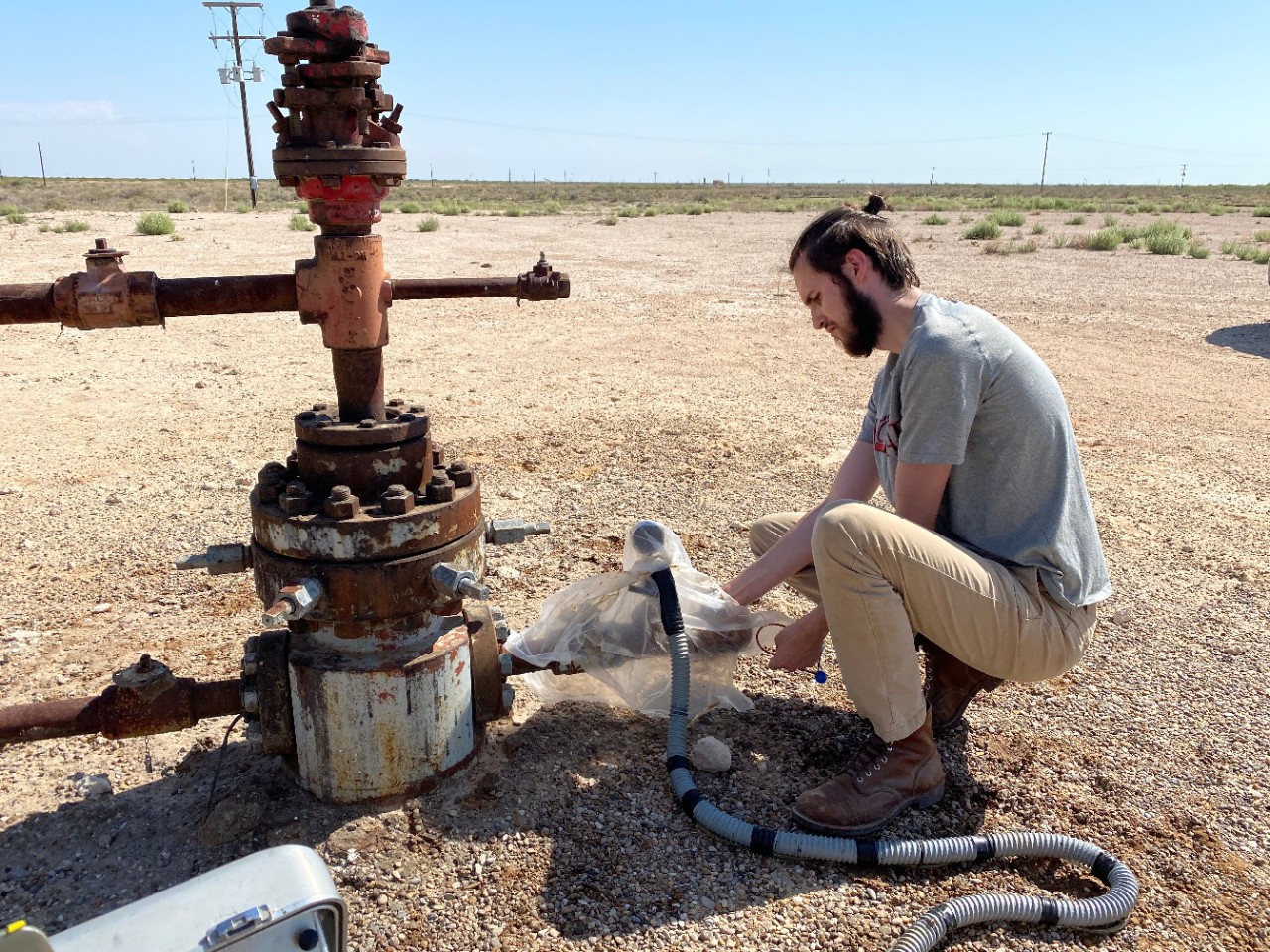
UC graduate Jacob Hoschouer takes samples at the site of an oil well in Texas in this file photo. Photo/Provided
Related Stories
These teeny spiders are social media stars
August 28, 2026

The New York Times turned to a University of Cincinnati professor to explain the appeal of jumping spiders on social media.
An internal divide among unions on AI impacts the Wisconsin gubernatorial race
August 28, 2026

Anne Lofaso, a professor in the Donald P. Klekamp College of Law at UC, spoke with Wisconsin Public Radio, about the schism among unions over AI and whether it is a plus, a negative, or somewhere in between when looking at job creation.
UC, NKU renew longstanding partnership supporting Army ROTC cadets
August 26, 2026
The University of Cincinnati Army ROTC and Northern Kentucky University (NKU) have renewed a longstanding partnership that supports students preparing to become Army officers and leaders in their communities. The universities formalized the renewed agreement during a signing event Aug. 11 at NKU.