Hoxworth Blood Center announces new interim leadership

Caroline Alquist, MD, PhD, and David Oh, MD, are the new interim co-directors of Hoxworth Blood Center, University of Cincinnati, effective Monday, June 3.
Alquist and Oh, who both hold appointments as associate professor at UC's College of Medicine, have extensive experience in the field of blood bank administration and together will lead Hoxworth as they collaborate on all blood center management and strategic efforts.
Alquist, chief transplant and cellular therapies officer, will ensure seamless continuity of Hoxworth’s clinical patient care. She is a leader in apheresis, transplant immunology and biotherapies with significant skill in clinical pathology, transfusion medicine, histocompatibility, laboratory medicine leadership and blood management.
Since joining Hoxworth in 2020, Alquist's clinical focus has been in supporting all regional solid organ and bone marrow transplants, which she will continue while serving as co-director. She has served as interim division director, cellular therapies, since last year, but will relinquish those responsibilities as soon as an ongoing search is completed to permanently fill that position.
Oh, chief medical officer, possesses a wealth of experience in operational process optimization and innovative initiatives. He has provided leadership to blood centers with the American Red Cross, San Diego Blood Bank and Stanford University Blood Center.
Oh joined UC's faculty in 2017 and will continue to focus his attention on blood supply, including blood donor recruitment, collection, processing, labeling, testing, storage and distribution. He also will continue as the UC Medical Center Transfusion Medicine/Blood Bank Medical Director and as the director of the Hoxworth Transfusion Medicine/Blood Banking Fellowship Program while leading all medical student, resident and fellow transfusion medicine education.
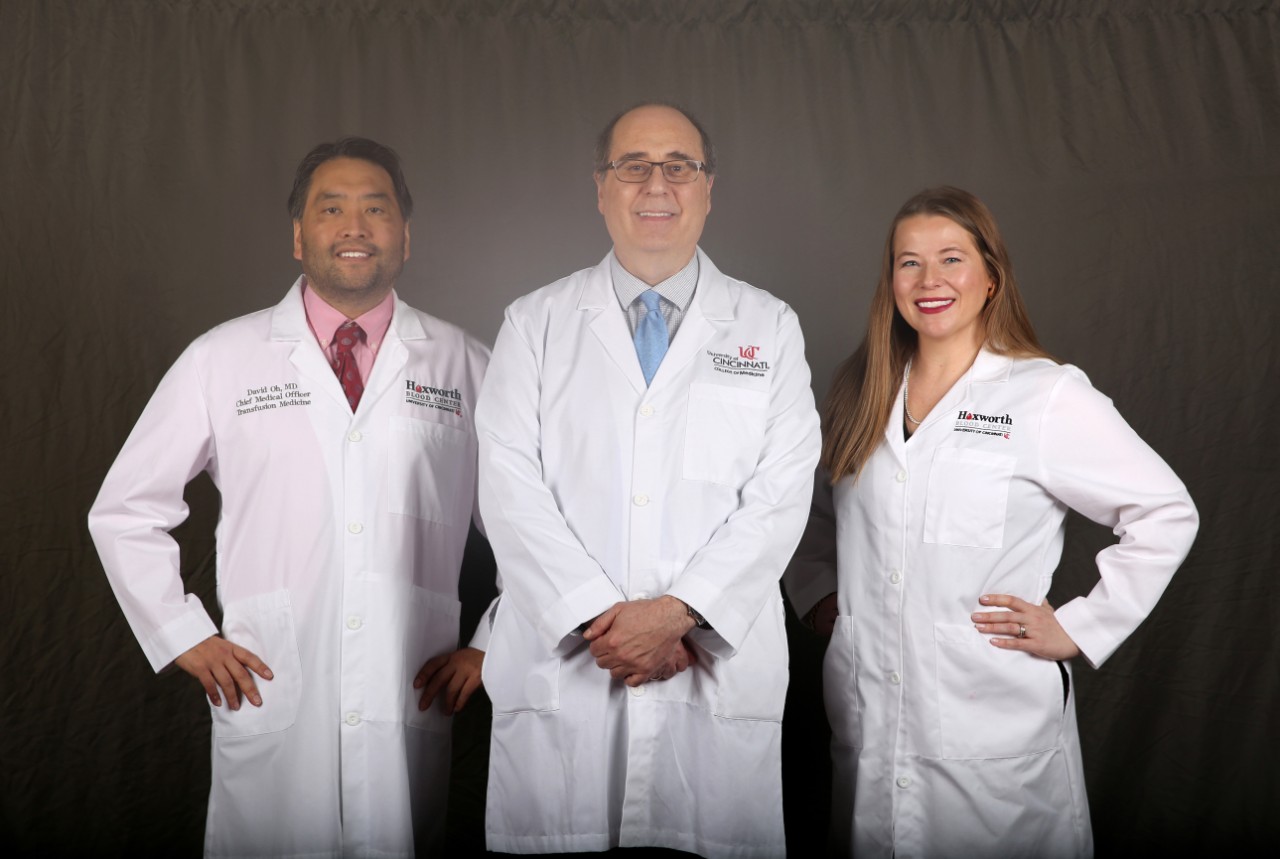
Pictured left to right: David Oh, José Cancelas and Caroline Alquist. Photo/University of Cincinnati.
Hoxworth is confident that Alquist and Oh will form a strong, coordinated team to continue their mission to enhance patient wellbeing, support more than 30 hospitals in the Greater Cincinnati region and maintain the center’s 85-year-record of the highest standards of quality, safety and innovation.
Alquist and Oh will lead Hoxworth following the June 2 departure of José Cancelas, MD, PhD, who has served as director and chief executive officer since Feb. 1, 2018.
Reflecting on his tenure, Cancelas expressed gratitude for the support of the community, staff and donor.
"My time at Hoxworth has been a privilege, and I am immensely proud of what we have achieved together," he said.
Cancelas is joining Dana-Farber Cancer Institute in Boston, where he will be the executive director of the Connell-O’Reilly Cell Manipulation Core Facility and hold an endowed professorship at Harvard Medical School. Under his leadership, Hoxworth became the only academic unit formed by a blood center in the United States, significantly expanded clinical activities and conducted groundbreaking bench and clinical research.
Hoxworth extends congratulations to Alquist and Oh on their expanded leadership responsibilities and a sincere thank you to Cancelas for his 23 years of extraordinary service to Hoxworth, the College of Medicine and Cincinnati Children’s.
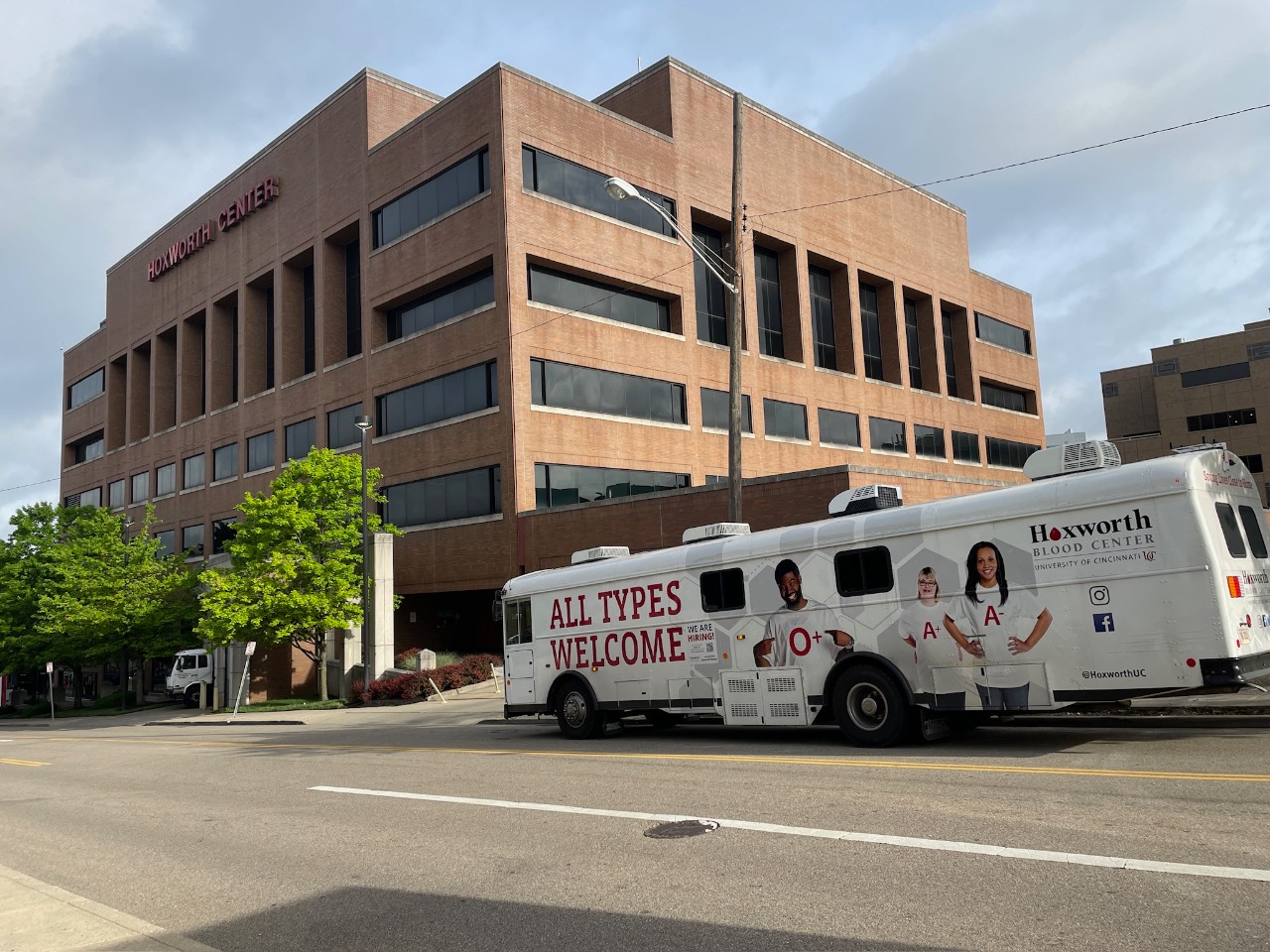
Featured photo at top of a Hoxworth donor bus in front of the building. Photo/University of Cincinnati.
About Hoxworth:
Hoxworth Blood Center, University of Cincinnati, was founded in 1938, and is the oldest blood center in the nation. Hoxworth serves more than 30 hospitals in 18 counties in Southwestern Ohio, Northern Kentucky, and Southeastern Indiana. Annually, Hoxworth collects more than 100,000 units of blood from local donors to help save the lives of patients in area hospitals. Hoxworth Blood Center: Saving Lives Close to Home. For more information, visit Hoxworth.org.
Related Stories
Cancer Center plays key role in lab research, clinical trials for new pancreatic cancer drug
September 1, 2026

WLWT and WCPO highlighted the contributions of University of Cincinnati Cancer Center researchers that helped lead to the recent FDA approval of daraxonrasib, a new treatment for pancreatic cancer.
Cancer Center physician receives $150,000 New Investigator Research Grant to study treatment-resistant leukemia
September 1, 2026
The University of Cincinnati Cancer Center’s Sarah Skuli, MD, PhD, received a two‑year, $150,000 Leukemia Research Foundation New Investigator Grant to study TP53‑mutated leukemia, a treatment‑resistant subtype with very poor outcomes.
Designing with cancer patients' needs in focus
August 27, 2026
Kristina Shin is designing garments that prioritize the comfort, function and confidence of breast cancer patients, addressing a need often overlooked by traditional fashion.