Washington Post: The hour after leaving day care is a nutritional fail for kids

The Washington Post highlighted research led by University of Cincinnati and Cincinnati Children's Hospital researchers that found kids eat fewer healthy foods and take in 22% of their day’s added sugar intake in the single hour after they’re picked up from child care.
Published in the journal Children’s Health Care, the study used dietary intake data from 307 children attending 30 child-care centers in Hamilton County, Ohio, between 2009 and 2011. The children were an average of 4.3 years old, and 57% were eligible for subsidized meals through the federal Child and Adult Care Food Program, which reimburses child-care centers for providing nutritious foods.
Children ate an average of 1,471.6 calories a day, the study found, but the kids ate fewer servings of dairy and vegetables in the hours before and after child-care pickup and drop-off and more added sugar and snack foods. In the hour after arriving at a child-care center, the researchers found, the children ate less and took in less added sugar and sweet and salty foods, and were more likely to eat dairy and fruit.
“Every parent knows how busy that time of day can feel. Parents can feel stressed, the kids may be cranky, hungry, or tired. There’s nothing wrong with treats once in a while,” the study’s senior author, Kristen Copeland, MD, professor in UC's Department of Pediatrics in the College of Medicine and an attending physician at Cincinnati Children’s, said. “But that car ride home also can be an opportunity to instill healthier habits instead of less healthy ones.”
Read the Washington Post article. (Note: Subscription may be required to view full story.)
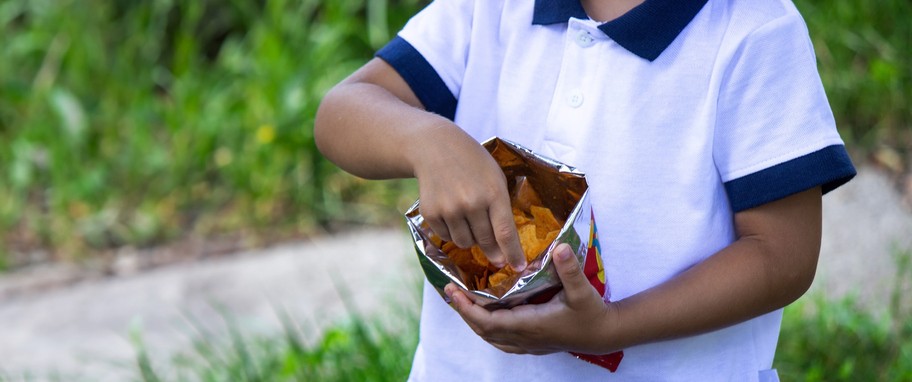
Featured photo at top of a child reaching into a bag of chips. Photo/Anna Solovel/iStock.
Related Stories
These teeny spiders are social media stars
August 28, 2026

The New York Times turned to a University of Cincinnati professor to explain the appeal of jumping spiders on social media.
An internal divide among unions on AI impacts the Wisconsin gubernatorial race
August 28, 2026

Anne Lofaso, a professor in the Donald P. Klekamp College of Law at UC, spoke with Wisconsin Public Radio, about the schism among unions over AI and whether it is a plus, a negative, or somewhere in between when looking at job creation.
On-site training in Speech & Hearing Clinic sets UC’s programs apart
August 27, 2026
At the University of Cincinnati’s Speech & Hearing Clinic, Doctor of Audiology and Speech-Language Pathology graduate students gain real-world experience while providing free speech and hearing services to the community.