Thrombectomy less beneficial in large-core stroke
UC expert comments on trial results to Medscape

Thrombectomy, a minimally invasive stroke procedure that uses a catheter to remove a blood clot from a blood vessel in the brain to restore blood flow, has been shown to be beneficial in patients with large-core ischemic stroke.
But a secondary analysis of data from the randomized SELECT2 trial recently showed that patients with the greatest volume of tissue injury may benefit less from the procedure.
The analysis used imaging and outcome data from the 322 patients with large-core ischemic stroke included in the trial to look at whether the occurrence of severe hypodensity modified the effect of thrombectomy.
The results showed that as the volume of severe hypodensity increased, the odds of a favorable outcome with thrombectomy decreased.
The University of Cincinnati's Joseph Broderick, MD, commented on the study findings to Medscape.
"These data, if validated, provide a more fine-tuned approach to the use of endovascular therapy in patients with larger volumes of ischemic core," said Broderick, professor in the University of Cincinnati’s Department of Neurology and Rehabilitation Medicine in the College of Medicine and director of the UC Gardner Neuroscience Institute.
Broderick explained that greater intensity of hypodensity has been recognized as a marker for a greater likelihood of unsalvageable brain.
"There are some parallels with diffusion/flair mismatch that have been used to identify patients who may benefit from reperfusion," he said. "The next step will be to test these parameters in other published and reported large-core trials, but time to first image and time to treatment will be important variables to be considered in validating these data and incorporating them into clinical practice."
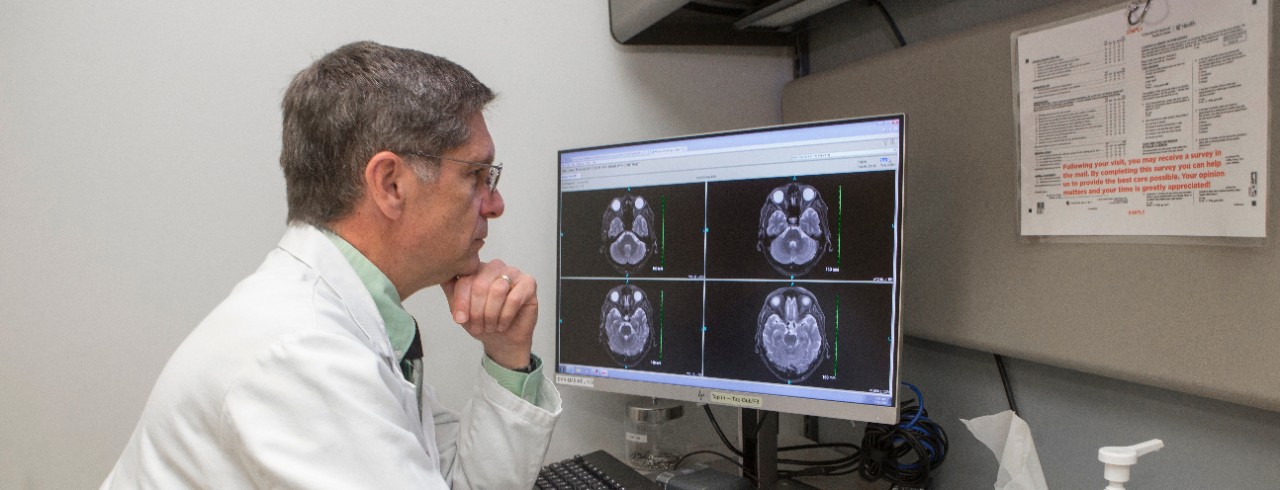
Featured photo at top of Dr. Broderick. Photo/Joseph Fuqua II/University of Cincinnati
Related Stories
Bidirectional link between oral, kidney health calls for patient education, access
August 4, 2026

Despite growing awareness of the connection between oral health and chronic health conditions, patient awareness and access to dental care remain limited, according to University of Cincinnati experts who recently spoke with Healio | Nephrology News & Issues.
'Be human in it': UC College of Medicine welcomes Class of 2030 at 31st White Coat Ceremony
August 4, 2026
The University of Cincinnati College of Medicine welcomed 185 first-year medical students in the Class of 2030 at the 31st annual White Coat Ceremony.
UC-built detector at CERN looks for enticing evidence to explain dark matter
August 4, 2026
A physicist from the University of Cincinnati and his research partners from around the world conducted an experiment at CERN’s Large Hadron Collider in Switzerland to look for evidence that might help explain one of science’s most baffling questions: dark matter.