
Joro spiders are heading up the coast
UC biologist says these garden spiders want to stay in the garden

Everyday Health turned to a University of Cincinnati biologist to learn more about an invasive spider from Asia that is showing up in more American back yards.
The Joro spider is a large, yellow orb-weaving spider from Japan that is slowly creeping across the American Southeast toward the Mid-Atlantic.
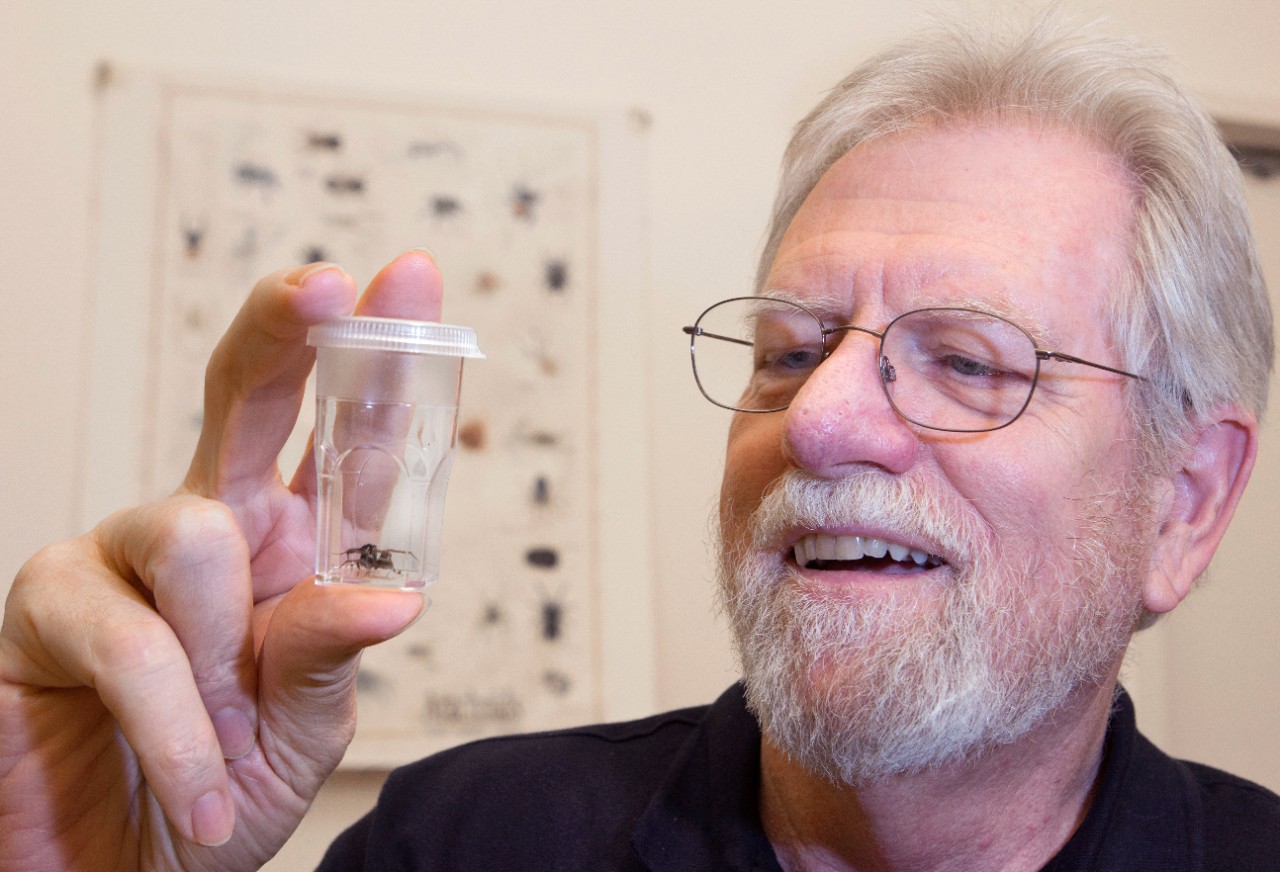
UC Professor Emeritus George Uetz. Photo/Lisa Ventre/UC
Female spiders grow to more than 3 inches in length. They build equally enormous webs spanning more than 10 feet to catch flying insects, which makes it hard for them to go unnoticed in gardens and back yards. But they are harmless and don't bite people, said George Uetz, a professor emeritus in UC's College of Arts and Sciences.
“They are very sedentary in their webs,” he told Everyday Health.
Uetz spent his career studying the fascinating behavior of spiders and other animals in his biology lab. He was named a fellow this year of the American Association for the Advancement of Sciences.
If disturbed, the spider freezes in place for as long as an hour.
“Approach them from a distance, observe them, and you will see they are no threat, as they stay in their web,” Uetz said.
Read the Everyday Health story.
Featured image at top: Joro spiders are showing up in more states. Photo/David Hansche
Related Stories
Still the top ‘cat
October 20, 2026

The University of Cincinnati Bearcat mascot was voted Cincinnati’s favorite mascot in a Cincinnati Enquirer reader poll, earning 45.1% of the vote and topping other local favorites.
How will Ohio's minimum wage bump impact businesses and their employees?
October 20, 2026

UC economist Michael Jones spoke to WVXU's "Cincinnati Edition" on if Ohio's latest minimum wage increase will actually impact employees and businesses as inflation continues to rise.
Researchers test gene therapy as less invasive treatment for hydrocephalus
October 20, 2026

Researchers at the University of Cincinnati College of Medicine say an experimental gene therapy could eventually lead to a less invasive treatment for hydrocephalus, a condition in which excess fluid accumulates in the brain. The early-stage study, led by Agnes (Yu) Luo, PhD, professor and vice chair for research, was published in the journal Fluids and Barriers of the CNS. Yahoo! News recently featured it.