
Joro spiders are heading up the coast
UC biologist says these garden spiders want to stay in the garden

Everyday Health turned to a University of Cincinnati biologist to learn more about an invasive spider from Asia that is showing up in more American back yards.
The Joro spider is a large, yellow orb-weaving spider from Japan that is slowly creeping across the American Southeast toward the Mid-Atlantic.
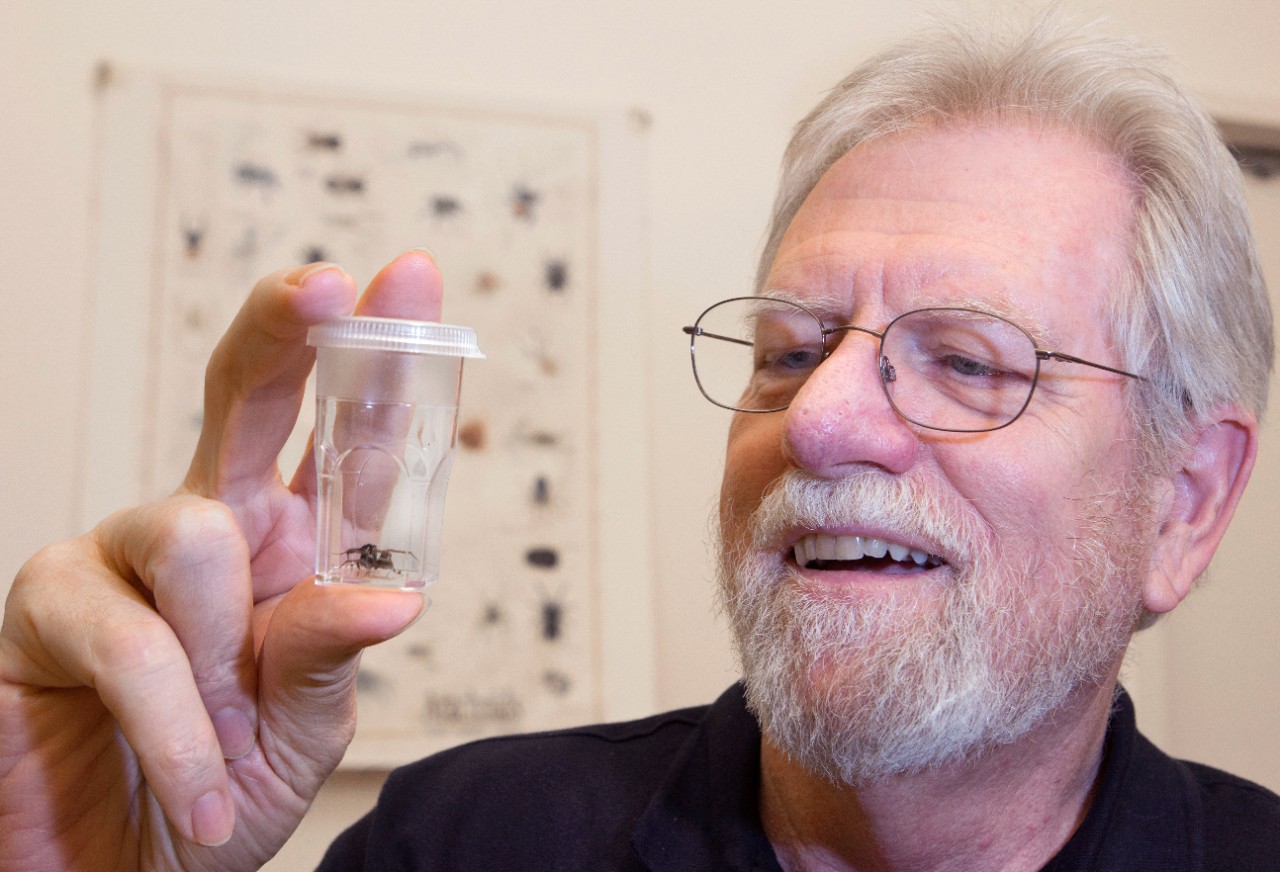
UC Professor Emeritus George Uetz. Photo/Lisa Ventre/UC
Female spiders grow to more than 3 inches in length. They build equally enormous webs spanning more than 10 feet to catch flying insects, which makes it hard for them to go unnoticed in gardens and back yards. But they are harmless and don't bite people, said George Uetz, a professor emeritus in UC's College of Arts and Sciences.
“They are very sedentary in their webs,” he told Everyday Health.
Uetz spent his career studying the fascinating behavior of spiders and other animals in his biology lab. He was named a fellow this year of the American Association for the Advancement of Sciences.
If disturbed, the spider freezes in place for as long as an hour.
“Approach them from a distance, observe them, and you will see they are no threat, as they stay in their web,” Uetz said.
Read the Everyday Health story.
Featured image at top: Joro spiders are showing up in more states. Photo/David Hansche
Related Stories
From hobbyist photographer to professional educator
October 9, 2026

DAAP alum and photographer HATSUE studied communication design after a pivot in high school from a track toward veterinary school. Today, they teach photography at 1001 Colors white working as an artist and curator in Cincinnati.
UC researcher to launch national study with $2.5 million NIH grant
October 9, 2026

A University of Cincinnati researcher has received a $2.5 million National Institutes of Health grant to conduct research during the next five years. Natalie Kreitzer, MD, a University of Cincinnati College of Medicine physician-researcher, received an R01 independent research grant from the NIH's Eunice Kennedy Shriver National Institute of Child Health and Human Development. The funding will support a test program for caregivers of patients with traumatic brain injury, as reported by the Cincinnati Business Courier.
Simple ways to find a deeper sense of happiness and well being
October 8, 2026

UC assistant professor Suzie White, featured in an AARP story on practical ways to live a happier, healthier life, shared research-backed strategies for increasing well-being through gratitude and service to others. White teaches Happiness in Action, a course that helps students apply the science of happiness in everyday life.