
Study examines link between family incarceration, children’s health
Research from Samantha Boch, PhD, UC College of Nursing is cited in national media

The Washington Post highlighted a study by Samantha Boch, PhD, assistant professor in the UC College of Nursing, that attempts to shed light on the ripple effects of mass incarceration.
Her analysis suggests that youth with a family history of incarceration are more likely to be diagnosed with physical and mental health conditions than other youth.
Published in the journal Academic Pediatrics, the study looked at 11 years’ worth of electronic health records from Cincinnati Children’s, analyzing over 1.74 million unique patients under age 21 years between 2009 and 2020.
Researchers searched the records for keywords such as “incarcerated,” “parole” and “jail” for signs of justice system involvement, and then compared the records of patients with a justice keyword in their chart with those of demographically similar patients.
Boch and her team of researchers identified nearly 38,300 patients with justice keywords in their files, 2.2 percent of the total sample.
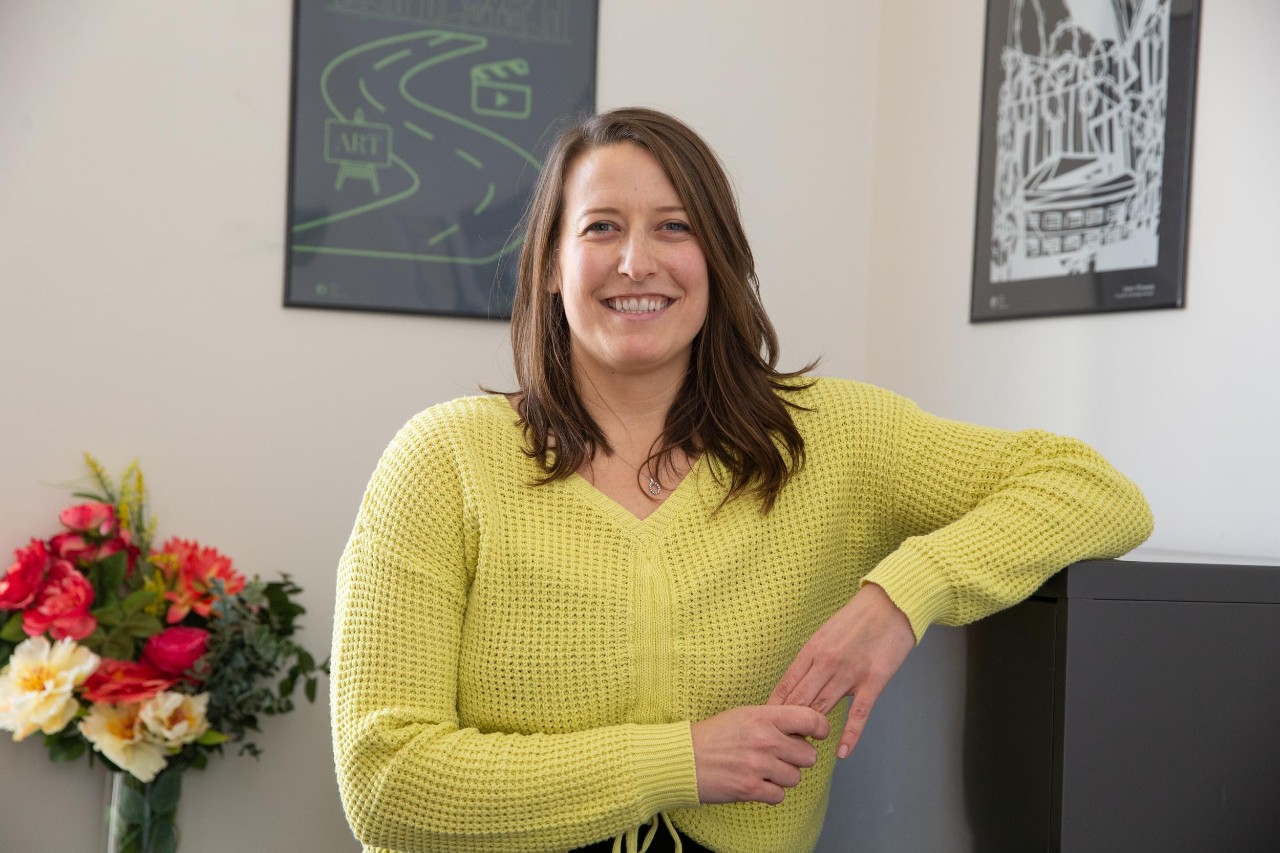
Samantha Boch, PhD, in the UC College of Nursing. Photo by Andrew Higley/UC Marketing + Brand.
Patients with justice keywords made up 42.9 percent of all schizophrenia spectrum and other psychotic disorders, 42.1 percent of bipolar and related disorders, and 38.3 percent of suicide and self-injury diagnoses, and were disproportionately diagnosed with physical conditions such as neurodevelopmental disorders (69.7 percent) and shaken baby syndrome (44.9 percent).
“Our data reflects families who disclosed and health providers who documented,” says Boch. “Families who refrain from disclosing or whose information is not documented were not represented, which is a key limitation.”
But Boch says replication of her findings in other communities would strengthen the growing justification for decarceration efforts and other reforms. That’s a necessity if families and children are to thrive, she adds.
“We will continue to have health care disparities and lead the world with poor health outcomes if we continue to lead in incarceration,” says Boch, quoted in The Washington Post.
Read the full story in The Washington Post online.
Dr. Boch was also interviewed by WLWT-Channel 5 about her research findings.
Learn more about research from Samantha Boch, PhD, online.
Related Stories
UC Biomedical Engineering student launches mobile healthcare platform
October 22, 2026
As a fifth-year biomedical engineering student at the University of Cincinnati College of Engineering and Applied Science, Amelia Wares has been a trailblazer in nearly every area imaginable — and this is only the beginning of her journey.
Still the top ‘cat
October 20, 2026

The University of Cincinnati Bearcat mascot was voted Cincinnati’s favorite mascot in a Cincinnati Enquirer reader poll, earning 45.1% of the vote and topping other local favorites.
How will Ohio's minimum wage bump impact businesses and their employees?
October 20, 2026

UC economist Michael Jones spoke to WVXU's "Cincinnati Edition" on if Ohio's latest minimum wage increase will actually impact employees and businesses as inflation continues to rise.