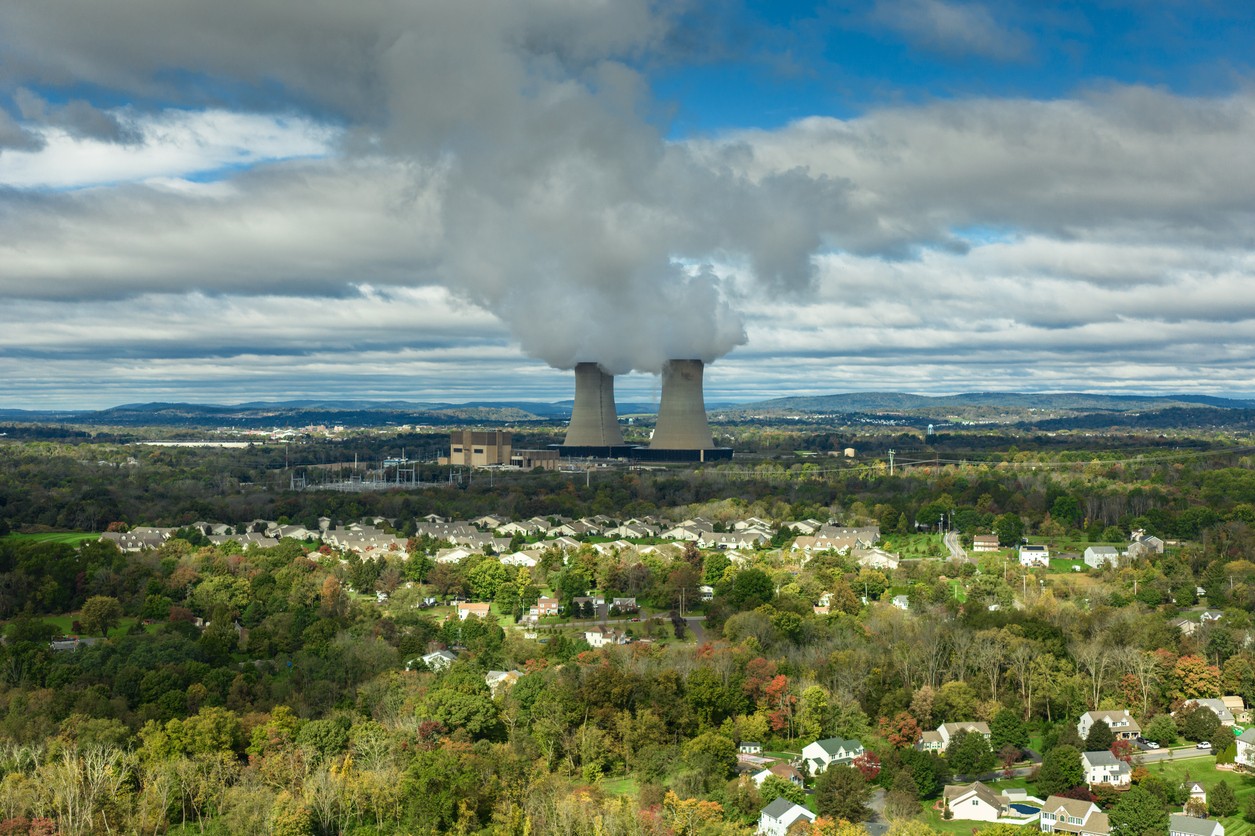
WVXU: Supreme Court temporarily blocks key air pollution regulations

Last week’s US Supreme Court decision, which temporarily blocked key air pollution regulations established by the Environmental Protection Agency (EPA), was just one in a line of recent rulings over the past two years significantly impacting the EPA’s authority to limit pollution in air and water. In last Thursday’s decision, the court ruled that the emissions-reductions standards set by the plan were likely to cause “irreparable harm” to almost half the states unless the court halted the rule pending further review by the U.S. Court of Appeals for the District of Columbia.
Cincinnati Law’s Professor Brad Mank spoke with WVXU about the impact of the most recent decision, stating that “The Ohio v. EPA decision will continue to worsen air quality, especially on the East Coast.
“In the short-term, this is a decision environmentalists won't like,” Mank said. “It's not good for the environment and it does show a kind of general trend that the current Supreme Court doesn't really like to give deference to agencies.”
About The Good Neighbor Plan
The EPA established the Good Neighbor Plan to ensure compliance with the 2015 Ozone National Ambient Air Quality Standards law. To carry out the law’s mandate, the EPA required “upwind” states to reduce air pollution affecting “downwind” states. Under the Good Neighbor rule, states are first given the chance to create a plan that complies with agency’s ozone guidelines. If a state fails to submit an adequate plan, the EPA then designs a compliance plan for the state. In February 2023, the EPA determined that 23 states had not provided sufficient plans and the agency then decided to implement its own emissions-control program for those states.
Ohio, along with several other states, large industrial companies, and trade associations, challenged the EPA plan in court. They contended that the agency’s “dictatorial approach” failed to adequately consider the legal and practical implications of substituting its own plan for the state plans. The opponents also argued that the plan’s implementation would cause significant economic and operational harm, particularly by forcing states to undertake costly modifications to their power plants while judicial review is pending in the U.S. Court of Appeals for the District of Columbia.
Read more about the decision, its impact, and Professor Mank’s commentary in the story “Supreme Court temporarily blocks key air pollution regulations".
Lead photo: istockphoto.com
Related Stories
These teeny spiders are social media stars
August 28, 2026

The New York Times turned to a University of Cincinnati professor to explain the appeal of jumping spiders on social media.
An internal divide among unions on AI impacts the Wisconsin gubernatorial race
August 28, 2026

Anne Lofaso, a professor in the Donald P. Klekamp College of Law at UC, spoke with Wisconsin Public Radio, about the schism among unions over AI and whether it is a plus, a negative, or somewhere in between when looking at job creation.
On-site training in Speech & Hearing Clinic sets UC’s programs apart
August 27, 2026
At the University of Cincinnati’s Speech & Hearing Clinic, Doctor of Audiology and Speech-Language Pathology graduate students gain real-world experience while providing free speech and hearing services to the community.