How to fend off mosquitoes
UC expert shares in New York Times how to keep pests away, protect against bites

To get rid of mosquitoes, experts first advise homeowners to get rid of standing water on their property.
They say to look out for water pooling inside gutters, where leaves have built up, near leaky sprinklers, on top of tarps and in flower pots or buckets. Mosquitoes don’t need much water to lay their eggs, so try to be thorough.
“It’s actually pretty sneaky,” said Jen Wall Forrester, MD, division director of infectious diseases and professor of internal medicine at the University of Cincinnati's College of Medicine. “It’s really hard to get rid of all the water in your yard."
Her advice on fending off mosquitoes was recently featured in the New York Times.
Experts also recommend applying bug spray liberally and covering up exposed skin when outdoors.
Tight or thin clothing, such as leggings and linen pants, can make a person an easy target because mosquitoes can bite through them, said Wall Forrester.
Experts also suggest protecting the home and yard by making sure window screens don't have holes in them and hanging a mosquito coil outside.
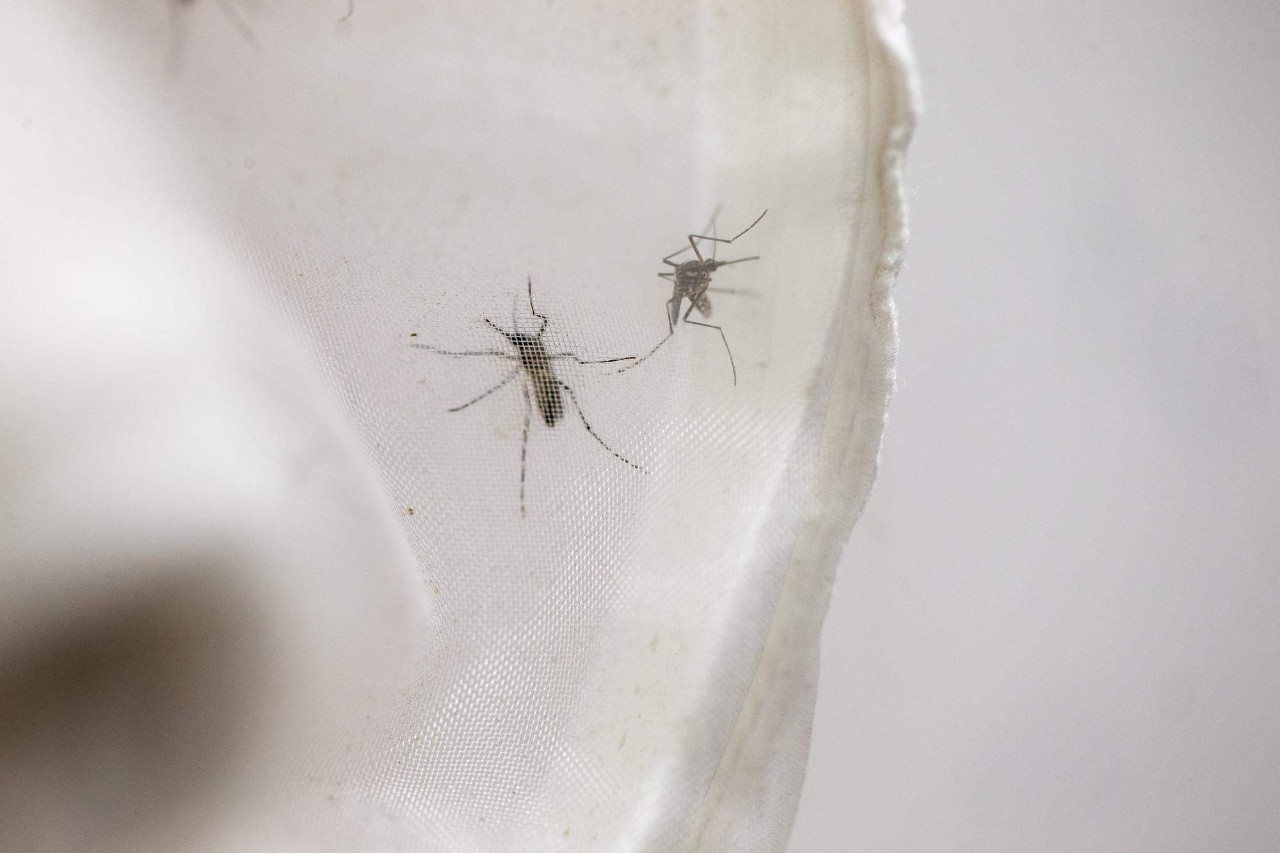
Feature image at top: Two mosquitoes on a piece of netting. Photo/Andrew Higley/UC Marketing + Brand
Related Stories
Playbill ranks CCM in Top 10 most represented colleges on Broadway
September 14, 2026

The University of Cincinnati College-Conservatory of Music has once again been named as one of Playbill’s Top 10 most represented schools on Broadway.
Parakeet males, females equally likely to fight
September 14, 2026
Researchers from the University of Cincinnati and Duke University studied captive monk parakeets and found that sex has little effect on who starts fights, who is targeted or who rises in the dominance hierarchy, as reported in Integrative & Comparative Biology.
UC researchers seek to combat youth weight gain from bipolar medication
September 14, 2026

Cleveland.com highlighted a University of Cincinnati initiative approved for funding by the Patient-Centered Outcomes Research Institute (PCORI) to expand the implementation of healthy lifestyle interventions and metformin prescription to help manage weight gain in overweight or obese youth taking second-generation antipsychotic medications.