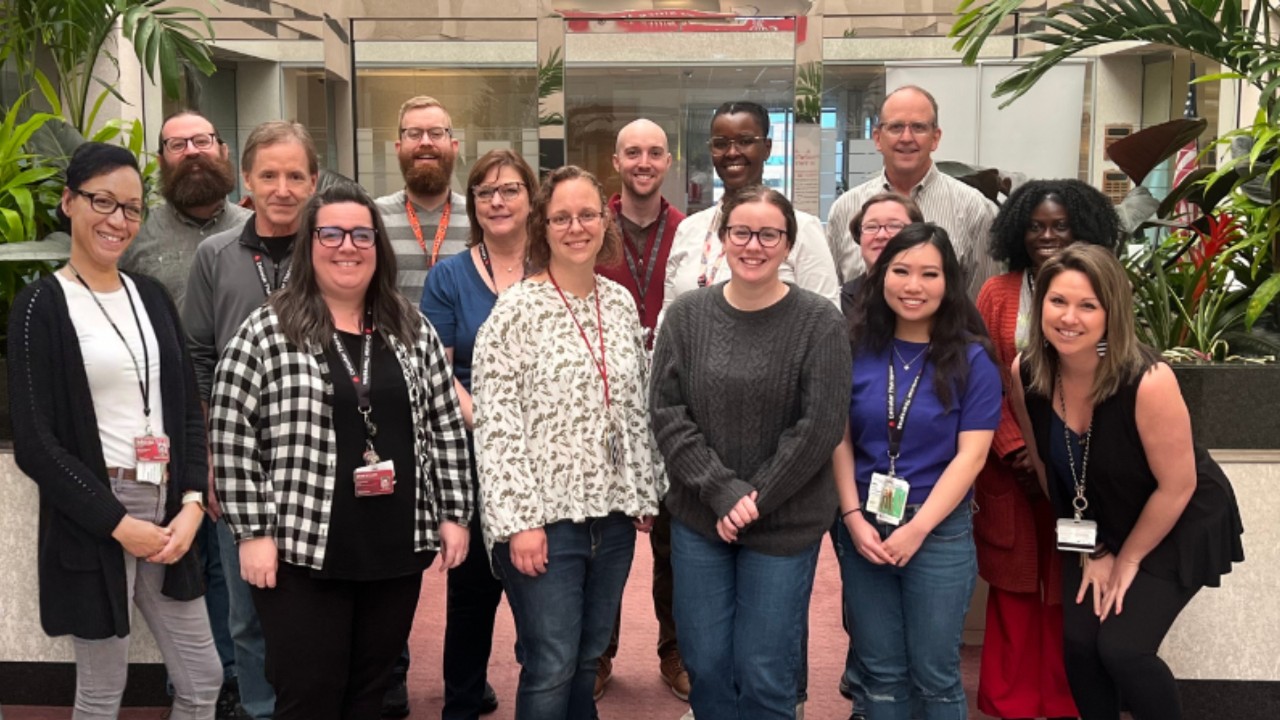
Hoxworth Blood Center’s cellular therapy teams advance viral-specific T-cell therapy in partnership with Cincinnati Children’s

Since 2017, Hoxworth Blood Center has collaborated with Cincinnati Children’s Hospital Medical Center on a groundbreaking initiative to deliver viral-specific T-cells (VSTs) to vulnerable patients. VSTs are specially programmed immune cells designed to target and combat specific viruses. They offer a critical lifeline for patients recovering from bone marrow transplants, whose immune systems are often too weak to fight off infections independently.
For bone marrow transplant recipients, viral infections can pose serious risks. These patients undergo intensive treatments that strip them of their natural immune defenses, leaving them susceptible to life-threatening viruses. The innovative VST therapy infuses these patients with a specialized type of T-cell to temporarily take on the role of defending against viral infections until the patient’s immune system recovers and can manage infections on its own.
In collaboration with Cincinnati Children’s Hospital Medical Center, the Hoxworth cellular therapy teams have played an instrumental role in developing and administering VST therapy. During the past seven years, more than 1,200 VST infusions have been performed, offering critical care and protection to pediatric and adult patients alike. This monumental accomplishment reflects not only the success of the treatment but also the dedication and expertise of the cellular therapy teams at Hoxworth.
The production of these highly specialized VSTs is no simple task. It requires about two weeks of intricate work by a team of six fully trained technologists, with a seventh currently undergoing training. These experts operate at the cutting edge of medical science, using state-of-the-art techniques to generate T-cells specifically targeted to fight viruses that are particularly dangerous for immunocompromised patients.
VST therapy offers a beacon of hope for patients who otherwise might face severe complications or even fatal outcomes from viral infections. With such a high degree of specialization and focus, each member of the Hoxworth cellular therapy teams plays a vital role in producing life-saving treatments for these vulnerable patients.
Hoxworth’s cellular therapy division continues to push the boundaries of what is possible in immunotherapy. The partnership between Hoxworth and Cincinnati Children’s is poised to expand further into new clinical research areas in 2025, promising even more advances in the field of cellular therapy. This collaboration exemplifies the mission of both institutions: to provide innovative, life-saving care and to continue exploring new ways to improve patient outcomes through science and dedication.
As we celebrate the successes of the past seven years, we also extend our deepest gratitude to the incredible teams of technologists and medical professionals who have made these achievements possible. The future of viral-specific immunotherapy looks bright, and Hoxworth Blood Center is proud to be at the forefront of this exciting medical advancement.
About Hoxworth Blood Center
Hoxworth Blood Center, University of Cincinnati, was founded in 1938, and serves more than 30 hospitals in 18 counties in Southwestern Ohio, Northern Kentucky and Southeastern Indiana. Annually, Hoxworth collects more than 100,000 units of blood from local donors to help save the lives of patients in area hospitals. Hoxworth Blood Center: Saving Lives Close to Home. hoxworth.org
Featured image at top: Hoxworth cellular therapy teams. Photo/Hoxworth staff.
Related Stories
Heavy social media use linked to depression
August 31, 2026

U.S. News and World Report, Yahoo! News, MSN, USA Today and other national media highlight a new study by the University of Cincinnati and Northwestern University that found a correlation between heavy social media use and depression in adults.
These teeny spiders are social media stars
August 28, 2026

The New York Times turned to a University of Cincinnati professor to explain the appeal of jumping spiders on social media.
On-site training in Speech & Hearing Clinic sets UC’s programs apart
August 27, 2026
At the University of Cincinnati’s Speech & Hearing Clinic, Doctor of Audiology and Speech-Language Pathology graduate students gain real-world experience while providing free speech and hearing services to the community.