Treatment options when breast cancer becomes unresponsive to chemotherapy
UC expert speaks with Everyday Health

The University of Cincinnati's Mahmoud Charif was featured in an Everyday Health article discussing treatment options when metastatic triple-negative breast cancer (mTNBC) becomes unresponsive to chemotherapy.
Even though chemotherapy is the standard treatment for mTNBC, it’s not uncommon for these drugs to stop working eventually.
Charif, MD, a University of Cincinnati Cancer Center member, associate professor in the UC College of Medicine and a UC Health physician, said breast cancer cells can become resistant to chemotherapy over time, making the treatment less effective. This is especially the case for mTNBC, which is typically a more aggressive form of cancer.
Treatment options when mTNBC becomes unresponsive to chemotherapy include immunotherapy, clinical trials and a class of drugs called antibody-drug conjugates (ADCs). Charif explained ADCs combine an antibody therapy and chemotherapy to work together to kill cancer cells.
Read the Everyday Health article.
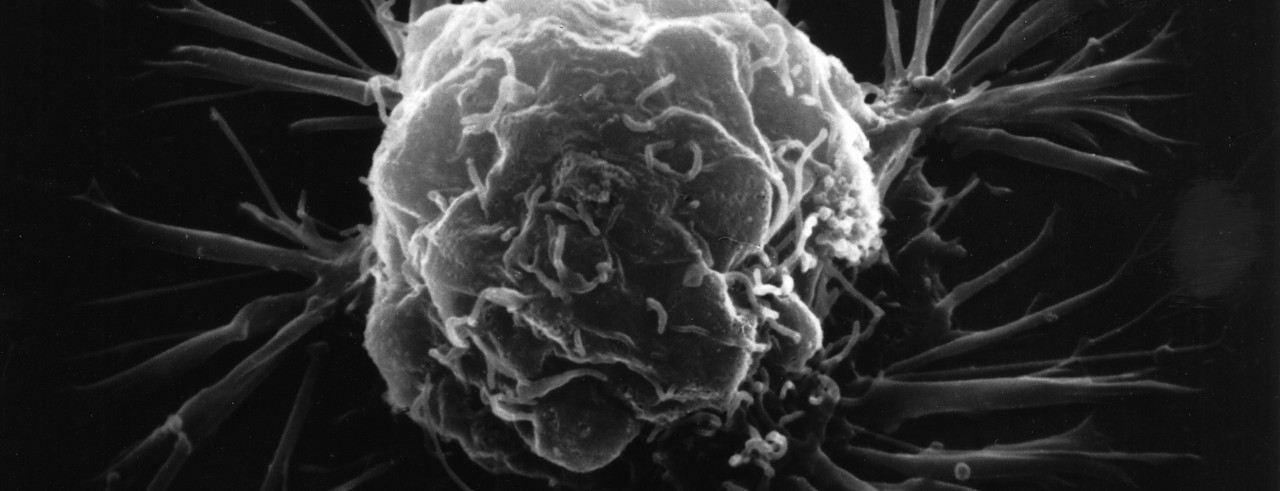
Featured photo of 3D breast cancer cell courtesy of the National Cancer Institute.
Related Stories
These teeny spiders are social media stars
August 28, 2026

The New York Times turned to a University of Cincinnati professor to explain the appeal of jumping spiders on social media.
An internal divide among unions on AI impacts the Wisconsin gubernatorial race
August 28, 2026

Anne Lofaso, a professor in the Donald P. Klekamp College of Law at UC, spoke with Wisconsin Public Radio, about the schism among unions over AI and whether it is a plus, a negative, or somewhere in between when looking at job creation.
On-site training in Speech & Hearing Clinic sets UC’s programs apart
August 27, 2026
At the University of Cincinnati’s Speech & Hearing Clinic, Doctor of Audiology and Speech-Language Pathology graduate students gain real-world experience while providing free speech and hearing services to the community.