Nationwide map shows area's risks of landslides
UC geosciences professor talks to WVXU about local examples

WVXU highlighted a new national map that identifies the greatest risk of landslides in every state.
University of Cincinnati geologist Daniel Sturmer helped the U.S. Geological Survey assemble the map from data he collected from more than 700 landslides in Nevada, where they pose a major threat to some populated areas.
“It's important to know where you've had landslides, because that can tell you where you will have landslides again,” Sturmer told WVXU.
Some of the hills around Cincinnati present a landslide threat as happened in 2019 when transportation officials had to close parts of Columbia Parkway.
The highest landslide risks are in the western United States and the Appalachians. But Sturmer said the risks are not limited to mountain areas.
“Generally landslides don't just happen out of the blue with no initial indicators,” Sturmer said. “If you can learn those warning signs and learn to look for them, then you can hopefully contact somebody, and bring somebody out who can help mitigate it before it's a catastrophe.”
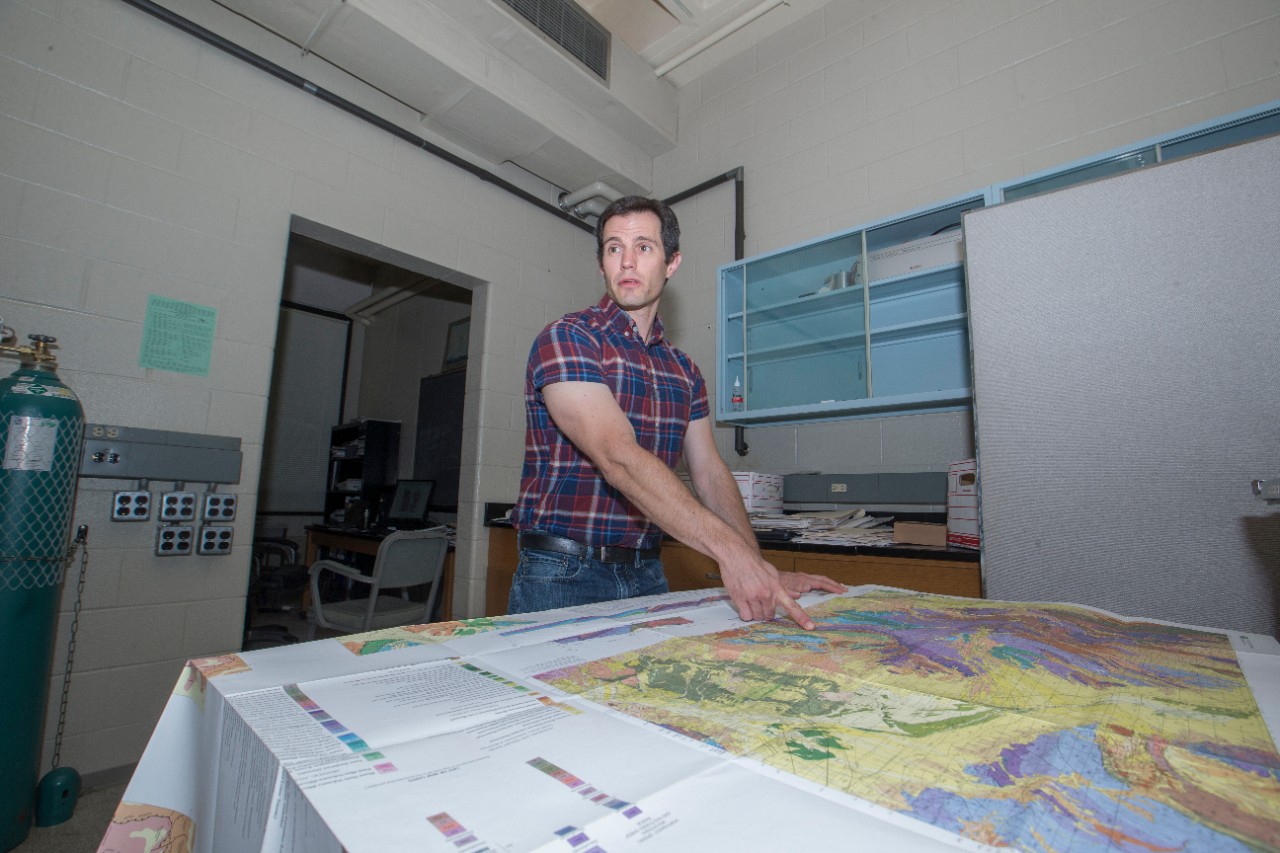
Featured image at top: UC Associate Professor Daniel Sturmer studies landslides in the Department of Geosciences. Photo/Joseph Fuqua II/UC

The U.S. Geological Survey released a new map identifying areas at greatest risk of landslides across the United States. Illustration/USGS
Related Stories
Why can it get so hot at times?
September 3, 2026

Cincinnati is experiencing more days of extreme heat this summer than in previous decades, due in large part to warmer global temperatures. But explanations for these higher temperatures also relate to regional factors, including the city's location in a river valley and large proportion of built environment.
Driverless-taxi company Waymo is mapping Cincinnati streets
September 3, 2026

WCPO turns to UC College of Engineering and Applied Science Professor Munir Nazzal to discuss how consumer confidence is growing in autonomous vehicles as the driverless taxi service sets its eyes on Cincinnati.
UC invests in the next generation of graduate leaders through fellowships focused on mentorship and research
September 3, 2026
The Next Lives Here Presidential Fellowship supports the recruitment of top doctoral students through competitive funding, mentorship and professional development.