German TV highlights UC expert's ancient Maya discoveries
'Unsolved Cases' talks to biology professor about ancient Maya ballcourts

German Public Television highlighted the archaeology research of a University of Cincinnati expert who studies the ancient Maya.
UC College of Arts and Sciences paleoethnobotanist David Lentz uses the latest tools to learn more about the Maya through the plants they cultivated, consumed and used in rituals and daily life.
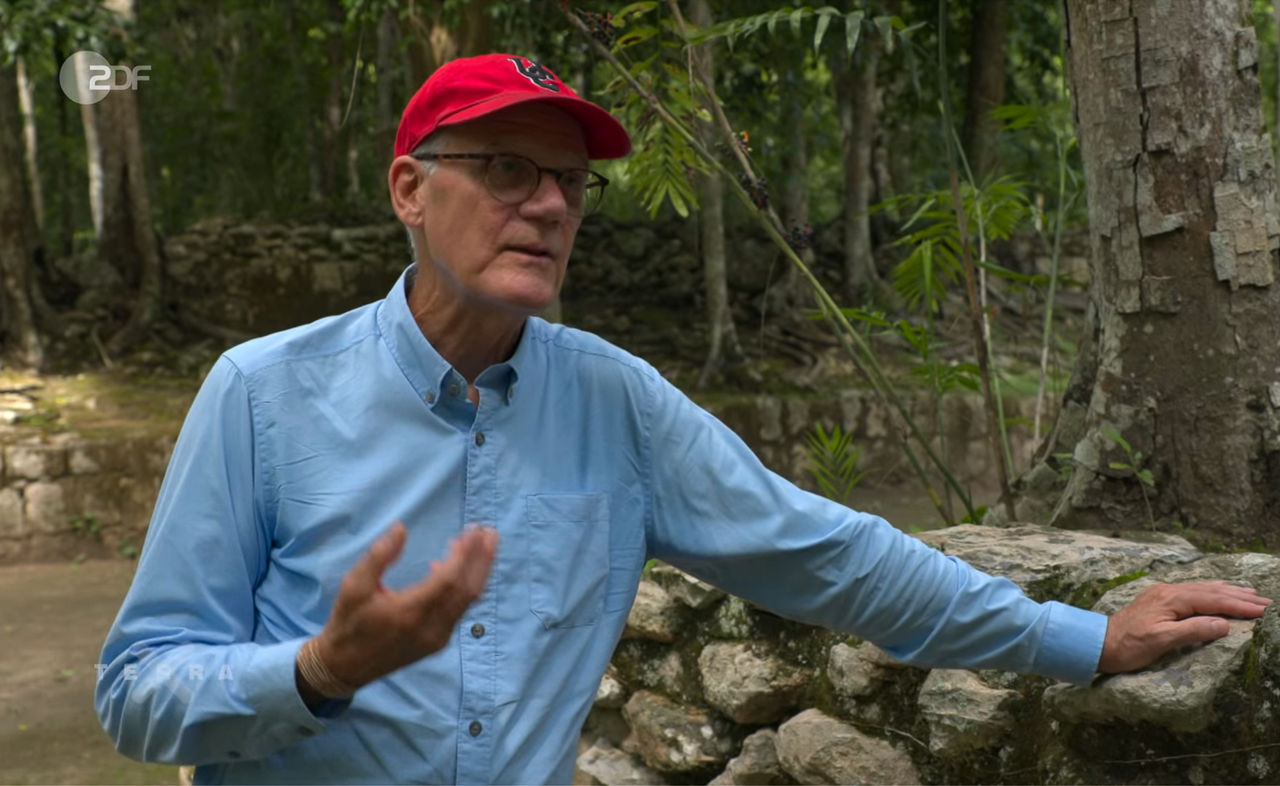
The program “Unsolved Cases” visited Lentz in Calakmul for a documentary that examined the simplest human creation: the ball. The show examined the many ways ancient civilizations used spheres as tools and toys alike.
The documentary was produced by filmmakers Peter Prestel and Gisela Graichen.
Lentz talked about his discovery that the ancient Maya blessed their ballcourts. That study was published in 2024 in the journal PLOS One. Lentz said he and his research partners found a ceremonial bundle buried at the edge of a ballcourt.
“The plant that was most interesting to me was called Xtabentun, which has hallucinogenic properties and was used by people across Mesoamerica for divination,” he said. “And that allowed them to interact with the gods.”
Lentz noted that these gestures all had one general goal.
“Everything they did was a ritual to appease the gods. If they did not appease the gods, they would suffer. Death would rage, the harvests would fail and other bad things would happen,” he said.
Featured image at top: UC College of Arts and Sciences Professor David Lentz spoke to filmmakers in Calakmul about how the ancient Maya blessed their ballcourts. Photo/Unsolved Case
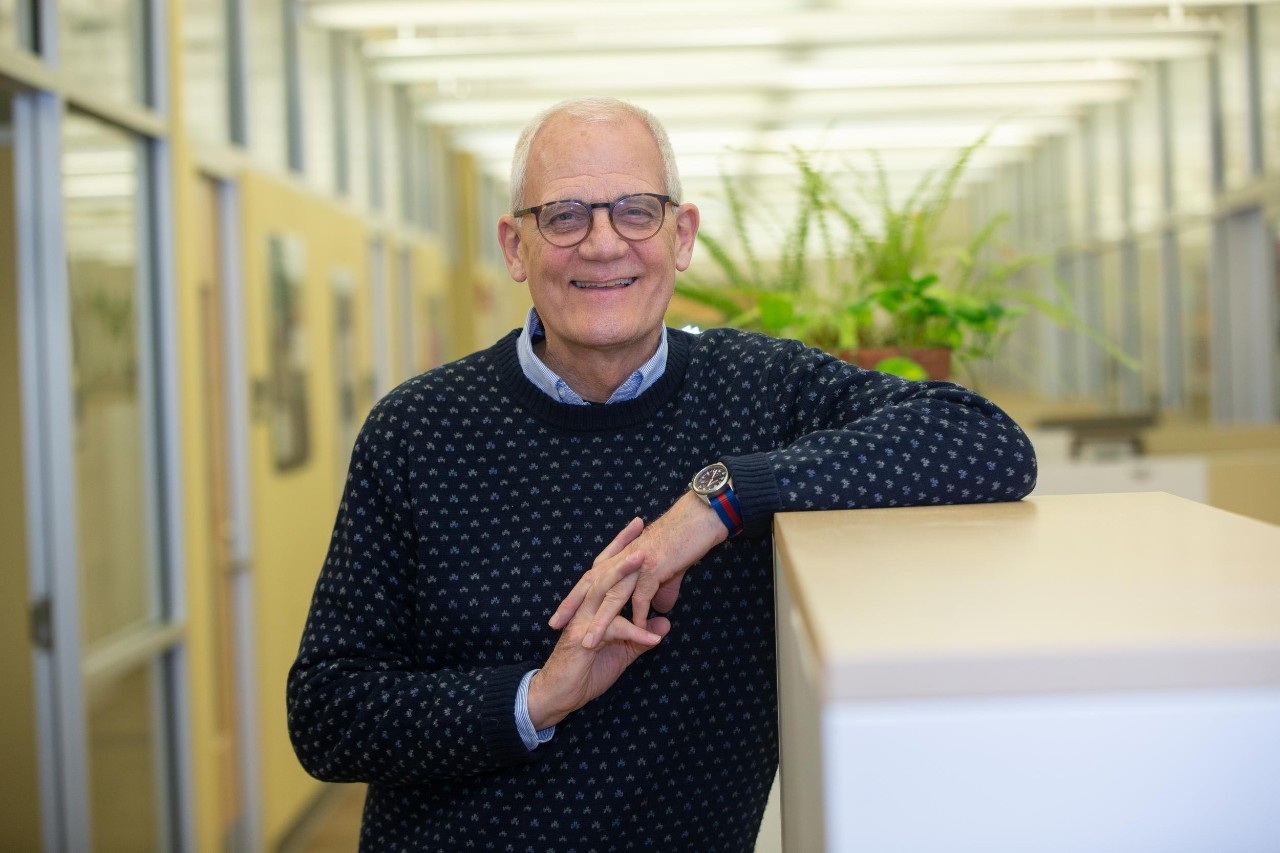
UC Professor David Lentz studies ancient Mesoamerican civilizations in the College of Arts and Sciences. Photo/Andrew Higley/UC
Related Stories
Smithsonian: UC finds pollution in ancient Maya city
July 2, 2020
Smithsonian Magazine examines research by University of Cincinnati that found toxic pollution in ancient Maya reservoirs.
Haaretz: UC study sheds light on environmental collapse
June 29, 2020
Haaretz and other international media report on UC's research into ancient Maya water pollution.
Children learn about UC science, engineering majors during visit
February 19, 2025

Students from the Clifton Area Neighborhood School visit UC to get an introduction to subjects such as science, Classics and engineering.