How to support grandparents raising their grandkids alone
UC expert featured in Parents.com article

The advocacy group Generations United reports more than 2.5 million children in the United States are living in "grandfamilies," families where extended family members like grandparents raise children when their birth parents cannot.
Steven Kniffley Jr., PsyD, spoke with Parents.com about the unique challenges and need for support for grandfamilies, citing the African proverb that "it takes a village to raise a child."
"However, due to death, disease, and disruption, more and more grandparents are being called upon to be the village for their grandchildren," said Kniffley, senior associate dean for pathway innovation and inclusive excellence and associate professor in the Department of Psychiatry and Behavioral Neuroscience in the UC College of Medicine. "A number of difficulties may arise in families that span generations with the biological parent absent, including bridging cultural divides, healing from inter-generational trauma and building a family identity."
Kniffley said open communication and creating space where every member feels heard and is given space to learn from mistakes and maintain unconditional love is important for grandfamilies.
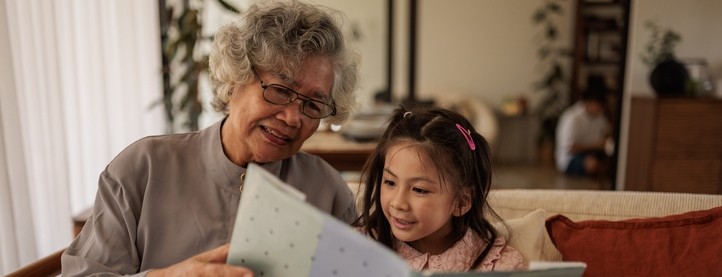
Featured photo at top of a grandmother reading to her grandchild. Photo/miodrag ignjatovic/iStock.
Related Stories
These teeny spiders are social media stars
August 28, 2026

The New York Times turned to a University of Cincinnati professor to explain the appeal of jumping spiders on social media.
An internal divide among unions on AI impacts the Wisconsin gubernatorial race
August 28, 2026

Anne Lofaso, a professor in the Donald P. Klekamp College of Law at UC, spoke with Wisconsin Public Radio, about the schism among unions over AI and whether it is a plus, a negative, or somewhere in between when looking at job creation.
On-site training in Speech & Hearing Clinic sets UC’s programs apart
August 27, 2026
At the University of Cincinnati’s Speech & Hearing Clinic, Doctor of Audiology and Speech-Language Pathology graduate students gain real-world experience while providing free speech and hearing services to the community.