UC expert: More oil production means more leaks
Environmental studies professor talks about railcar leak that prompted evacuations

The Cincinnati Enquirer turned to an environmental studies professor to explain why Ohio has seen several high-profile rail disasters that have led to neighborhood evacuations.
Neighborhoods in southwest Ohio were evacuated as a precaution on Sept. 24 after a rail car was discovered spewing a toxic chemical called styrene commonly used in plastics.
In 2023, a train derailed outside East Palestine, Ohio, prompting evacuations after vinyl chloride spilled into the Ohio River.

UC Professor Amy Townsend-Small teaches environmental studies in UC's College of Arts and Sciences. Photo/Jay Yocis/UC
UC College of Arts and Sciences Professor Amy Townsend-Small told the Enquirer that both chemicals are byproducts of oil. She teaches in UC's School of Environment and Sustainability.
“These train cars that we see throughout Cincinnati, they’re all carrying petrochemicals,” she said.
Styrene is an organic molecule that's used in making Styrofoam and other plastics, she said.
It's considered a likely carcinogen, according to the National Research Council.
Townsend-Small said the likelihood of rail accidents increases with the increase in rail use. Ohio ranks fourth in the nation in miles of active freight rail, according to the Association of American Railroads.
And as the United States turns to greener transportation, gas and oil companies are dedicating more petrochemicals to plastics production, Townsend-Small said.
The Ohio River is home to dozens of oil, gas and petrochemical facilities.
Read the Cincinnati Enquirer story.
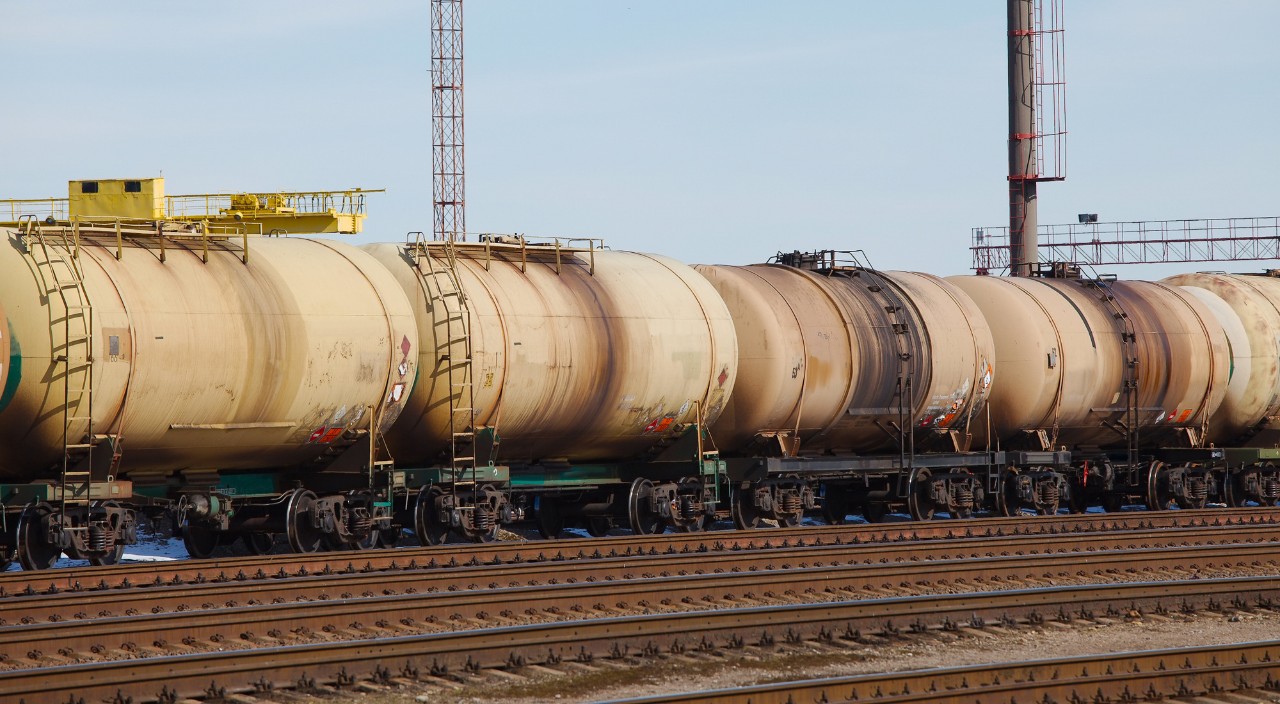
Featured image at top: UC Professor Amy Townsend-Small said the booming production of oil and natural gas has led to increased transportation of toxic chemicals across America's rail system. Photo/iStockPhoto
Related Stories
UC doctoral student shares his journey with Spectrum News
July 27, 2026

UC doctoral student Amota Ataneka spoke with Spectrum News about his educational journey. Ataneka, a native of the Pacific island nation of Kiribati, is one of 35 emerging scholars across the United States to win the National Academy of Education/Spencer Dissertation Fellowship.
How scammers can persuade you with AI
July 27, 2026
Spectrum News recently dove into how cloning voices with artificial intelligence is making it easier to scam people over the phone. The news outlet spoke with Kimberly Hyun, assistant professor of marketing at UC’s Lindner College of Business, to examine why AI is making it so much easier to trick people.
Decade of discovery
July 27, 2026
Every summer, UHP Discover has connected undergraduate students in the University Honors Program (UHP) to a unique array of opportunities in original interdisciplinary research. This year, the program celebrates its 10th anniversary.