Investigational medicine for Tourette syndrome promising
Medscape highlights UC, Children's researcher's findings

Medscape highlighted new research from the University of Cincinnati and Cincinnati Children's Hospital's Donald Gilbert that found a new drug reduces tic severity in children and adolescents with Tourette syndrome (TS) without exacerbating common psychiatric comorbidities.
Previous research found the drug called ecopipam reduced the primary endpoint of tic severity scores by 30% compared to placebo after 12 weeks, but it was unknown if the drug would affect the common comorbidities of attention-deficit/hyperactivity disorder (ADHD), anxiety, obsessive-compulsive disorder (OCD) and depression that are often present.
Gilbert, MD, professor in the Department of Pediatrics in UC's College of Medicine and a pediatric movement disorders and Tourette syndrome specialist at Cincinnati Children's Hospital's Division of Neurology, presented his findings at the International Congress of Parkinson's Disease and Movement Disorders 2024.
He told Medscape the two key findings were "first, that patients with a nonmotor diagnosis like depression or ADHD did not do any worse in terms of tic efficacy; and second, we didn't find any evidence that any of the nonmotor symptoms of Tourette's got worse with ecopipam."
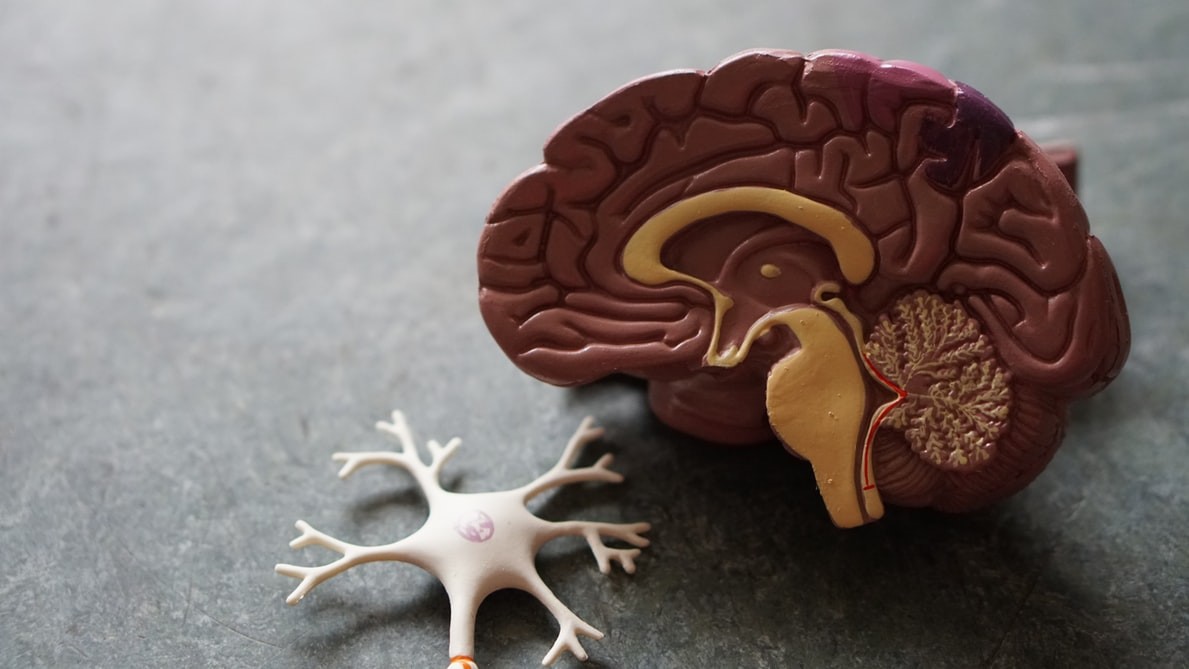
Featured photo at top of a model of a brain. Photo/Robina Weermeijer/Unsplash.
Related Stories
UC doctoral student shares his journey with Spectrum News
July 27, 2026

UC doctoral student Amota Ataneka spoke with Spectrum News about his educational journey. Ataneka, a native of the Pacific island nation of Kiribati, is one of 35 emerging scholars across the United States to win the National Academy of Education/Spencer Dissertation Fellowship.
How scammers can persuade you with AI
July 27, 2026
Spectrum News recently dove into how cloning voices with artificial intelligence is making it easier to scam people over the phone. The news outlet spoke with Kimberly Hyun, assistant professor of marketing at UC’s Lindner College of Business, to examine why AI is making it so much easier to trick people.
Decade of discovery
July 27, 2026
Every summer, UHP Discover has connected undergraduate students in the University Honors Program (UHP) to a unique array of opportunities in original interdisciplinary research. This year, the program celebrates its 10th anniversary.