
Pythons could fit your whole head in their mouth
UC study examines how largest snakes have ability to swallow enormous prey

Newsweek highlighted a new study by the University of Cincinnati and the Conservancy of Southwest Florida that examined the size of the prey that the biggest Burmese pythons captured could consume.
Burmese pythons are nonnative to Florida's Everglades National Park, where they have established themselves as apex predators. The biggest wild snakes captured in Florida stretch more than 15 feet with a mouth or gape that stretches 26 centimeters. That's big enough to swallow a 77-pound deer.
The bones of the snake's lower jaw are not fused at the front. But more importantly, Jayne said, the snakes have incredibly stretchy skin that allows them to swallow sometimes enormous prey.
Federal officials say the invasive snakes are decimating wildlife in the Everglades.
The study was published in the journal Reptiles & Amphibians.
"Watching an invasive apex predator swallow a full-sized deer in front of you is something that you will never forget," co-author Ian Bartoszek, a researcher at the Conservancy of Southwest Florida, said.
The conservancy's Ian Easterling also co-authored the study.
"The impact the Burmese python is having on native wildlife cannot be denied. This is a wildlife issue of our time for the Greater Everglades ecosystem," Bartoszek said.
Featured image at top: The U.S. Fish and Wildlife Service is leading a campaign to eradicate invasive Burmese pythons from the Everglades National Park. Photo/Susan Jewell/USFWS
More UC Biology in the news
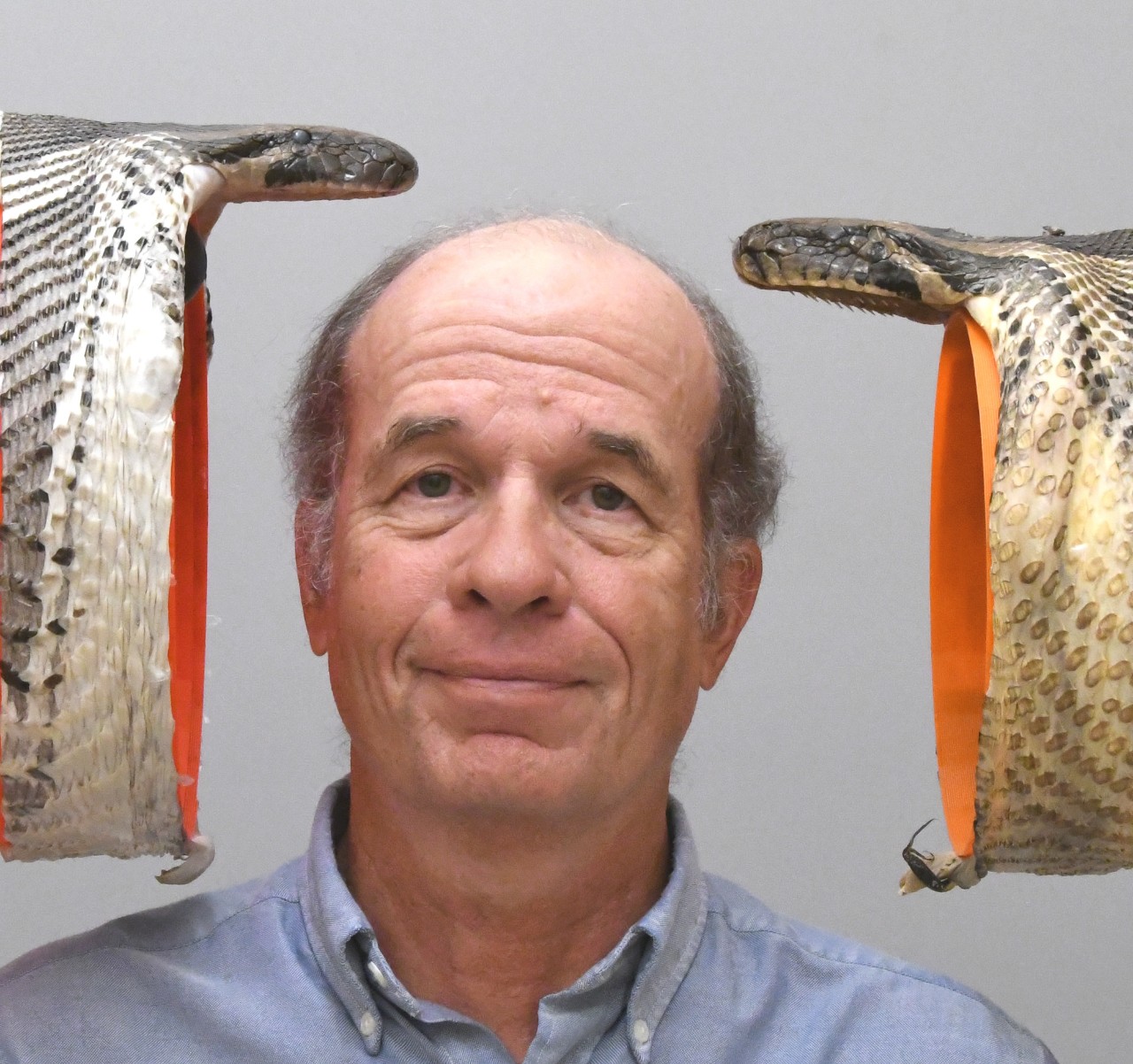
UC Professor Bruce Jayne poses with two mounted specimens of Burmese pythons captured in Florida showing the impressive gape of their mouths. Photo/Bruce Jayne
- Earth.com: Burmese pythons can eat larger animals whole
- West Hawaii Today: Large python swallows 77-pound deer, stunning researchers
Related Stories
Still the top ‘cat
October 20, 2026

The University of Cincinnati Bearcat mascot was voted Cincinnati’s favorite mascot in a Cincinnati Enquirer reader poll, earning 45.1% of the vote and topping other local favorites.
How will Ohio's minimum wage bump impact businesses and their employees?
October 20, 2026

UC economist Michael Jones spoke to WVXU's "Cincinnati Edition" on if Ohio's latest minimum wage increase will actually impact employees and businesses as inflation continues to rise.
Researchers test gene therapy as less invasive treatment for hydrocephalus
October 20, 2026

Researchers at the University of Cincinnati College of Medicine say an experimental gene therapy could eventually lead to a less invasive treatment for hydrocephalus, a condition in which excess fluid accumulates in the brain. The early-stage study, led by Agnes (Yu) Luo, PhD, professor and vice chair for research, was published in the journal Fluids and Barriers of the CNS. Yahoo! News recently featured it.