UC expert: More oil production means more leaks
Environmental studies professor talks about railcar leak that prompted evacuations

The Cincinnati Enquirer turned to an environmental studies professor to explain why Ohio has seen several high-profile rail disasters that have led to neighborhood evacuations.
Neighborhoods in southwest Ohio were evacuated as a precaution on Sept. 24 after a rail car was discovered spewing a toxic chemical called styrene commonly used in plastics.
In 2023, a train derailed outside East Palestine, Ohio, prompting evacuations after vinyl chloride spilled into the Ohio River.

UC Professor Amy Townsend-Small teaches environmental studies in UC's College of Arts and Sciences. Photo/Jay Yocis/UC
UC College of Arts and Sciences Professor Amy Townsend-Small told the Enquirer that both chemicals are byproducts of oil. She teaches in UC's School of Environment and Sustainability.
“These train cars that we see throughout Cincinnati, they’re all carrying petrochemicals,” she said.
Styrene is an organic molecule that's used in making Styrofoam and other plastics, she said.
It's considered a likely carcinogen, according to the National Research Council.
Townsend-Small said the likelihood of rail accidents increases with the increase in rail use. Ohio ranks fourth in the nation in miles of active freight rail, according to the Association of American Railroads.
And as the United States turns to greener transportation, gas and oil companies are dedicating more petrochemicals to plastics production, Townsend-Small said.
The Ohio River is home to dozens of oil, gas and petrochemical facilities.
Read the Cincinnati Enquirer story.
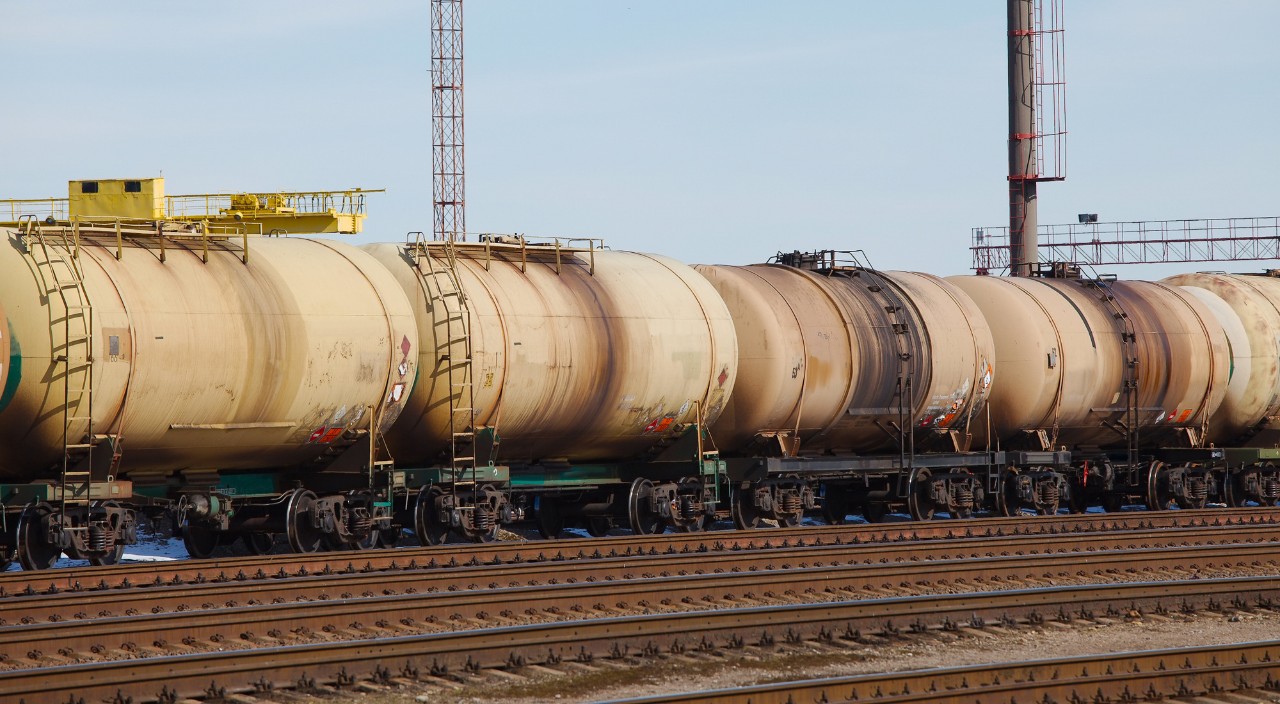
Featured image at top: UC Professor Amy Townsend-Small said the booming production of oil and natural gas has led to increased transportation of toxic chemicals across America's rail system. Photo/iStockPhoto
Related Stories
6 ways starting a GLP-1 medication could affect your emotions
May 20, 2026

When patients first start taking a glucagon-like peptide-1 (GLP-1) medication, they probably expect to feel full. But they might not anticipate how it can influence their emotions. The medications act on the stomach and the brain, said Malti Vij, MD, a University of Cincinnati adjunct associate professor in the College of Medicine's Department of Internal Medicine and a diplomate of the American Board of Obesity Medicine.
Pocket-sized population threat
May 18, 2026

The Financial Times took a deep dive into why populations around the world continue to be on the decline. The publication cited new University of Cincinnati research as part of the investigation that looks at the fall of fertility in the digital era.
Colorado silica dust trial could change the way industry does business
May 17, 2026

Betsy Malloy, Andrew Katsanis Professor of Law, at the University of Cincinnati, spoke with Bloomberg Law about how a Colorado trial could change the way the stone fabrication industry does business.