Exploring the current use and future of alternatives to traditional informed consent in acute stroke trials
MSN highlights editorial authored by UC experts

MSN highlighted an editorial written by the University of Cincinnati’s Yasmin Aziz, MD, and Joseph Broderick, MD, published Nov. 7 in the journal Neurology analyzing the current use and potential future of alternatives to traditional informed consent in acute stroke trials.
Patient informed consent is a crucial part of ethical clinical trial design and implementation, but time is of the essence for stroke trials. Approximately 2 million neurons die each minute they are deprived of oxygen, and patients are also sometimes incapacitated and therefore unable to consent to a trial, highlighting the need for emergency consent in certain cases.
There is currently no worldwide standard for emergency consent for stroke trials, with various approaches taken by different countries.
“This editorial is intended to educate the greater neurology community about these consent procedures and their current relevance to stroke research in particular,” said Aziz, assistant professor in the Department of Neurology and Rehabilitation Medicine in UC’s College of Medicine and a UC Health physician.
Broderick is principal investigator of the FASTEST trial, the first acute stroke trial in the United States to use exception from informed consent (EFIC) protocols.
“...Community consultation and public disclosure are unique to EFIC,” the authors wrote. “Both requirements can be quite expensive and time-consuming, delaying study start-up. Efforts to make EFIC more efficient and less costly in the US are ongoing.”
The coauthors noted as the field continues to explore the most effective and efficient alternatives to prospective informed consent, the “principles of patient autonomy and beneficence remain imperative.” Aziz said improving consent procedures is an opportunity to “keep moving the chains forward” for stroke research.
“The United States in particular has a very dark, very recent, unethical history with certain populations and the performance of clinical research,” she said. “We need to find the best way to honor patient autonomy while moving research forward to ultimately get better treatments to the bedside.”
Neuro Rehab Times also covered the editorial. Read the Neuro Rehab Times article.
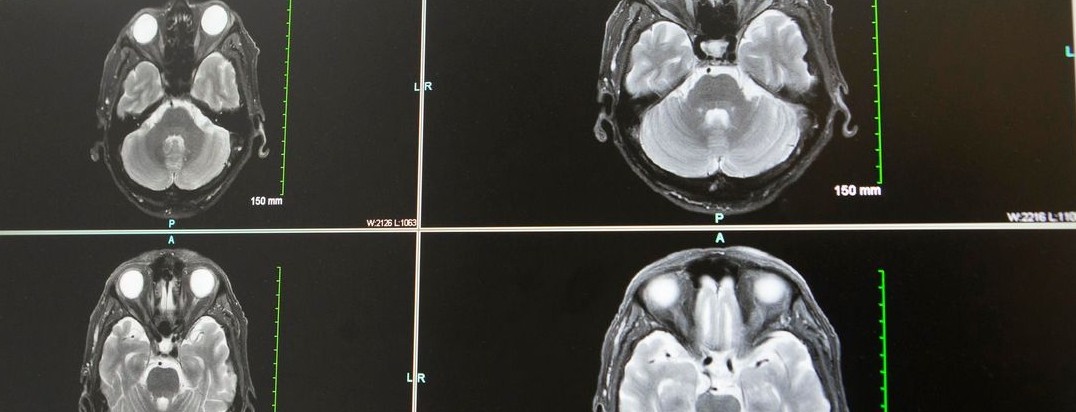
Featured photo at top of brain scans. Photo courtesy of Joseph Broderick.
Related Stories
These teeny spiders are social media stars
August 28, 2026

The New York Times turned to a University of Cincinnati professor to explain the appeal of jumping spiders on social media.
An internal divide among unions on AI impacts the Wisconsin gubernatorial race
August 28, 2026

Anne Lofaso, a professor in the Donald P. Klekamp College of Law at UC, spoke with Wisconsin Public Radio, about the schism among unions over AI and whether it is a plus, a negative, or somewhere in between when looking at job creation.
On-site training in Speech & Hearing Clinic sets UC’s programs apart
August 27, 2026
At the University of Cincinnati’s Speech & Hearing Clinic, Doctor of Audiology and Speech-Language Pathology graduate students gain real-world experience while providing free speech and hearing services to the community.