UC student's documentary to air on PBS
Digital media student follows researchers’ desperate bid to save a songbird

A University of Cincinnati student's documentary on the real-time extinction of Hawaii bird will air on PBS Hawaii this month.
UC College of Arts and Sciences student Ella Marcil, a digital media student, was commissioned by Kauai County’s Office of Economic Development to document the work of scientists who are trying to save the last members of a songbird called the akikiki.
Marcil accompanied the Kauai Forest Bird Recovery Project as it scoured the top of the high-altitude Halehaha plateau more than 4,000 feet above sea level looking for the bird, a species of honeycreeper.

An akikiki. Photo/Graham Talaber
The little gray-and-white bird used to be a common backyard visitor across the island, Marcil said. But the introduction of avian malaria to the island began to devastate akikiki populations. Birds that lived at higher, colder elevations were safe for a while. But a warming climate on the island allowed mosquitoes to reach higher into the mountains where the malarial parasite has killed virtually every surviving bird.
Growing up in Hawaii, Marcil said the akikiki often went unnoticed because of its drab colors and small size, flitting about the treetops and calling in a high-pitched peep.
“What’s really devastating is the akikiki once was as common as a pigeon on Kauai,” Marcil said.
PBS Hawaii will host a special online screening 6 p.m. Tuesday of Marcil's film “When Silence Becomes the Song.” Registration is required.
The digital screening will include a live Q&A with Marcil and the director of the recovery project, Cali Crampton.
PBS Hawaii featured the film on its November program guide cover.
Exactly how avian malaria arrived in Hawaii is a mystery. People could have introduced it through domestic fowl. Or far-flying seabirds might have introduced it to the island.
But once there, it quickly began decimating birds that had no natural defenses.
Marcil followed researchers as they searched the forest and tried to get any birds to respond to audio playbacks of their calls. But wherever they went, no birds called back.
“You could hear the wind and nothing else. It was disheartening,” she said.
Researchers were hopeful they could collect birds from the last known nest.
But the day they were to depart for the plateau, a storm struck the island. When researchers got there, the nest was abandoned and the hatchlings had died.
“It’s devastating,” Marcil said. “You see thousands of years of evolution dwindle to nothing just like that.”
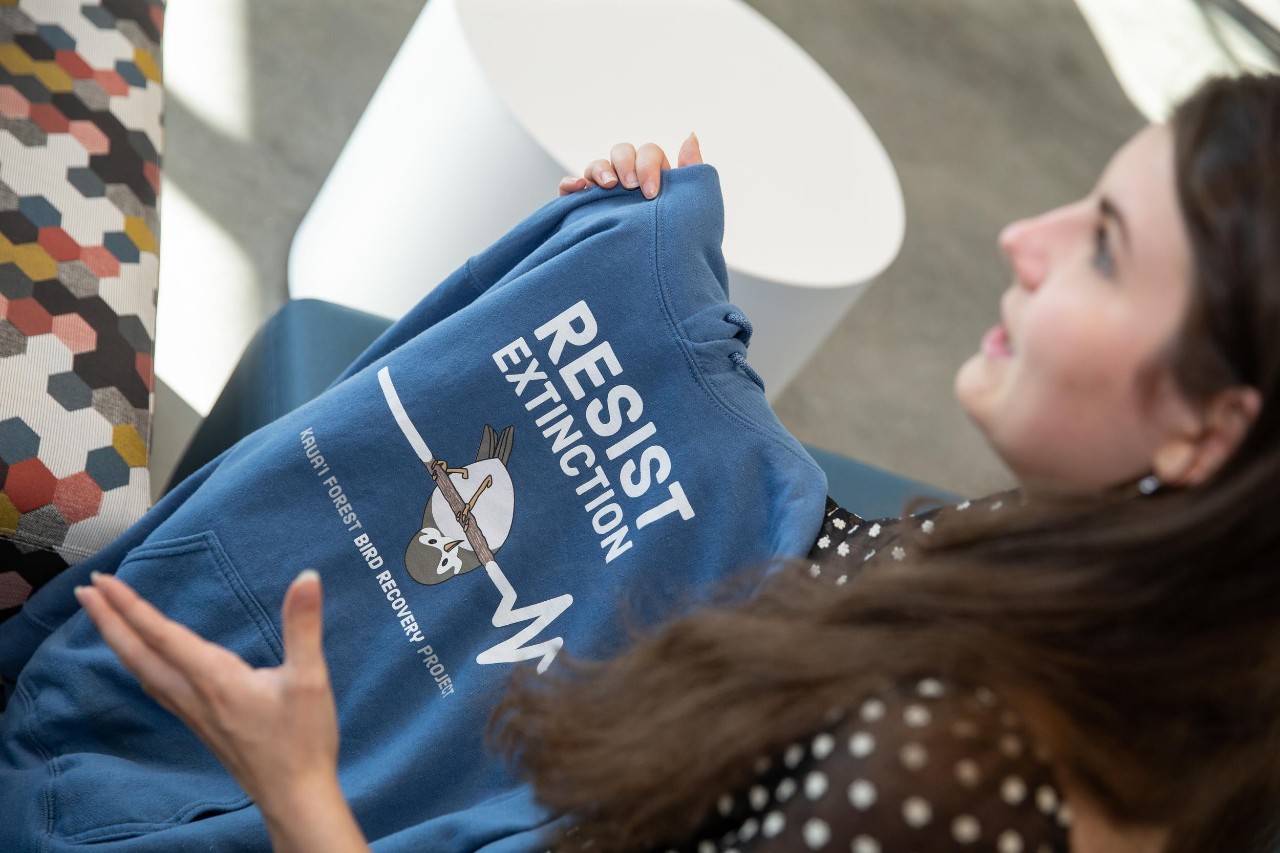
Featured image at top: UC College of Arts and Sciences student Ella Marcil filmed a documentary on the plight of a bird endemic to Hawaii that is now extinct in the wild. Photo/Andrew Higley/UC Marketing + Brand

UC filmmaker Ella Marcil's documentary on the plight of a native Hawaiian bird called the akikiki will air on PBS Hawaii this month. Photo/Andrew Higley/UC Marketing + Brand
Related Stories
President Pinto’s 2nd glow party brings first-year Bearcats together
September 20, 2026
UC President Neville Pinto and team hosted the second annual Bright Beginnings glow party for first-year students
How phone scammers use your own voice against you
September 18, 2026

The Wall Street Journal recently did a deep dive on how artificial intelligence is making scamming people over the phone much easier, citing research by Kimberly Hyun, assistant professor of marketing at UC’s Lindner College of Business.
Gas prices spike... Again
September 18, 2026

UC economist Gary Painter goes through the tactics companies use to keep their consumer bases amid rising oil costs.