Is it time to worry about benzene?
UC cosmetic science expert featured in New York Times article

Benzene can be found in everything from hand sanitizers to dry shampoo, but research is ongoing to determine the carcinogen's effect on humans.
The chemical is found naturally in crude oil and used to manufacture chemicals such as dyes, detergents, paints and plastics. It can end up in personal care products when the chemicals in them aren’t purified enough, or when certain active ingredients in products react with each other or break down.
There is no hard data yet that suggests low levels of benzene exposure from personal care products carries significant health risks. Many of the online and scientific discussion around benzene's presence in personal care products comes from drug testing company Valisure, which reported finding benzene contamination in hand sanitizers, body sprays, sunscreens, dry shampoos and acne medications containing benzoyl peroxide.
Some experts have questioned Valisure's methodology, including a testing protocol that involves heating products beyond temperatures that would ever happen in regular life. This could accelerate the breakdown of ingredients and suggest a higher risk of benzene exposure than consumers would actually face.
Kelly Dobos, a cosmetic chemist and adjunct instructor in UC's Cosmetic Science Program in the James L. Winkle College of Pharmacy, told the New York Times companies often test products at slightly elevated temperatures to simulate the ingredient's breaking down and help set expiration dates. But heating products to higher than recommended temperatures may be providing faulty results.
While the research continues, Dobos and other experts said it is not recommended to stop using sunscreen out of fear of benzene exposure. If you want to continue to use benzoyl peroxide products, like acne creams, Dobos said to store them in a cool, dark place like a cabinet or fridge to help the ingredients remain stable for longer.
Read the New York Times article.
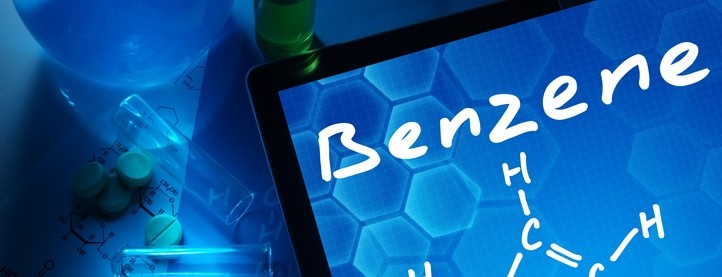
Featured photo at top of benzene's chemical makeup. Photo/designer491/iStock.
Related Stories
CCM welcomes new film and media scoring faculty member J.R. Paredes
May 20, 2026
UC College-Conservatory of Music Dean Pete Jutras has announced the appointment of J.R. Paredes as CCM's new Assistant Professor of Film and Media Scoring. His faculty appointment officially begins on Aug. 15, 2026. Paredes is a composer, music producer and audio post-production specialist whose work spans film, television and commercial music. His credits include original scores for feature films and series distributed on platforms such as Apple TV+ and Prime Video, as well as extensive work in sound design and mixing for film and media.
6 ways starting a GLP-1 medication could affect your emotions
May 20, 2026

When patients first start taking a glucagon-like peptide-1 (GLP-1) medication, they probably expect to feel full. But they might not anticipate how it can influence their emotions. The medications act on the stomach and the brain, said Malti Vij, MD, a University of Cincinnati adjunct associate professor in the College of Medicine's Department of Internal Medicine and a diplomate of the American Board of Obesity Medicine.