
Law lecture explores life of anti-slavery Supreme Court Justice John McLean

Event Information (passed)
John McLean, the first Ohioan on the U.S. Supreme Court, was a complex Justice. He was the only committed opponent of slavery on the Court before the Civil War yet enforced the Fugitive Slave Laws of 1793 and 1850 when the facts required it. McLean sought to balance his opposition to slavery and Ohio's status as a Free State with his constitutional duties. Paul Finkelman, Distinguished Professor of Law Emeritus, Albany Law School, will explore the complexities of Justice McLean during his lecture “John McLean: Southern Ohio’s Homegrown Anti-Slavery Justice”. This event, the 2025 Distinguished Visiting Professor of Law Lecture, will be held at 12:15 pm, Friday, January 17, 2025, in Room 160 at the College of Law.
CLE: 1 hour of general CLE credit has been approved for KY. OH is pending, approval is expected.
About the Lecture
John McLean was the first Ohioan to serve on the U.S. Supreme Court. He was the only truly dedicated opponent of slavery to serve on the Supreme Court in the six decades before the Civil War. He vigorously dissented in the court's major fugitive slave case, Prigg v. Pennsylvania (1842) and its most famous slavery case, Dred Scott v. Sandford (1857). As a member of the Ohio Supreme Court, he emphatically asserted that slavery was not allowed in the Buckeye State, and any slave brought into the state was free. He also personally helped a number of slaves become free. At the same time, he enforced the Fugitive Slave Laws of 1793 and 1850 on Circuit and in the Supreme Court, when the facts of a case fit the law. For this he was attacked by abolitionists. McLean tried to balance his opposition to slavery and the rights of Ohio to be a completely Free State, with his obligations to the Constitution. This lecture explores the dilemmas and complexities of this Justice.
About the Lecturer
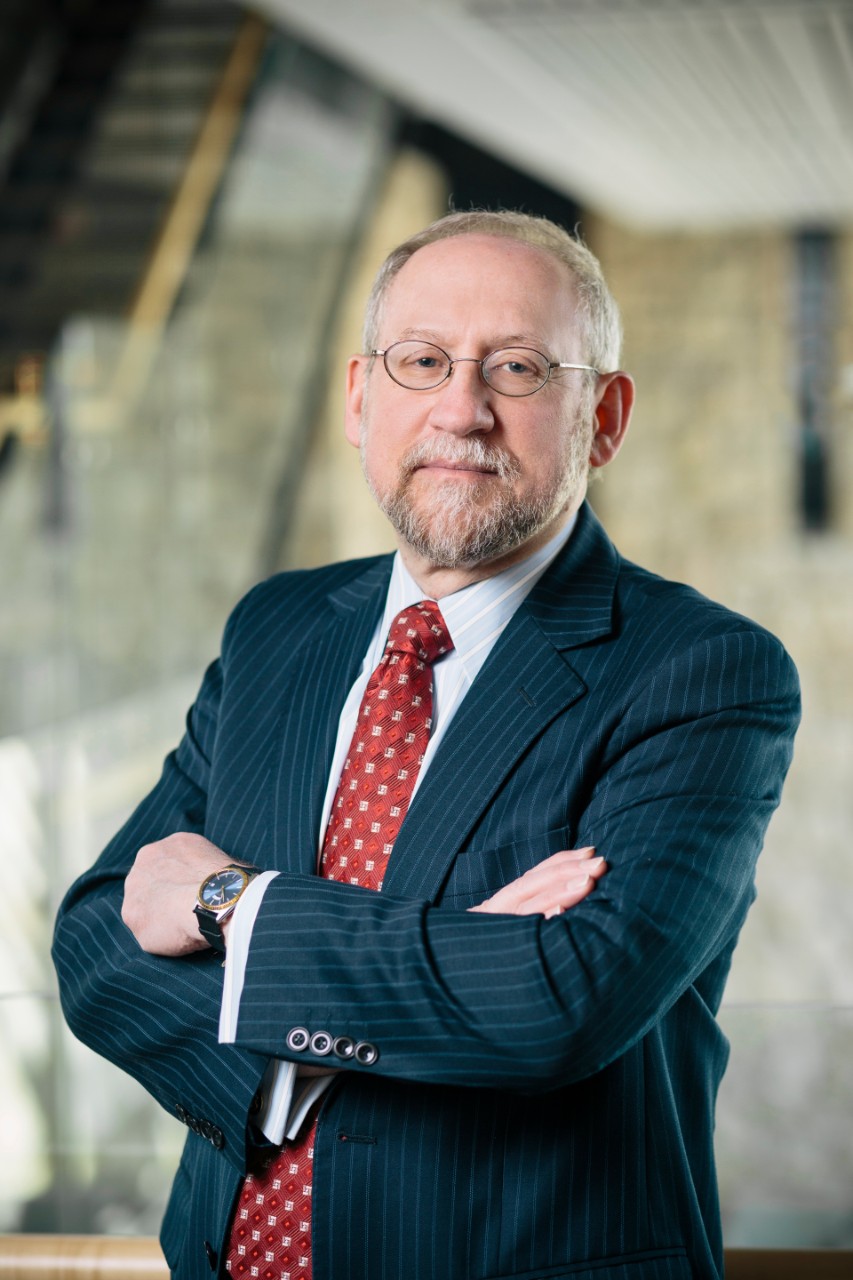
Professor Paul Finkelman, Albany Law School
Paul Finkelman, Distinguished Professor of Law Emeritus, Albany Law School, is the author or editor of more than 50 books. His most recent major book was Supreme Injustice: Slavery in the Nation's Highest Court (Harvard University Press). He is the author of more than 100 law review articles, many in such journals as Harvard Law Review, Stanford Law Review, University of Chicago Law Review, and University of Pennsylvania Law Review. His most recent major article was published in the Columbia Journal of Race and Law. In addition, the U.S. Supreme Court has cited his work in six decisions and he has been cited by many other federal and state courts.
Professor Finkelman has appeared on PBS, C-Span, NBC, Sunday Morning on CBS, and was the lead scholar for One Person, One Vote (2024), a movie about the Electoral College. He has published op-eds, reviews, and essays in, among others, the New York Times, Washington Post, The Atlantic, Washington Monthly, Huffington Post, New York Times.Com, The Los Angeles Review of Books, TheRoot.Com, USA Today, and the Baltimore Sun.
He is a specialist in American legal history, constitutional law, law and religion, civil rights and race relations, African American history, civil liberties, American Constitutional history, the American Civil War, American Jewish history, and legal issues surrounding baseball. He has lectured on human trafficking and on human rights issues at the United Nations, throughout the United States, and in more than a dozen other countries. He was an expert witness in a number of cases including the lawsuit over the ownership of Barry Bonds’ 73rd home run ball (Popov v. Hayashi) and in the famous Alabama Ten Commandments Monument Case (Glassroth v. Moore).
In 2017 Finkelman held the Fulbright Chair in Human Rights and Social Justice at the University of Ottawa. He has held tenured endowed chairs at Albany Law School and the University of Tulsa Law School, and visiting chairs at many institutions, including Duke Law School, the University of Pittsburgh Law School, Marquette University School of Law, LSU Law School, the University of Saskatchewan (Canada) College of Law, Nanzan University (Japan) College of Law, Osaka University (Japan) College of Law, and University of Miami history department. He received his bachelor’s degree from Syracuse University, and his master’s degree and Ph.D. from the University of Chicago. He was also a fellow in Law and Humanities at Harvard Law School.
Featured top photo: istockphoto.com.
Tags
Related Stories
UC's Anita Afzali, MD, receives American College of Gastroenterology International Leadership Award
October 27, 2026
The University of Cincinnati's Anita Afzali, MD, receives the American College of Gastroenterology's 2026 International Leadership Award for advancing global digestive health education, research and partnerships.
UC Foundation celebrates 2026 philanthropy winners
October 23, 2026
The University of Cincinnati Foundation recognized its Outstanding Philanthropic Volunteer Award honorees at the George Rieveschl Recognition Dinner on October 22, 2026.
AI breast cancer survival model from Cancer Center could improve accuracy and personalize care
October 23, 2026
UC Cancer Center researchers, including lead author Wedad Alatebi, developed a deep learning survival model for breast cancer that combines detailed clinical and genetic information, potentially offering physicians a more accurate tool to guide treatment decisions.