Transition clinic bridges gap in care for young people with disabilities
UC doctor, patient and mother featured in Quincy, Illinois news report

Quincy, Illinois television station WGEM highlighted the University of Cincinnati's Physical Medicine and Rehabilitation transition clinic led by Jensine’ J. Clark that helps patients like Tamia Craig move from pediatric to adult care.
Craig, 27, was born with cerebral palsy and has been in and out of hospitals her entire life. But as more patients with pediatric-onset disabilities like her live longer, they and their families can sometimes feel anxiety about moving from the pediatric care team some have known their whole lives to moving to adult care. The transition clinic helps ease this anxiety.
“Now they’re adults, now they’re 30 and 40 and maybe the pediatric setting is not the best place to care for them,” Clark, MD, assistant professor in the Department of Neurology and Rehabilitation Medicine in UC’s College of Medicine and a UC Health physician, told WGEM.
“She does need adult care because she’s got an adult body,” Tamia's mother Kristine Craig said. "[Clark] knew what things we needed to know. And it was amazing."
Another factor the transition team helps with is to make sure that the clinic is accessible to all patients, regardless of their mobility level. This means considering factors such as adjustable tables for easy transfers, wheelchair-accessible scales, and ample space for families with various seating options.
Read more about the PM&R and epilepsy transition clinics at UC.
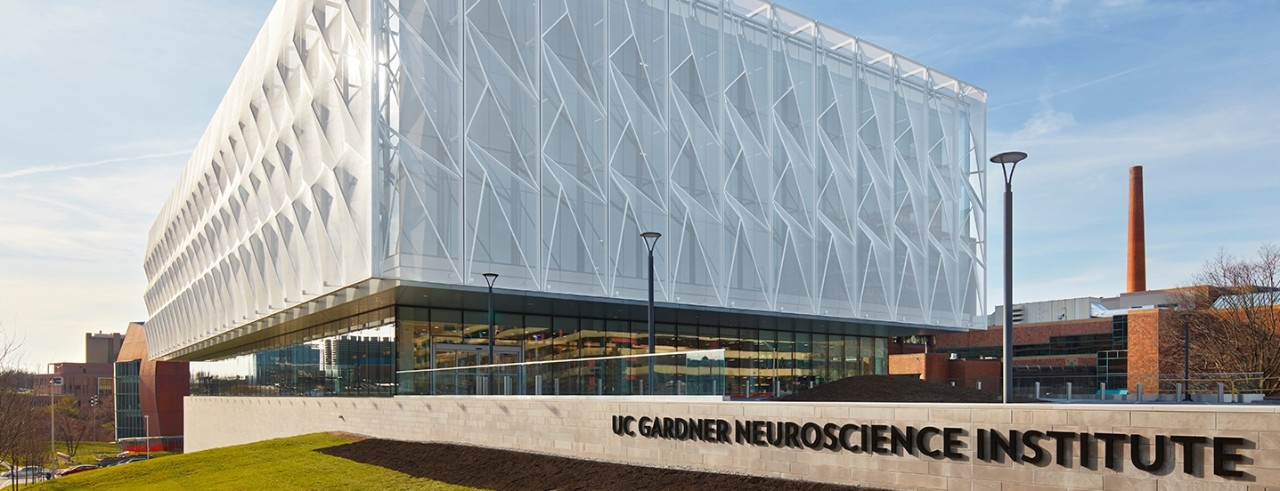
Featured photo at top of the UC Gardner Neuroscience Institute. Photo/University of Cincinnati.
Related Stories
These teeny spiders are social media stars
August 28, 2026

The New York Times turned to a University of Cincinnati professor to explain the appeal of jumping spiders on social media.
An internal divide among unions on AI impacts the Wisconsin gubernatorial race
August 28, 2026

Anne Lofaso, a professor in the Donald P. Klekamp College of Law at UC, spoke with Wisconsin Public Radio, about the schism among unions over AI and whether it is a plus, a negative, or somewhere in between when looking at job creation.
On-site training in Speech & Hearing Clinic sets UC’s programs apart
August 27, 2026
At the University of Cincinnati’s Speech & Hearing Clinic, Doctor of Audiology and Speech-Language Pathology graduate students gain real-world experience while providing free speech and hearing services to the community.