
NEH grant funds CCM faculty project that explores Cincinnati's sounds
CCM will host a workshop that examines Cincinnati's musical landscape

The UC College-Conservatory of Music (CCM) received a $190,000 National Endowment for the Humanities Landmarks in America History and Culture grant to fund Cincinnati Sounds: Exploring a Musical City’s Spaces, Places, and Sounds. The faculty-led project creates an immersive residency for visiting scholars, educators and humanties professionals to explore how Cincinnati landmarks shape — and are shaped by — music and sound.
During the weeks of July 6-11 and July 20-25, faculty (listed below) will partner with local community leaders to welcome humanties scholars from across the US to the musical city of Cincinnati. Learn more and apply to participate through the Cincinnati Sounds website.
- Kristy Swift, PhD and DMA, Project Lead and Assistant Professor of Music Studies at CCM
- Jenny Doctor, PhD, Professor of Musicology and Head of the CCM Library
- Stefan Fiol, PhD, Professor of Musicology at CCM
- Alexandra Kori Hill, PhD, Instructor of Musicology Adjunct at CCM
- Amy Koshoffer, UC Libraries
- Jonathan Kregor, PhD, Division Head of Composition, Musicology, and Theory; Professor of Musicology at CCM
- Scott Linford, PhD, Assistant Professor of Music at University of California Davis
- Stephen Meyer, PhD, Professor of Musicology at CCM
- Michael Unger, DMA, Associate Professor of Keyboard (organ and harpsichord) at CCM
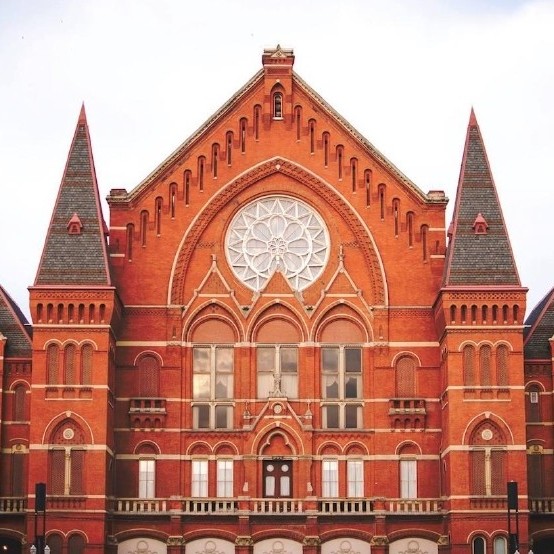
Cincinnati Music Hall.
For the visiting scholars, the Cincinnati Sounds project involves a weeklong residency, where they will immerse themselves in experiential site-based learning. Participants will investigate and interrogate music and sound in Cincinnati landmarks of education, instruments and instrument building, sacred practices, industry and progress, and freedom and justice, at sites located in Cincinnati’s Downtown, Newtown Village, Riverside, and West End neighborhoods. They will observe how urban planning and development can create some highly curated landmarks while leaving others lingering only in public memory.
Traveling by boat, bus, foot and streetcar, participants will tour pristinely preserved, deeply fractured and reimagined bygone, historic and modern landmarks. Musical instruments, sacred spaces, murals, libraries, museums, a recording studio, theaters, universities and a river boat offer unique opportunities to explore place-based resonances of music and sound in our musical city. Specific site stops include the Cincinnati Public Library, bus tours of ArtsWave public murals, Music Hall, Cincinnati Black Music Walk of Fame, the National Underground Railroad Freedom Center and more.
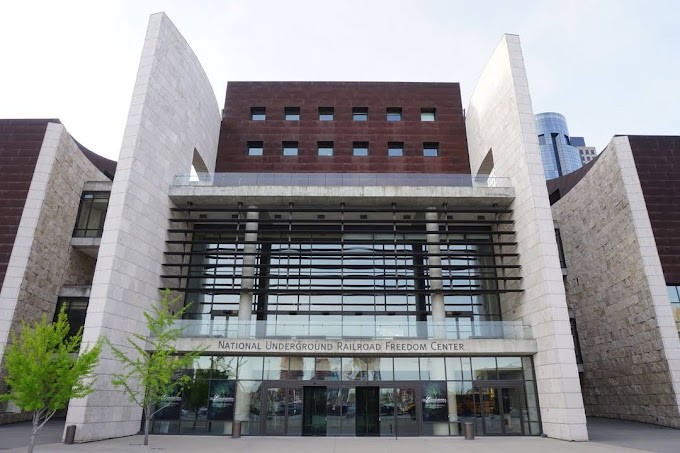
National Underground Railroad Freedom Center.
In addition to site visits, participants will work with primary sources, interdisciplinary secondary scholarship, geography, sound mapping and other applications to humanities research and teaching. Daily workshops will include a keynote address, instruction on mapping sound, methods of storytelling and presentations from Cincinnati area arts leaders, authors, historians, librarians and university faculty. Through these experiences and collaborations with the CCM faculty team, the visiting scholars will hone tools for developing new research and teaching around music, sound, and landmarks that they can take with them and further develop in their own cities.
The current NEH grant will fund an expansion of the faculty team’s research and teaching around Cincinnati Sounds. The group first formed in 2019 over a shared interest in collaborating with community partners to form new relationships and develop new initiatives highlighting Cincinnati as a musical city in their research and teaching. A collaborative grant award from the UC Provost’s Office supported the development of ground-breaking research and newly created CCM courses and units of study including Cincinnati Sounds, Music Cultures of the Black Atlantic, Noise in the Queen City, and Sing Cincinnati, which resulted in faculty and student digital research projects such as Fiol’s Noise in the Queen City and Linford’s Cincinnati’s West End Blues.
In the July 2025 workshops, the CCM faculty team will work with humanities scholars to hone tools for developing new research and teaching around music, sound, and landmarks that the visiting participants can take with them and further develop in their own cities.
Explore Cincinnati Sounds
Featured image at the top: The Singing Mural, designed by nationally renowned artist and Cincinnati resident C. F. Payne, this cast of characters represents the community coming together in celebration of the arts. Learn more about the mural.
Related Stories
Should we appreciate bats?
October 6, 2026
UC associate professor Joe Johnson explains why bats matter during Bat Appreciation Month and invites the public to Ohio Bat Fest, where families can learn about bat conservation, ecology and wildlife research.
Dylan Mulvaney visits CCM, where she got 'the best degree in the world'
October 6, 2026

UC College-Conservatory of Music alumna Dylan Mulvaney (BFA Musical Theatre, '19) visited campus to meet with current students on Friday, Oct. 2. During the 2.5 hour Q & A session, Dylan talked about her career, shared advice and answered questions from CCM's current Musical Theatre students.
UC Clermont's Valentine Johns expands student support through AI
October 6, 2026
Valentine Johns, PhD, associate director of the UC Clermont College Learning Commons, was inspired to champion artificial intelligence through its potential to make academic support more accessible and responsive to students’ needs.