
UC engineer honored with presidential award
Joel Alejandro (Alex) Mejia received Presidential Early Career Award for Scientists and Engineers

The highest honor bestowed upon scientists by the U.S. government, the Presidential Early Career Award for Scientists and Engineers (PECASE) was founded by President Clinton during his time in office. The award recognizes engineers and scientists who exemplify valuable potential for leadership early in their research career. Recently, the University of Cincinnati's Joel Alejandro (Alex) Mejia, was named a PECASE honoree.
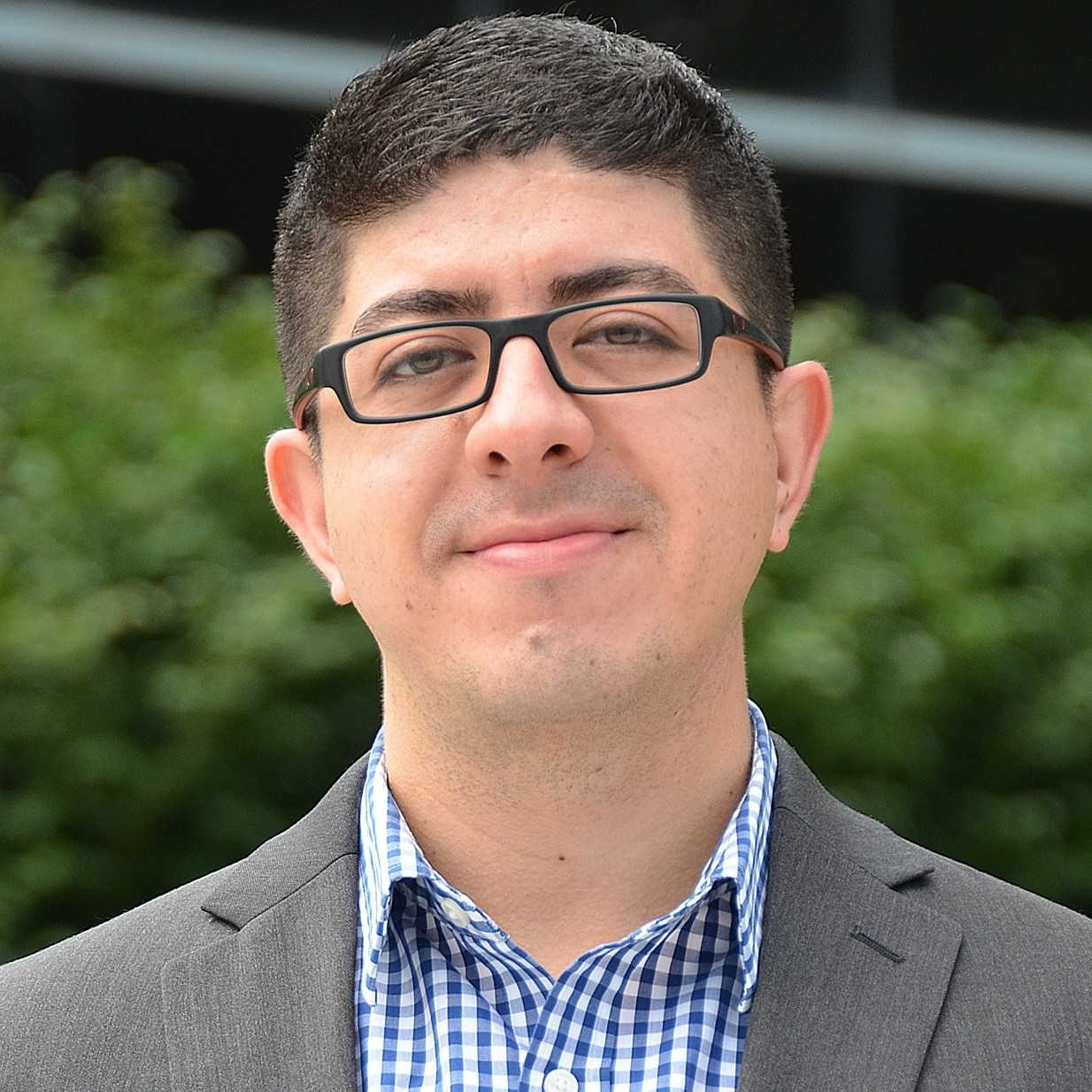
Joel Alejandro (Alex) Mejia serves as head of the Department of Engineering and Computing Education. Photo/Provided.
"This recognition is not just a personal achievement, but a testament to the incredible work being done by so many in the field, especially in making engineering more accessible for historically minoritized communities," Mejia said.
Mejia serves as the newly appointed head of the Department of Engineering and Computing Education within the College of Engineering and Applied Science. His research interests include Latino/a/x/é engineers, engineering culture and discourse, the development of critical consciousness among engineers, and engineering for social justice. His work has significantly contributed to the field's understanding of bilingualism and broadening participation in engineering spaces.
"It's a privilege to contribute to research that amplifies the voices of Latino/a/x students and to help shape a future where all students have support and opportunities they need to thrive," he said.
He comes to UC from the University of Texas at San Antonio, where he served as an associate professor in the Department of Biomedical Engineering and Chemical Engineering and in the Department of Bicultural-Bilingual studies. He also spent time as a project engineer working for various entities, including the Department of Defense.
The PECASE Award is a means of recognizing innovative developments in STEM while also expanding awareness of careers in these fields, strengthening connections between research and its impact on society, and emphasizing the importance of science on the future of our nation. Awardees are funded or employed by more than a dozen participating agencies. Mejia is supported by the National Science Foundation.
Along with this award, Mejia has been honored with The Collaborative Network for Engineering and Diversity's Rising Star Award in 2024 for his work, a National Science Foundation Faculty Early Career Development (CAREER) Award in 2022, as well as the National/William Elgin Wickenden Award in both 2022 and 2017 for the "highest standards of scholarly research" in the Journal of Engineering Education by the American Society for Engineering Education.
Featured image at top: Next Lives Here. Photo/UC Marketing and Communications
Related Stories
Is Cincinnati building new homes fast enough?
September 22, 2026

Gary Painter, professor and academic director of the Real Estate Center at UC's Lindner College of Business, offers comments on affordability issues in Cincinnati.
UC climbs to No. 3 in the nation for co-ops and internships in 2027 U.S. News rankings
September 22, 2026
In U.S. News & World Report’s 2027 Best Colleges rankings, the University of Cincinnati rises to No. 3 in the nation for co-ops and internships — No. 1 among public institutions — and posts gains in undergraduate business, computer science and psychology.
'Discovery, mentorship, momentum': UC College of Medicine's graduate programs celebrate year of success
September 22, 2026
From new mentorship honors to a growing research pipeline, see how the University of Cincinnati College of Medicine's graduate programs made this a standout year.