UC studies: Silent mutations, tumor microenvironment may be therapeutic targets
Experts present at AACR 2026

University of Cincinnati Cancer Center researchers will present abstracts at the American Association for Cancer Research Annual Meeting 2026 April 17 to 22 in San Diego.
‘Silent’ mutations, previously overlooked, may be therapeutic targets
Megan Satyadi, MD. Photo provided.
KRAS, the most commonly mutated oncogene in human cancer, is mutated in more than 90% of pancreatic cancers, helping the tumors grow, spread and evade treatment.
Certain KRAS mutations, called “silent” or “synonymous” mutations, have been ignored during clinical testing because they do not change the gene’s amino acid sequence. Researchers including first author Megan Satyadi, MD, examined whether these silent mutations still affected cancer cells.
“Specifically, we wanted to know whether these synonymous variants could alter KRAS biology and influence how cancer cells respond to emerging KRAS-targeted therapies,” said Satyadi, a resident in UC’s Department of Surgery in the College of Medicine working in the lab of Andrew Waters, PhD.
The team found that certain silent KRAS mutations behave more similarly to mutations known to help tumor cells grow than previously thought, increasing KRAS expression and helping tumors develop treatment resistance.
“This challenges the long-standing assumption that all silent mutations are biologically inert and suggests that some patients currently classified as ‘KRAS wild-type’ may in fact have tumors with meaningful oncogenic KRAS activity,” Satyadi said.
Moving forward, the team will work to validate the findings in more clinically relevant systems, such as animal cell models, and define the mechanisms these silent mutations use. More broadly, the research highlights that these so-called “silent” mutations are not truly silent and need to be studied more closely in other cancer cells.
“As precision oncology increasingly relies on genomic classification, our findings suggest that subtle nucleotide changes may have clinically meaningful effects that are currently overlooked,” Satyadi said. “Recognizing these variants could refine how we interpret sequencing results and identify new groups of patients who may benefit from targeted treatment therapies.”
Satyadi will present “Silent KRAS mutations confer altered sensitivity to targeted KRAS inhibition” April 21 at 2 p.m.
Fat tissue a possible biomarker to predict immunotherapy outcomes in head and neck cancer
Kyle Harris. Photo provided.
Previous research has found that obesity is associated with better outcomes for patients with head and neck cancer treated with immunotherapy. But the role of peritumoral adipose tissue, or fat directly surrounding tumors, has not been well studied.
Researchers including first author Kyle Harris examined whether the amount of fat tissue surrounding the tumor helps predict which patients respond best to pembrolizumab, a commonly used immunotherapy treatment. They conducted a retrospective analysis of patients with locally advanced head and neck squamous cell carcinoma treated with pembrolizumab before surgery.
“We found that patients with greater peritumoral adipose tissue on pretreatment CT imaging were more likely to have favorable pathologic response and improved survival outcomes,” said Harris, a medical student researcher in the Cancer Center’s Head and Neck Experimental Advancement Laboratory.
The team also analyzed tumor RNA sequencing data and found several molecular pathways associated with higher peritumoral adipose tissue. “These pathways may help explain the biologic relationship between adipose tissue and immunotherapy response,” Harris said.
The amount of peritumoral adipose tissue could become a noninvasive biomarker that helps predict which patients will respond best to immunotherapy. Harris said the team is planning a prospective study to validate the current findings in a larger group of patients that could lead to an interventional clinical trial.
“The ultimate goal of this work is to provide clinicians with a simple biomarker that is available on routine CT scans and may help select treatments that best fit patients,” he said. “This goal would fill a need for noninvasive biomarkers to predict response, as currently the Food and Drug Administration-approved biomarkers to predict immunotherapy response require tissue-based sampling.”
Harris will present “Peritumoral adipose tissue as a prognostic imaging biomarker for immunotherapy response in HNSCC” April 20 at 9 a.m.
Targeting tumor microenvironment, melanoma cells could overcome treatment resistance

Jie Wang. Photo provided.
Cancer-associated fibroblasts (CAFs) are cells outside a tumor but within the tumor microenvironment that help tumors grow and spread. They can also help cancer cells develop resistance to certain treatments.
Researchers including first author Jie Wang examined how CAFs help melanoma cells develop resistance to BRAF inhibitors, a targeted therapy.
“We identified a novel β-catenin–TCF–POSTN regulatory axis that drives CAF-mediated resistance to BRAF inhibitors in melanoma,” said Wang, a graduate assistant in the lab of Yuhang Zhang in UC’s James L. Winkle College of Pharmacy. In cells, regulatory axes are pathways where genes, proteins and other cellular material interact to control specific processes.
“Specifically, CAF-derived POSTN, regulated by β-catenin–TCF signaling, promotes extracellular matrix remodeling and enhances melanoma cell survival under therapeutic pressure,” explained Wang.
The findings support a treatment approach that targets both the tumor and CAFs by combining a drug that inhibits β-catenin–TCF interaction and a BRAF inhibitor to help overcome treatment resistance in melanoma.
“This study highlights the importance of tumor-stroma interactions in drug resistance and underscores the potential of targeting the tumor microenvironment,” Wang said.
Wang will present “POSTN-driven mechanotransduction sustains β-catenin activity in CAFs to promote melanoma progression and drug resistance” April 20 at 2 p.m.
The next groundbreaking discovery
UC is a powerhouse of discovery and impact as a Carnegie 1 research institution. From pioneering medical research to transformative engineering and social innovation, our faculty and students drive progress that reaches across the world.
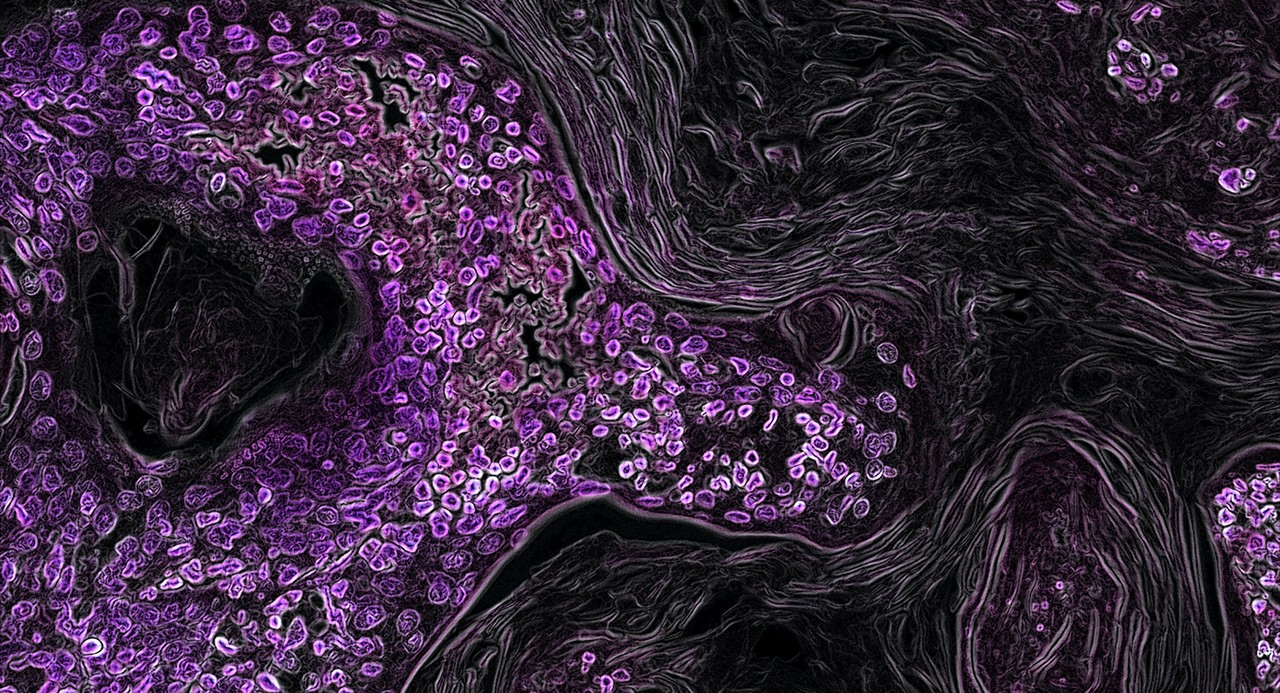
Featured image at top: KRAS-driven cancer cells. Created by Eric Snyder, 2015. Image used courtesy of the National Institutes of Health.
Related Stories
New clinical trial aims to optimize pain management and reduce opioid use after mastectomy
March 7, 2025

MSN highlighted a new University of Cincinnati Cancer Center clinical trial aimed to optimize pain management and reduce the need for opioids after mastectomy procedures.
Study looks to optimize pain management, reduce opioid use after mastectomy
March 5, 2025
A multidisciplinary team of University of Cincinnati Cancer Center researchers is leading a new clinical trial aimed to optimize pain management and reduce the need for opioids after mastectomy procedures.
UC study shows lack of awareness for lung cancer screenings across country
August 21, 2026
University of Cincinnati Cancer Center researchers have published a study in the American Journal of Surgery that found only 15% of eligible American adults have discussed lung cancer screening with their doctors.This research emphasizes the need to spread awareness and better educate the public about screening through low-dose computed tomography.