
Fighting against Florida's most invasive reptile
UC biologist tracks impact of pythons on Florida's wildlife

The ecological news site Planet Forward accompanied snake catcher Donna Kalil on a hunt for one of Florida's most devastating nonnative, invasive species: the Burmese python.
These snakes are believed to have been introduced to Florida's Everglades in the 1980s through releases from the pet trade and the accidental release of snakes after Hurricane Andrew in 1992. Today, they are decimating Florida's native wild animals, according to wildlife surveys by the U.S. Fish and Wildlife Service.
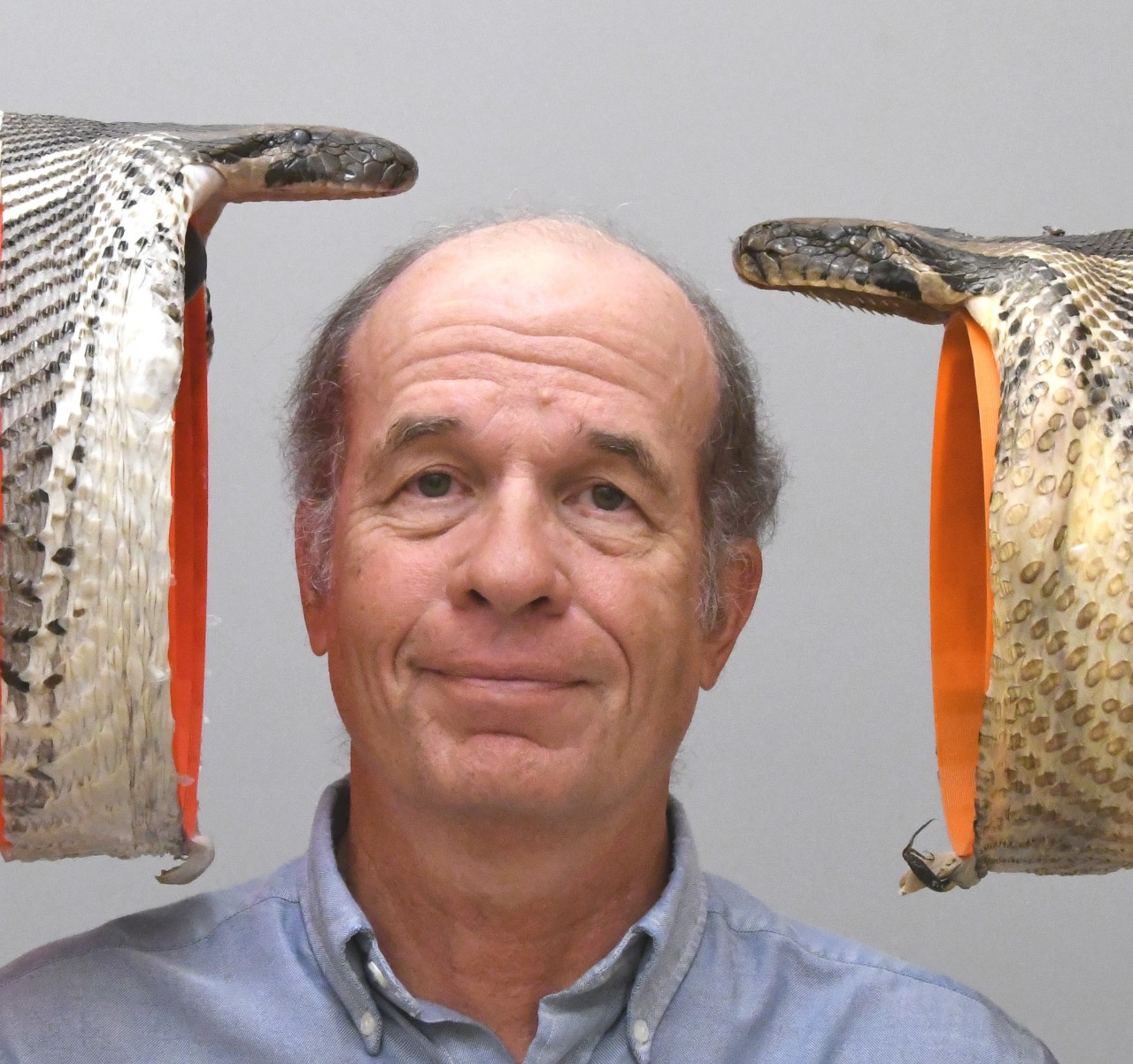
UC Professor Bruce Jayne demonstrates the gape of wild-caught and euthanized Burmese python specimens in his lab. Photo/Bruce Jayne
Planet Forward talked to University of Cincinnati Professor Bruce Jayne about a study he co-authored last year with the Conservancy of Southwest Florida that examined wild-caught snakes in Florida to assess their potential predatory impact on native wildlife.
Jayne studies the many ways snakes move, hunt and consume prey. The size of prey that most snakes can consume is limited in part by what they can swallow, which starts with the gape of their mouths, he said.
Like most snakes, Burmese pythons swallow their prey whole.
“To me, for a long time, what has not been obvious is that clearly, big pythons can eat very big prey. But that doesn’t necessarily mean they’re eating as big prey as they possibly could,” Jayne told Planet Forward.
Jayne teaches biological sciences in UC's College of Arts and Sciences.
Jayne's study found that pythons could consume prey far bigger than previously known, which means more Florida wildlife is on the menu. And this is cause for concern as the invasive snakes spread across the state, he said.
Read the Planet Forward story.
Featured image at top: Researchers with the Conservancy of Southwest Florida capture an enormous Burmese python. Photo/Conservancy of Southwest Florida
More UC Biology in the news

UC Professor Joshua Gross studies blind cavefish in his biology lab. Photo/Andrew Higley/UC Marketing + Brand
- National Geographic: The surprising strategies animals use to survive winter
- Popular Science: This eyeless cavefish grows extra taste buds
- Lake Okeechobee News: Researchers decode genome of insect harmful to citrus growers
Related Stories
Simple ways to find a deeper sense of happiness and well being
October 8, 2026

UC assistant professor Suzie White, featured in an AARP story on practical ways to live a happier, healthier life, shared research-backed strategies for increasing well-being through gratitude and service to others. White teaches Happiness in Action, a course that helps students apply the science of happiness in everyday life.
New vending machine helps people with addiction
October 8, 2026

The University of Cincinnati's Daniel Arendt was featured in a Spectrum News report on a new harm reduction vending machine installed at the IPM Food Pantry in partnership with the Hamilton County Mental Health and Recovery Services Board.
Defying the demographic cliff
October 7, 2026

Despite the looming demographic cliff, the University of Cincinnati and five other major Greater Cincinnati universities grew enrollment this fall, with UC reaching a record 54,437 students, helped by strong first-year demand.