
Pythons could fit your whole head in their mouth
UC study examines how largest snakes have ability to swallow enormous prey

Newsweek highlighted a new study by the University of Cincinnati and the Conservancy of Southwest Florida that examined the size of the prey that the biggest Burmese pythons captured could consume.
Burmese pythons are nonnative to Florida's Everglades National Park, where they have established themselves as apex predators. The biggest wild snakes captured in Florida stretch more than 15 feet with a mouth or gape that stretches 26 centimeters. That's big enough to swallow a 77-pound deer.
The bones of the snake's lower jaw are not fused at the front. But more importantly, Jayne said, the snakes have incredibly stretchy skin that allows them to swallow sometimes enormous prey.
Federal officials say the invasive snakes are decimating wildlife in the Everglades.
The study was published in the journal Reptiles & Amphibians.
"Watching an invasive apex predator swallow a full-sized deer in front of you is something that you will never forget," co-author Ian Bartoszek, a researcher at the Conservancy of Southwest Florida, said.
The conservancy's Ian Easterling also co-authored the study.
"The impact the Burmese python is having on native wildlife cannot be denied. This is a wildlife issue of our time for the Greater Everglades ecosystem," Bartoszek said.
Featured image at top: The U.S. Fish and Wildlife Service is leading a campaign to eradicate invasive Burmese pythons from the Everglades National Park. Photo/Susan Jewell/USFWS
More UC Biology in the news
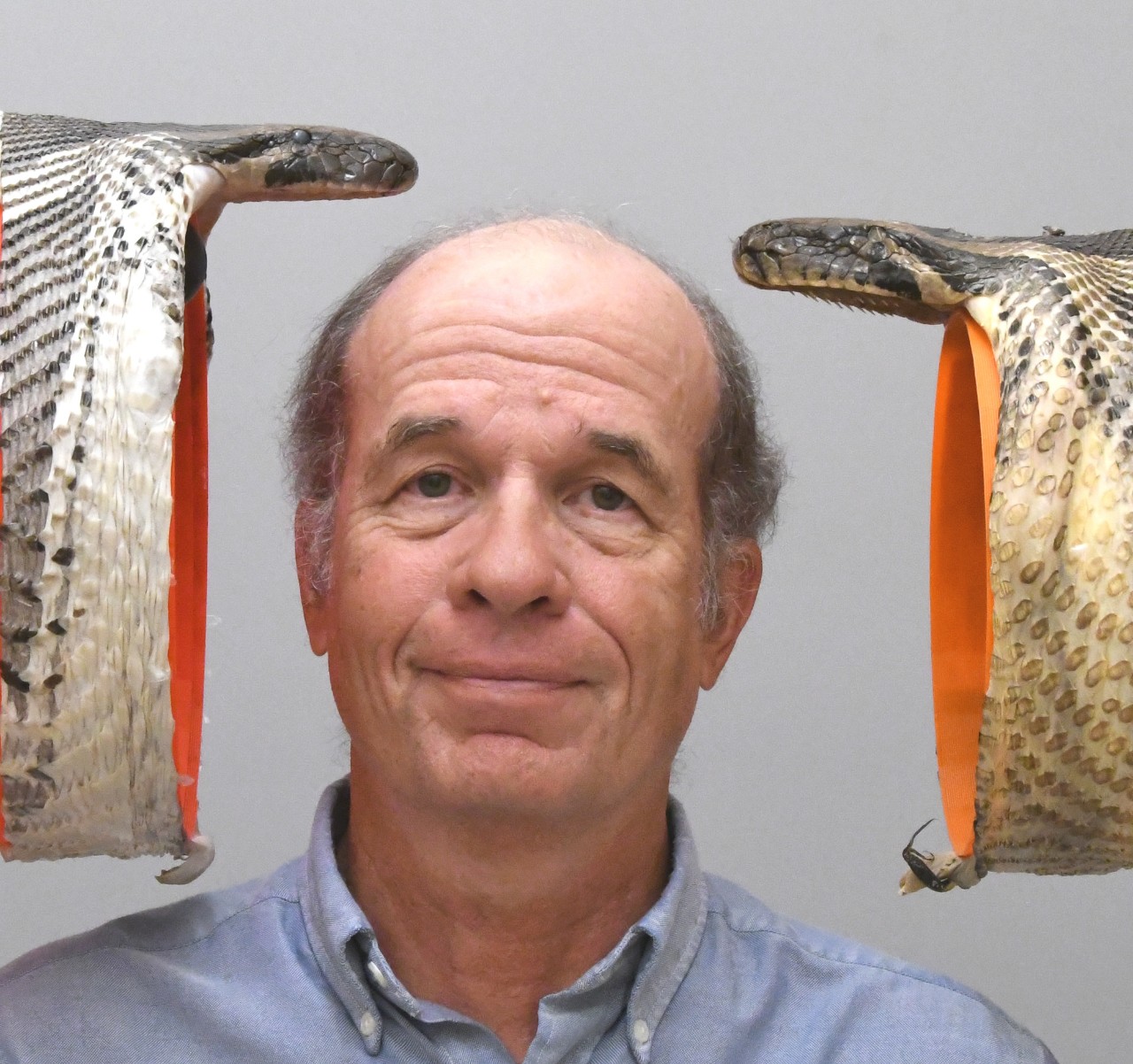
UC Professor Bruce Jayne poses with two mounted specimens of Burmese pythons captured in Florida showing the impressive gape of their mouths. Photo/Bruce Jayne
- Earth.com: Burmese pythons can eat larger animals whole
- West Hawaii Today: Large python swallows 77-pound deer, stunning researchers
Related Stories
Defying the demographic cliff
October 7, 2026

Despite the looming demographic cliff, the University of Cincinnati and five other major Greater Cincinnati universities grew enrollment this fall, with UC reaching a record 54,437 students, helped by strong first-year demand.
Should we appreciate bats?
October 6, 2026
UC associate professor Joe Johnson explains why bats matter during Bat Appreciation Month and invites the public to Ohio Bat Fest, where families can learn about bat conservation, ecology and wildlife research.
FAA turns to AI to reform air traffic control
October 6, 2026

WKRC Local 12 turned to an aerospace engineering professor at the University of Cincinnati to explain the risks and benefits of a proposal by the Federal Aviation Administration to use artificial intelligence to revamp air traffic control in the United States.