The evolution of poststroke recovery
UC expert featured in Medscape article

The University of Cincinnati's Joseph Broderick, MD, was featured in a Medscape article commenting on new treatments and advancements in the field of poststroke recovery research.
New research is challenging the idea that regaining limb mobility more than 6 months after a stroke was nearly impossible, including studies of noninvasive brain stimulation that pairs with physical rehabilitation to modulate disrupted neural networks.
Broderick noted determining the correct dose of stimulation will be key, as too much stimulation “can cause side effects that you don’t want.”
Other researchers are focused on using robotic therapy or interactive virtual reality (VR) gaming to help strengthen limbs and encourage patients to stick to their exercise regimen. Broderick noted that interventions like VR have a limitation of not being able to address language or vision deficits caused by stroke.
“There are limits to what we can recover from,” said Broderick, professor in UC’s Department of Neurology and Rehabilitation Medicine in the College of Medicine, director of the UC Gardner Neuroscience Institute and a UC Health physician.
Moving forward, Broderick said gene therapy could potentially help "spark motor recovery" in patients.
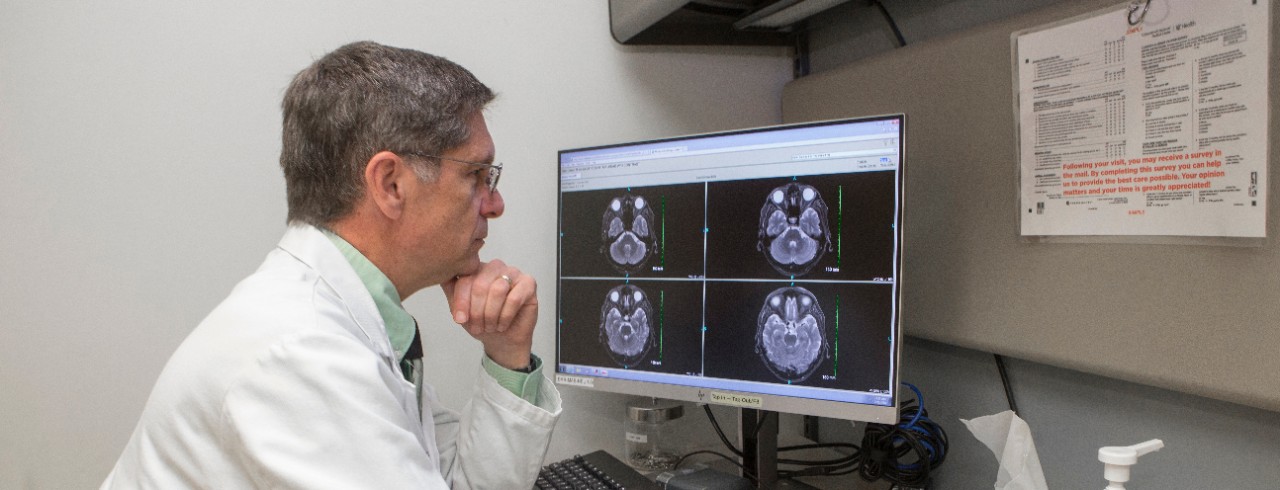
Featured photo at top of Dr. Broderick. Photo/Joseph Fuqua II/University of Cincinnati
Related Stories
Get to know CCM’s newest faculty and staff members
September 2, 2026
UC’s College-Conservatory of Music will welcome a variety of new faculty and staff members to its roster of distinguished performing and media arts experts, researchers and educators this fall.
Cancer Center plays key role in lab research, clinical trials for new pancreatic cancer drug
September 1, 2026

WLWT and WCPO highlighted the contributions of University of Cincinnati Cancer Center researchers that helped lead to the recent FDA approval of daraxonrasib, a new treatment for pancreatic cancer.
An expert pieced together this Roman document like a puzzle
September 1, 2026

National media highlighted a new project by UC Classics Assistant Professor Matthijs Wibier to piece together and translate an ancient Roman text from fragments buried in the desert for more than 1,600 years.