The evolution of poststroke recovery
UC expert featured in Medscape article

The University of Cincinnati's Joseph Broderick, MD, was featured in a Medscape article commenting on new treatments and advancements in the field of poststroke recovery research.
New research is challenging the idea that regaining limb mobility more than 6 months after a stroke was nearly impossible, including studies of noninvasive brain stimulation that pairs with physical rehabilitation to modulate disrupted neural networks.
Broderick noted determining the correct dose of stimulation will be key, as too much stimulation “can cause side effects that you don’t want.”
Other researchers are focused on using robotic therapy or interactive virtual reality (VR) gaming to help strengthen limbs and encourage patients to stick to their exercise regimen. Broderick noted that interventions like VR have a limitation of not being able to address language or vision deficits caused by stroke.
“There are limits to what we can recover from,” said Broderick, professor in UC’s Department of Neurology and Rehabilitation Medicine in the College of Medicine, director of the UC Gardner Neuroscience Institute and a UC Health physician.
Moving forward, Broderick said gene therapy could potentially help "spark motor recovery" in patients.
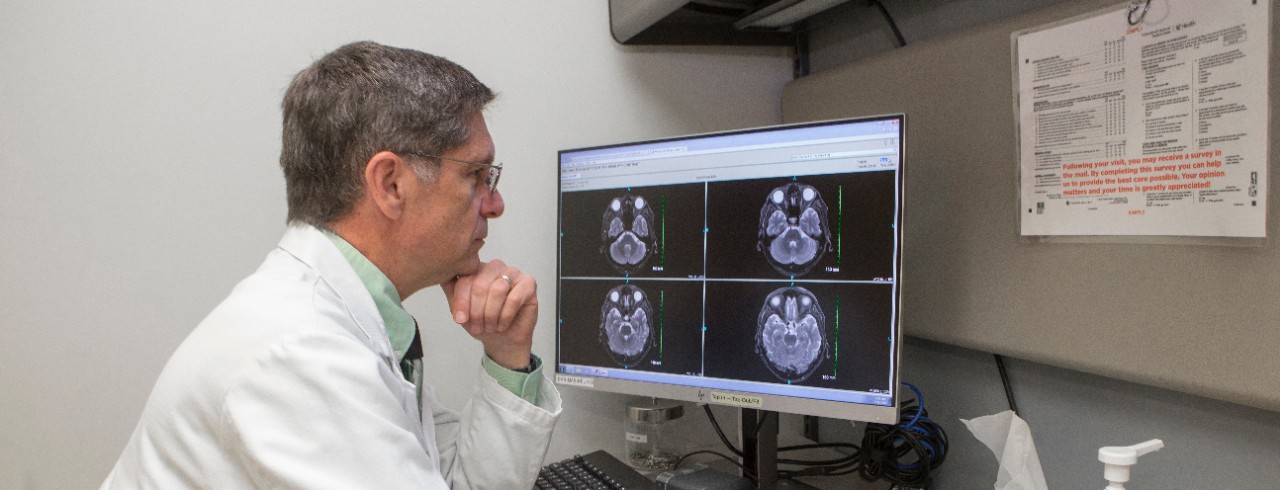
Featured photo at top of Dr. Broderick. Photo/Joseph Fuqua II/University of Cincinnati
Related Stories
Bidirectional link between oral, kidney health calls for patient education, access
August 4, 2026

Despite growing awareness of the connection between oral health and chronic health conditions, patient awareness and access to dental care remain limited, according to University of Cincinnati experts who recently spoke with Healio | Nephrology News & Issues.
'Be human in it': UC College of Medicine welcomes Class of 2030 at 31st White Coat Ceremony
August 4, 2026
The University of Cincinnati College of Medicine welcomed 185 first-year medical students in the Class of 2030 at the 31st annual White Coat Ceremony.
UC-built detector at CERN looks for enticing evidence to explain dark matter
August 4, 2026
A physicist from the University of Cincinnati and his research partners from around the world conducted an experiment at CERN’s Large Hadron Collider in Switzerland to look for evidence that might help explain one of science’s most baffling questions: dark matter.