
UC’s renovated Old Chem will feature bird-safe glass
UC biologists say the glass will prevent needless bird deaths

Renovations to a building at the University of Cincinnati feature windows designed to prevent the needless deaths of birds.
Migratory and resident birds die by the hundreds of thousands each year across the United States after they fly into glass reflecting tree branches or open sky. The U.S. Fish and Wildlife Service says the problem is impacting bird populations around the globe.
But as part of the $190 million renovation of Old Chem on UC’s Uptown campus, windows feature a pattern of slightly opaque dots that break up the reflection and warn birds of the otherwise unseen obstacles.
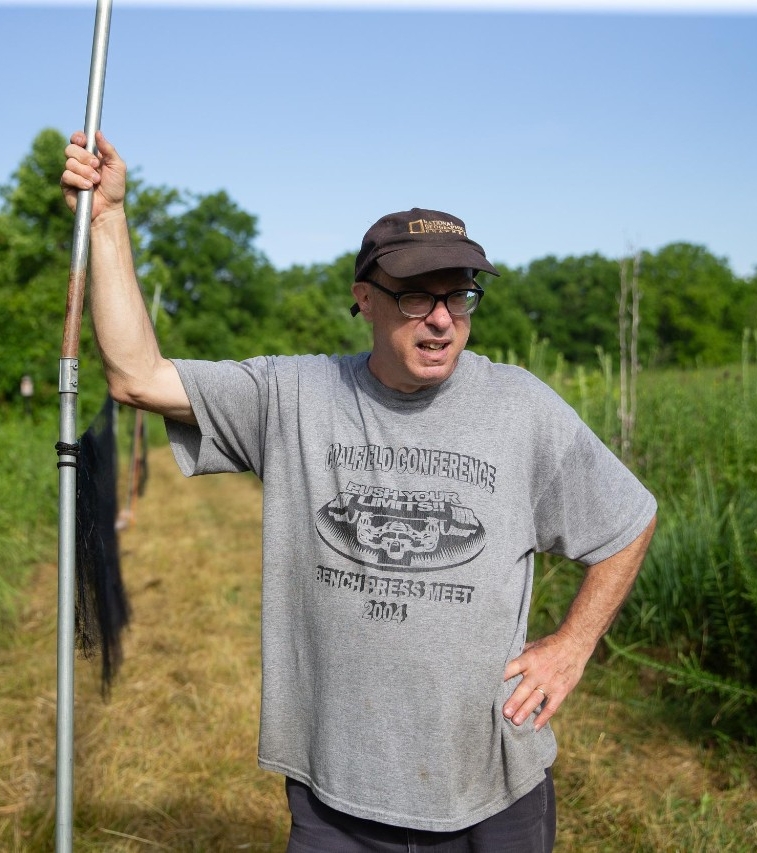
UC Professor Ronald Canterbury runs a bird-banding program and has an ongoing study of bird mortality from buildings in Cincinnati. Photo/Andrew Higley/UC Marketing + Brand
UC Professor Ronald Canterbury and his students have been documenting bird mortalities from window strikes in Ohio for more than a decade as part of an ongoing study. Likewise, he has been recording local populations of migratory birds each year, catching and banding them at locations across Southwest Ohio.
And what he and other biologists have observed is alarming. The population of wild birds in the United States has declined by nearly 3 billion since the 1970s, a drop of 25%. While there are many reasons behind that — from loss of habitat to predation by domestic cats — bird strikes are a major contributor, Canterbury said.
Canterbury said cities can do more to stem the decline.
“The etched windows are a positive first step forward,” he said. “But more needs to be done. Birds cannot wait indefinitely. Many are going to go extinct.”
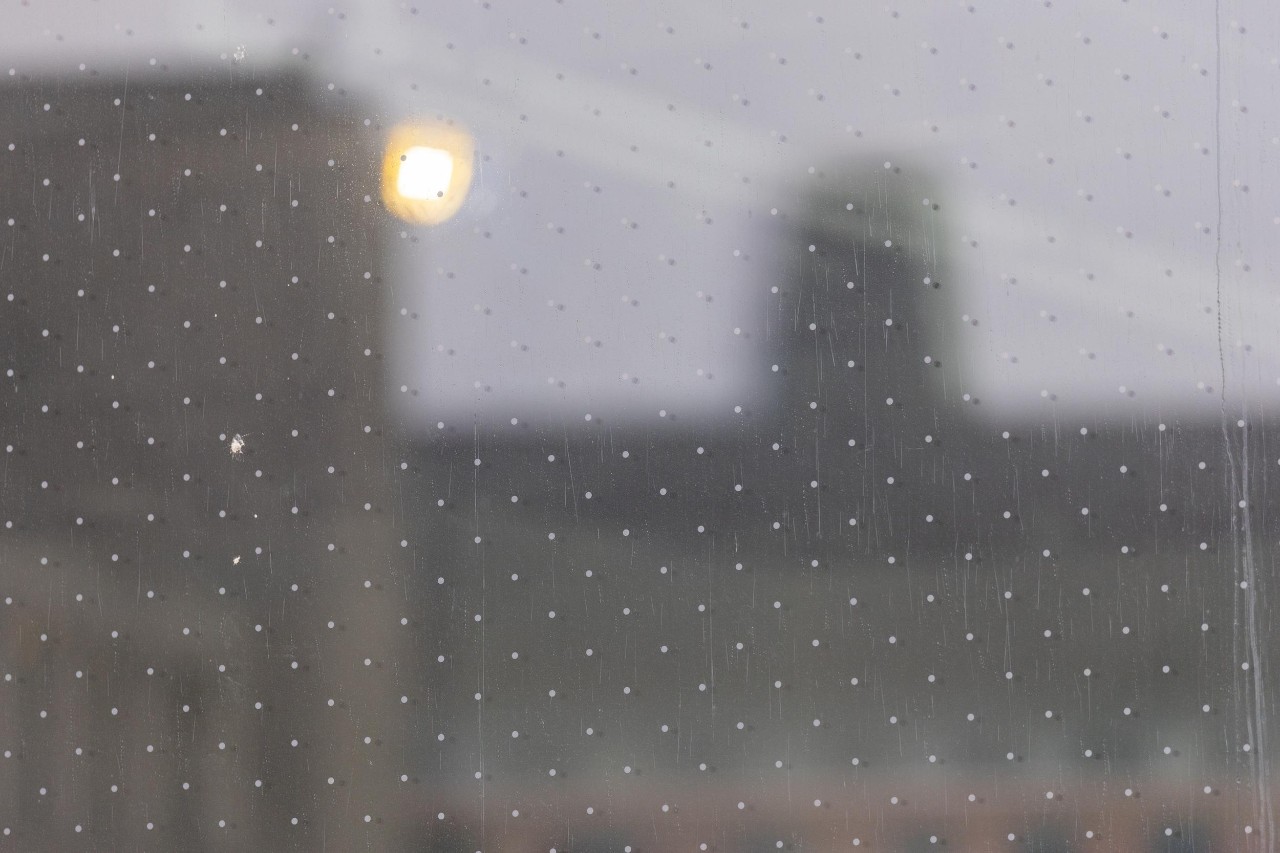
The new windows at Old Chem feature a pattern of etched dots that break up the reflection of a branch or sky for birds. Photo/Andrew Higley/UC Marketing + Brand
UC’s renovation project will provide a unique opportunity to demonstrate the benefits of bird-safe glass by comparing bird strikes before and after renovations, he said. He anticipates seeing a sharp decline in bird strikes around the renovated building, he said.
Likewise, UC Professor Theresa Culley said she incorporated the Old Chem window project in her classroom instruction.
“We used that in my conservation biology course,” she said. “It’s perfect for that. We’re talking about problems in the environment. How can you use smart design to reduce the impact on wildlife?”
But more than that, Culley said, projects like this demonstrate UC’s interest in being a good environmental steward. UC’s College of Arts and Sciences is seeing growing enrollment in the School of Environment and Sustainability.
“We have a lot of students who are interested in the environment and want to leave the world a better place,” Culley said. “Our world has many challenges — and the younger generation is seeing that and wants to do something about it.”
‘Bravo!’ for the Old Chem glass.
Steve Maslowski, Cincinnati author and photographer
There are a few prominent examples of bird-safe glass in Cincinnati, including several windows in front of habitats at the Cincinnati Zoo & Botanical Garden. Canterbury said he is working with Cincinnati Audubon to spread the word about the project.
“I speak for myself and not necessarily for Cincinnati Audubon’s board when I say, ‘Bravo!’ for the Old Chem glass,” Cincinnati author and wildlife photographer Steve Maslowski said.
Canterbury said people can take steps, many of them inexpensive and simple, to mitigate bird strikes in their own homes or businesses. Many birds cover long distances at night, but artificial lights can confuse and disorient them.
UC biologists have discovered that insects like monarch butterflies, too, can become disoriented by artificial lights. When they rest overnight under artificial lights, they have more trouble navigating the next day. The artificial light interferes with the molecular processes responsible for the butterfly’s remarkable navigational ability.
“Turn off as many lights as you can at night, which saves not only birds but bats, insects, amphibians and more,” Canterbury said.
Cincinnati Audubon is trying to raise public awareness about the dangers migrating birds face from window strikes. Cities from Oregon to Florida even have “lights out” programs during spring and fall migration to help birds and other animals safely reach their destination.
“There are many bird-friendly designs and retrofits to reduce avian window strikes,” he said.
Meanwhile, the UC project could serve as a model for other public or private buildings, Culley said. Culley said people outside UC routinely ask to see the university's greenhouses to learn about new technology, research and growing practices.
“It's a huge win,“ Culley said.
Featured image at top: UC Professor Theresa Culley is promoting UC's new bird-safe glass windows in the renovated Old Chem building. Photo/Andrew Higley/UC Marketing + Brand
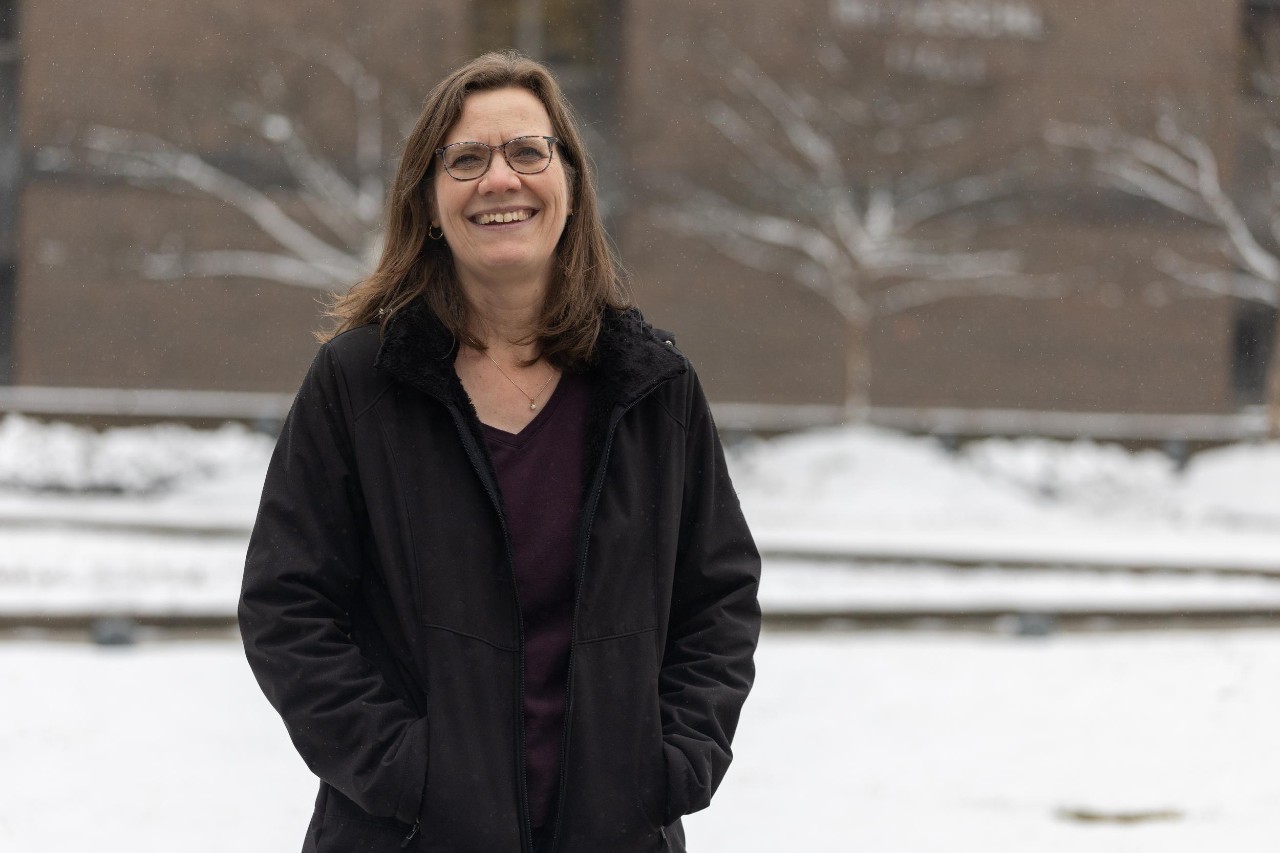
UC Professor of Biological Sciences Theresa Culley is celebrating new bird-safe glass windows at Old Chem that she and Professor Ronald Canterbury hope will prevent needless bird deaths. Photo/Andrew Higley/UC Marketing + Brand
Next Lives Here
The University of Cincinnati is leading public urban universities into a new era of innovation and impact. Our faculty, staff and students are saving lives, changing outcomes and bending the future in our city's direction. Next Lives Here.
Related Stories
'There's a strong community here:' UC transfer student finds place in College of Arts and Sciences
October 23, 2026
This week marks National Transfer Students Week, and the College of Arts and Sciences celebrated those students Thursday. Olivia White, assistant director of recruitment, said around 13-15% of students at UC are transfer students, and with that comes its own set of challenges.
AI breast cancer survival model from Cancer Center could improve accuracy and personalize care
October 23, 2026
UC Cancer Center researchers, including lead author Wedad Alatebi, developed a deep learning survival model for breast cancer that combines detailed clinical and genetic information, potentially offering physicians a more accurate tool to guide treatment decisions.
UC Blue Ash Career Champions make career development part of the everyday experience
October 21, 2026
The University of Cincinnati Blue Ash College is bringing career development into students' everyday experiences through its Career Champions program.