Ohio medical regulators raise concerns over retail IV therapy clinics
UC liver transplant expert spoke on Cincinnati Edition

On May 15, the State Medical Board of Ohio, Ohio Board of Pharmacy and Ohio Board of Nursing issued a joint regulatory statement addressing patient safety concerns when it comes to retail IV therapy clinics. The clinics administer a combination of saline, vitamins, electrolytes and amino acids, as well as headache relief and anti-nausea medications through an intravenous drip. Clinics in the Cincinnati area have made claims that their treatments can cure hangovers and dehydration better than water alone, while also boosting immunity, improving gut health and maintaining healthy joints.
On Cincinnati Edition on 91.7 WVXU News, experts including the University of Cincinnati's Michael (Mick) Schoech, MD, talked about the risks associated with retail IV hydration and if these services offer effective solutions to the health concerns they target.
Schoech is an associate professor in the Division of Digestive Diseases in the Department of Internal Medicine in the UC College of Medicine and director of UC Health's transplant hepatology program.
"Typically, with a hangover, you're getting symptoms as your blood alcohol level nears zero, so headache, fatigue, nausea, anxiety, sensitivity to light and sound, poor concentration," said Schoech. "So, IV fluids are really treating only one part of the problem that is the dehydration associated with it, and it's not going to speed up the process of recovering from a hangover. Really it's time, rest and rehydrating, and IV fluids aren't typically going to counteract those effects."
Schoech went on to say that typically rehydrating with water is a more cost-effective way to treat a hangover.
"There is no evidence to support that IV hydration for minor flu-like symptoms, jet lag and hangovers has any benefit to the person or kind of speeding up the recovery from either or those conditions," he said.
"It's really about drinking in moderation," said Schoech. "And there's really no easy, quick fix that's going to undue the effects of alcohol."
Listen as Schoech described possible risks involved with getting an IV.
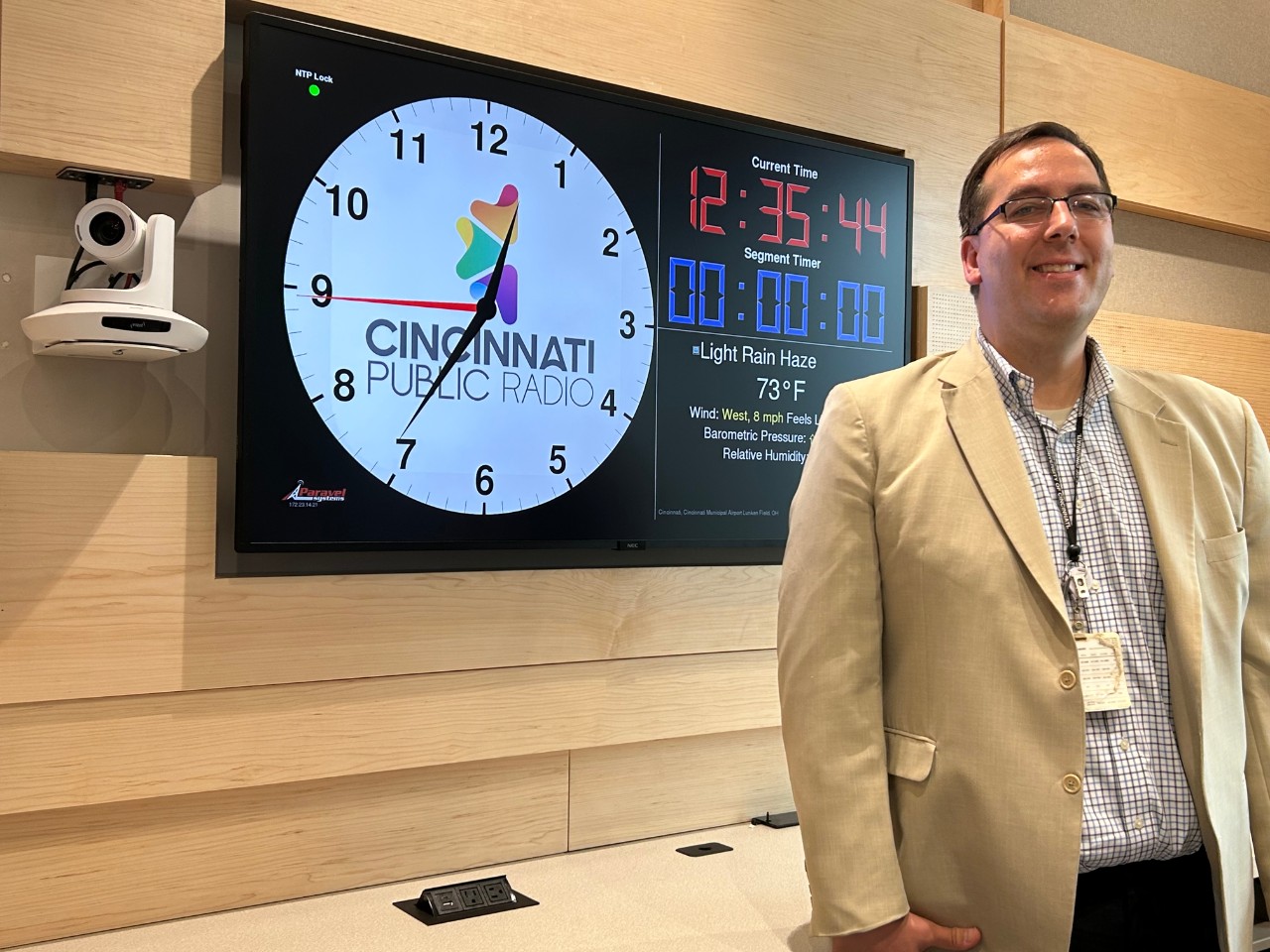
Featured image at top: Michael (Mick) Schoech, MD, inside the WVXU studios. Photo/Megan Burgasser/UC Media Relations + Content.
Related Stories
AI is going to change all our lives
September 21, 2026

UC College of Arts and Sciences Assistant Professor Kelly Merrill Jr. tells the Columbus Dispatch that AI is becoming engrained in every aspect of health care.
President Pinto’s 2nd glow party brings first-year Bearcats together
September 20, 2026
UC President Neville Pinto and team hosted the second annual Bright Beginnings glow party for first-year students
How phone scammers use your own voice against you
September 18, 2026

The Wall Street Journal recently did a deep dive on how artificial intelligence is making scamming people over the phone much easier, citing research by Kimberly Hyun, assistant professor of marketing at UC’s Lindner College of Business.