Novel drug achieves high objective response rate in heavily pretreated chronic lymphocytic leukemia
Cancer Network News highlights UC-led research

Cancer Network News highlighted research led by the University of Cincinnati Cancer Center's Zulfa Omer that found a novel drug was generally well tolerated and demonstrated early efficacy in patients with relapsed/refractory chronic lymphocytic leukemia (CLL).
Omer, MD, Cancer Center member and assistant professor in the Department of Internal Medicine in UC's College of Medicine, and colleagues shared data from the Phase 1 NX-5948-301 trial at the 2025 European Hematology Association Congress.
The trial is testing a novel drug called bexobrutideg that targets the BTK enzyme in a population of heavily pretreated patients with advanced CLL. The drug was found to be well tolerated at all dose levels.
At a median follow-up of 9 months, 80.9% of patients had an objective response, meaning a complete or partial response to the treatment. Out of 48 patients enrolled, seven patients had stable disease, meaning the cancer did not progress or decrease while being treated with the drug. Two patients experienced disease progression.
“Robust and deepening responses were observed [with bexobrutideg]. Responses were rapid, with a median time to first response of 1.87 months,” Omer and her study coauthors wrote in the poster presentation. “...Of 18 patients treated for more than 12 months, 17 remain on the study, [and] 1 patient is approaching 2.5 years on treatment.”
Read the Cancer Network News article.
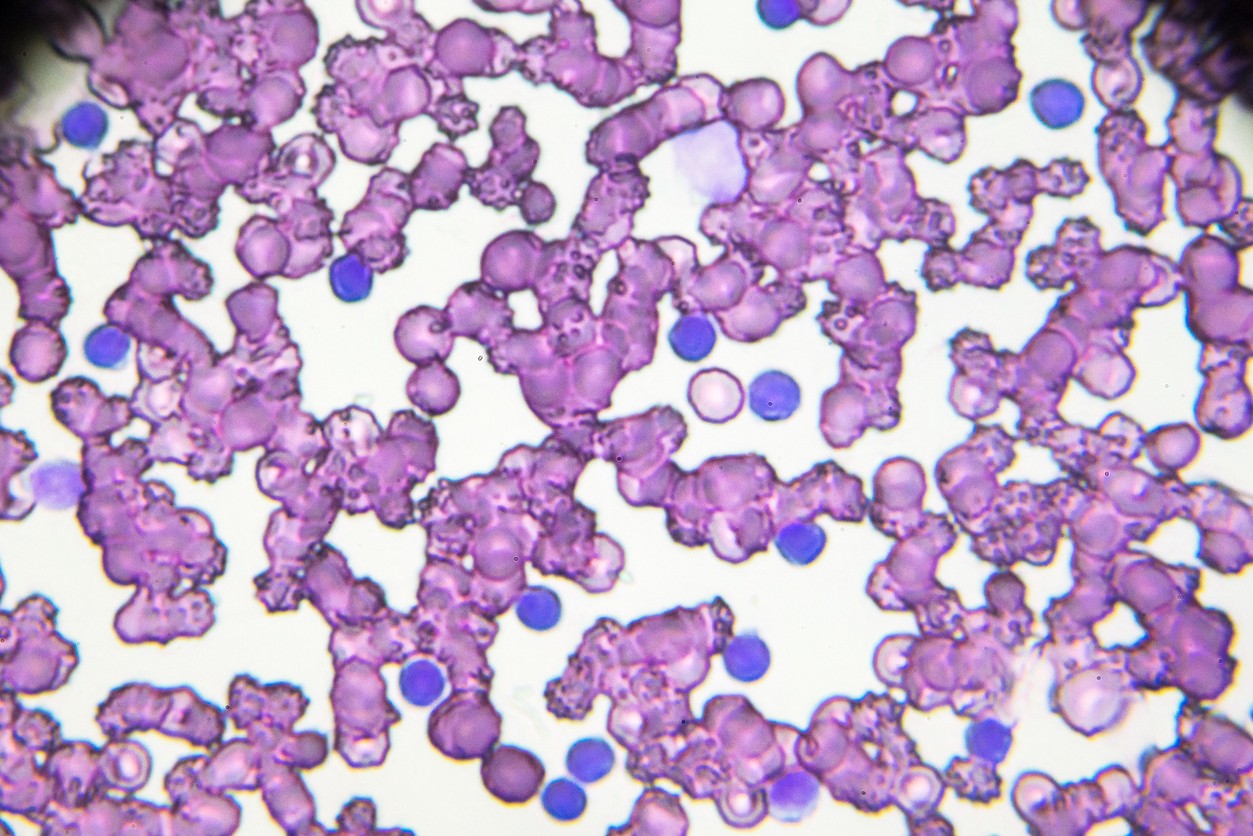
Featured photo at top of CLL cells viewed under a microscope. Photo/jxfzsy/iStock Photo.
Related Stories
Is Cincinnati building new homes fast enough?
September 22, 2026

Gary Painter, professor and academic director of the Real Estate Center at UC's Lindner College of Business, offers comments on affordability issues in Cincinnati.
'Discovery, mentorship, momentum': UC College of Medicine's graduate programs celebrate year of success
September 22, 2026
From new mentorship honors to a growing research pipeline, see how the University of Cincinnati College of Medicine's graduate programs made this a standout year.
Tina Cheng, MD, receives American Academy of Pediatrics’ highest honor
September 22, 2026
UC Pediatrics chair Tina Cheng, MD, has received the American Academy of Pediatrics' highest honor for her decades of advancing child health.